Claims Surface Regarding Spanberger Administration Letter on Felon Voting Rights
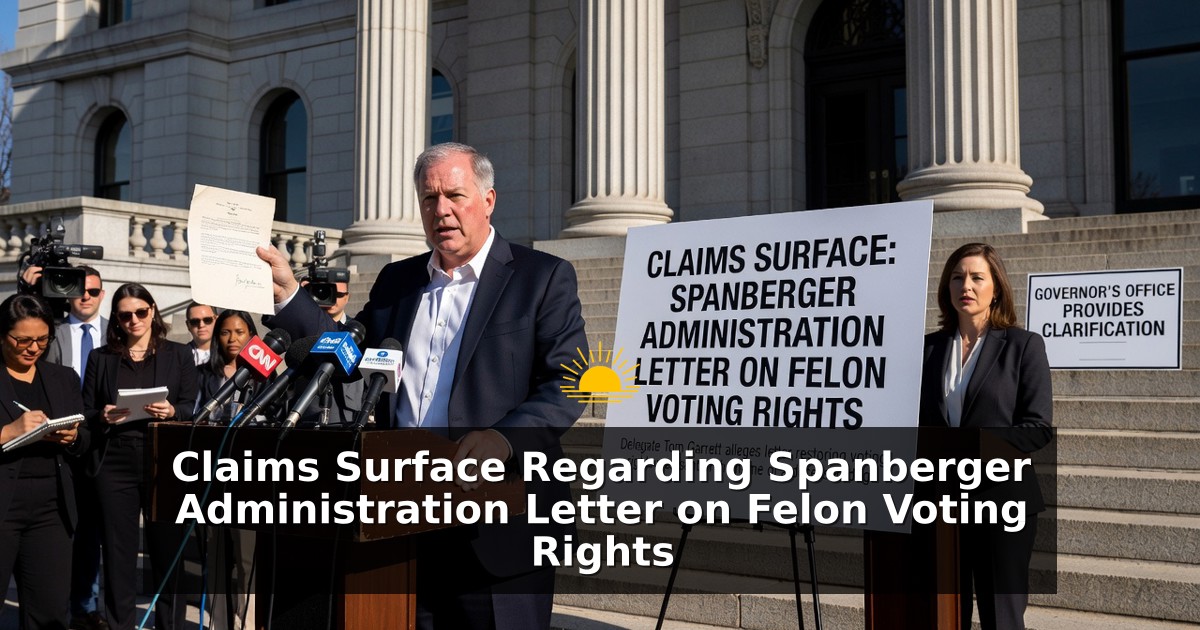
A claim has emerged from Virginia Delegate Tom Garrett regarding a letter issued by the administration of Governor Abigail Spanberger. The letter, dated September 23, addressed voting rights restoration for an individual identified as Biscuit Rigsby, described as a previously convicted felon. Garrett shared the document in a press release, noting it was received by one of his constituents.
The constituent reportedly identified Biscuit Rigsby as a dog that died five years ago. According to the release, the owner stated the dog had no felony conviction and no interest in voting. The letter informed the recipient of restored rights and encouraged voter registration, describing participation in democracy as a sacred American value.
Spanberger's office responded to inquiries by stating that rights were not restored to a dog. The spokesperson indicated the record pertains to a person with an associated date of birth and Social Security number. Details on how the letter reached the constituent's address remain under review.
Background on Virginia Felon Voting Rights Restoration
Virginia is one of three states that automatically removes voting rights from convicted felons upon conviction. Restoration requires the individual to complete their sentence and petition the sitting governor for approval on a case-by-case basis. Governor Spanberger has approved restorations for tens of thousands of felons, differing from the record of her predecessor Glenn Youngkin.
A recent federal court ruling found elements of the state's felon disenfranchisement laws unconstitutional after more than a century. This decision has expanded opportunities for restorations, though the governor retains final authority. The topic of felon voting rights is scheduled to appear on the ballot in the 2026 midterms.
Spanberger has publicly supported restoration for those who meet legal requirements after release. In late September comments, she noted that individuals returning to communities after fulfilling obligations should regain voting rights. Questions about database accuracy have arisen previously in the process.
Previous Concerns and Administrative Responses
In early October, Spanberger indicated her team was investigating possible restorations granted to deceased individuals. The governor linked such issues to inconsistencies between databases involved in the verification process. No specific outcomes from that review have been detailed publicly.
Garrett called for an examination of the overall restoration procedures. He stated that expectations include confirmation that recipients are alive and are persons. The delegate described the matter as non-partisan, focusing on procedural reliability.
The letter in question included a certificate of restoration. Attempts to vote in another person's name constitute a felony in Virginia. The administration maintains that the referenced record aligns with a human individual rather than an animal.
Ongoing Developments and Public Interest
This latest allegation adds to discussions about the scale and oversight of voting rights restorations under the current administration. With thousands of cases processed, the potential for administrative discrepancies has drawn attention from multiple sides. The governor's office has reiterated its commitment to accurate handling of petitions.
Garrett's press release included images of the correspondence sent to the constituent. The situation is described as developing, with additional information expected as reviews continue. Election officials have not issued further statements on the specific letter at this time.
The broader context involves Virginia's unique reliance on gubernatorial discretion for restorations. This system has operated differently across administrations, reflecting varying priorities on rehabilitation and civic participation. Public records requests and further inquiries may provide additional clarity in the coming days.
Context of the Midterm Election Cycle
The timing of the claim coincides with the final days before the 2026 midterms. Voter registration and eligibility questions often gain prominence during such periods. Spanberger's record on restorations has been a point of contrast with prior Republican leadership in the state.
No evidence has been presented that any ineligible party attempted to vote based on the letter. The focus remains on the accuracy of notifications and the underlying data used for decisions. Both the delegate and the governor's office have addressed the matter through official channels.
Further updates are anticipated as the administration and legislative members examine the circumstances surrounding the September 23 correspondence. The incident underscores the complexities of managing large-scale eligibility determinations in a state with automatic disenfranchisement for felons.
Email Abigail Spanberger at:
abigail.spanberger@governor.virginia.gov
Email Abigail Spanberger at:
abigail.spanberger@governor.virginia.gov
2026 Abigail Spanberger Additional appear approval authority between Cases clarity Commitment communities Concerns Convicted court current Data decision delegate Delegate Tom Garrett Democracy described election eligibility Felony five focus Glenn Youngkin Governor individuals information issues Leadership legal managing name officials ongoing opportunities oversight participation person petitions point presented Press Release previous previous procedural procedures Process Public public records question regarding registration reliability remains Republican requirements requires rights social System team timing Tom Garrett value Virginia Virginia's vote voter registration voting
