Loudoun Official Explains Constraints on Power Line Burial Projects
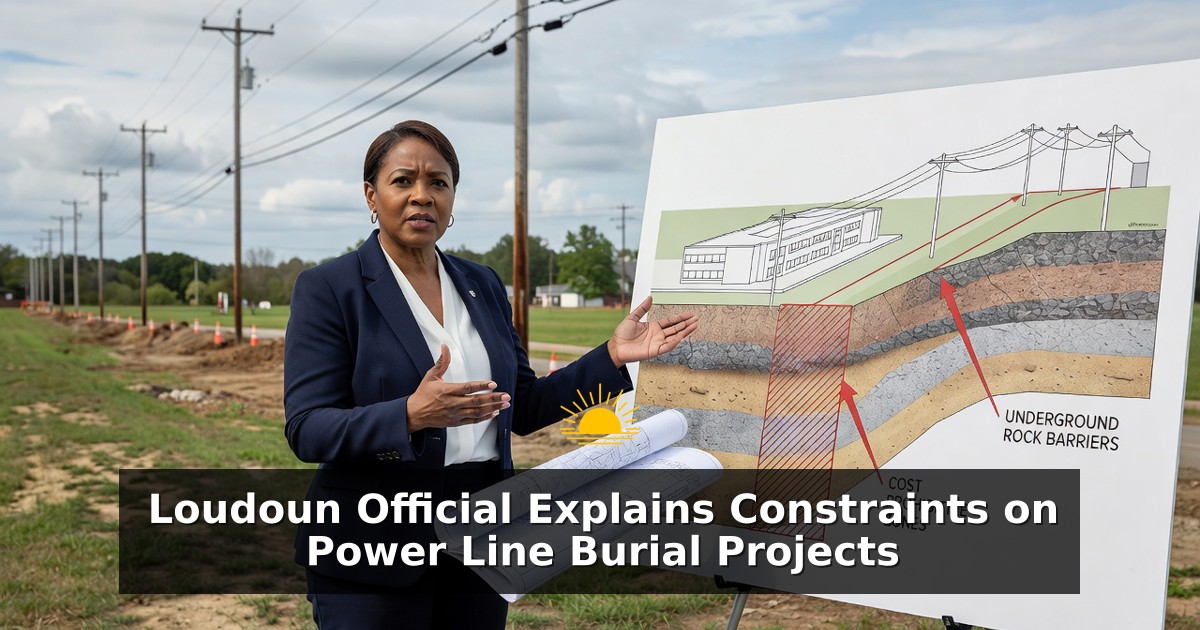
Loudoun County Supervisor Phyllis Randall provided details on challenges associated with burying power lines. Her remarks came during a discussion of infrastructure constraints in the area. Randall addressed why certain burial options encounter difficulties near educational facilities.
Geological Factors Affecting Projects
Underground rock presents a primary barrier to burying power lines. Randall described how these formations interfere with standard installation methods. The presence of rock requires adjustments that complicate project timelines.
This geological element influences decisions on power infrastructure throughout the county. Randall noted that such conditions are common in the specific zones under review. Planning efforts must incorporate these natural features from the outset.
Cost Considerations for Burial Options
The expenses involved in burying lines exceed those of alternative methods. Randall explained that these higher costs stem from the complexity of the work. Budget allocations in Loudoun County reflect the need to manage such financial demands.
Officials evaluate these costs against available funding for infrastructure initiatives. Randall indicated that the financial scale makes burial less practical under current conditions. Resource management plays a key role in determining viable project paths.
Structural Concerns Near Schools
School foundations add another layer of consideration for any burial work. Randall referenced Stonehill Middle School as an example of affected sites. Proximity to these structures raises questions about potential impacts during construction.
The supervisor outlined how excavation could affect the stability of existing buildings. This aspect factors into broader risk assessments for power line projects. County processes include evaluations of these structural elements.
Assessment of Physical Feasibility
Randall stated that the outlined factors combine to limit the physical feasibility of burial. Geological conditions, expenses, and foundation issues contribute to this determination. The explanation provides context for ongoing infrastructure planning in the area.
Decision makers weigh these elements when selecting approaches for power delivery. The focus remains on completing projects in a manner consistent with identified limitations. This framework guides future actions related to county infrastructure.
https://twitter.com/AllVirginiaNews/status/2091281124240801970
Email the Board of Supervisors at:
Phyllis J. Randall (Chair, At-Large) – Phyllis.Randall@loudoun.gov,
Michael R. Turner (Vice Chair, Ashburn District) – Mike.Turner@loudoun.gov,
Juli E. Briskman (Algonkian District) – Juli.Briskman@loudoun.gov,
Sylvia R. Glass (Broad Run District) – Sylvia.Glass@loudoun.gov,
Caleb Kershner (Catoctin District) – caleb.kershner@loudoun.gov,
Matthew F. Letourneau (Dulles District) – Matt.Letourneau@loudoun.gov,
Kristen C. Umstattd (Leesburg District) – Kristen.Umstattd@loudoun.gov,
Laura A. TeKrony (Little River District) – Laura.TeKrony@loudoun.gov,
Koran Saines (Sterling District) – Koran.Saines@loudoun.gov
Loudoun County is a county in Northern Virginia. Its county seat is Leesburg.
Loudoun County actions against area Budget Caleb Kershner certain challenges Common Concerns conditions consideration consistent construction costs current decision described Determination discussion Educational efforts expenses Explained explains Explanation Financial focus funding higher costs initiatives issues Juli Briskman Koran Saines Kristen Umstattd Laura TeKrony limitations Loudoun Loudoun County Loudoun County Board of Supervisors manage Matt Letourneau middle school Mike Turner Need officials ongoing Phyllis Randall planning Power power lines presence project projects provides raises remains requires Role School Schools status Sylvia Glass work
