Young Hunter Opposes Virginia HB 1396 Over Hound Hunting Uncertainty
Updated
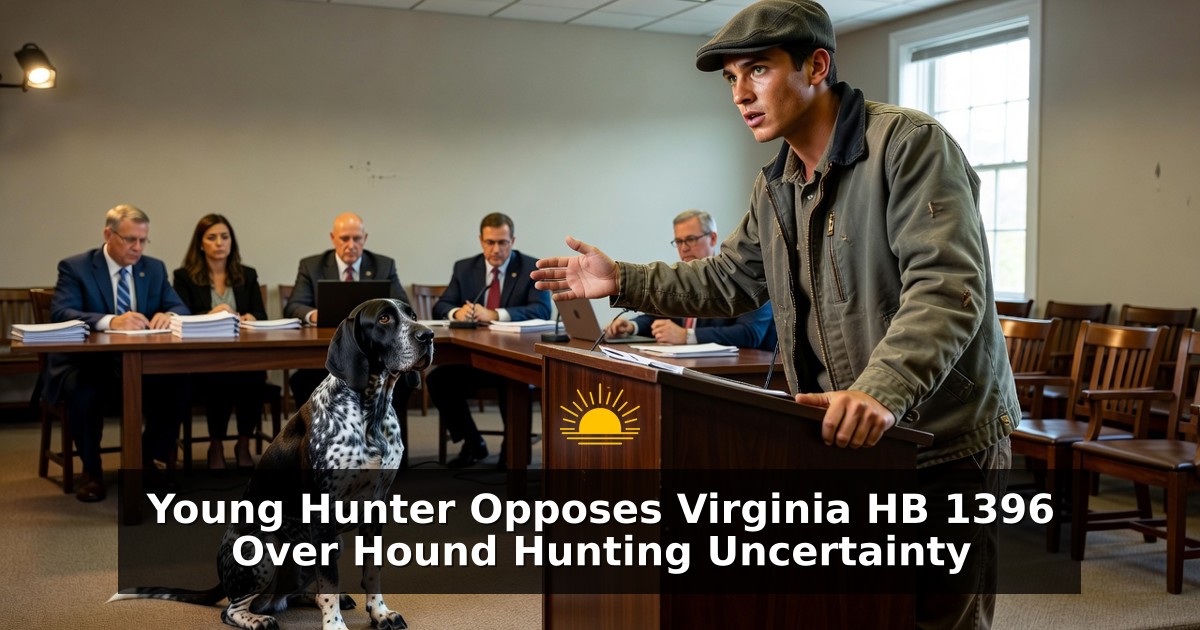
A young hound hunter appeared before the Virginia House Agriculture Subcommittee to voice strong opposition to House Bill 1396, arguing that the measure creates significant uncertainty for dog hunting traditions across the Commonwealth. Speaking on behalf of youth participants and the broader hunting community, the witness emphasized that the legislation lacks clear direction from the Department of Wildlife Resources on how future regulations would operate. The testimony underscored fears that ambiguous rules could discourage new generations from taking part in a practice deeply rooted in Virginia culture. Observers noted the emotional weight of the remarks, which framed the debate as one affecting not only current hunters but also children yet to come. The hearing highlighted ongoing tensions between regulatory proposals and longstanding outdoor heritage activities.
Hound hunting has formed a central part of Virginia’s rural sporting traditions for generations, involving the use of trained dogs to track and pursue game such as deer, bear, and raccoon under carefully managed seasons. Practitioners often describe the activity as a family-centered pursuit that teaches responsibility, outdoor skills, and respect for wildlife. State wildlife managers have historically balanced these traditions with modern conservation goals, property rights considerations, and public safety requirements. Youth involvement remains a priority for many sporting organizations that sponsor mentorship programs and educational hunts designed to pass knowledge from older to younger participants. Any legislative change that appears vague can therefore ripple through communities that rely on predictable rules to plan training, breeding, and seasonal activities.
During the subcommittee session, the young speaker stated that he had not heard specific guidelines from a representative identified as Mr. Martinez regarding what the Department of Wildlife Resources would implement if the bill advanced. This absence of detail, according to the testimony, leaves hunters of all ages unsure about the long-term viability of dog-assisted methods. The witness stressed that the concern extends well beyond personal interest and encompasses the prospects available to future children and other young people statewide. Many youth dog hunters already participate in organized events and informal family outings that depend on stable regulatory frameworks. Uncertainty, the speaker argued, risks eroding enthusiasm and reducing the number of newcomers who enter the sport.
Virginia’s Department of Wildlife Resources oversees hunting seasons, licensing, and dog-use provisions through a combination of statutes and administrative regulations developed with public input. Lawmakers periodically review these frameworks when conflicts arise between hunters, landowners, and other outdoor users. Proposals such as HB 1396 typically aim to address reported issues ranging from dogs crossing property lines to questions of fair chase and resource allocation. Supporters of tighter measures often cite the need for clearer accountability and reduced friction in shared landscapes. Critics counter that overly broad or poorly defined language can inadvertently restrict lawful practices that have operated for decades without major ecological harm.
Youth participation statistics compiled by wildlife agencies and sporting associations show that early exposure to hunting correlates with lifelong engagement in conservation and outdoor recreation. Mentored hunts, 4-H shooting sports clubs, and family-based hound training sessions serve as primary entry points for many Virginia children and teenagers. When regulatory language appears open-ended, parents and instructors may hesitate to invest time and resources in activities whose legal status could shift. The young hunter’s remarks reflected this practical worry, noting that unclear future rules could diminish opportunities for the next generation. Maintaining accessible pathways for youth remains a stated goal of both wildlife managers and legislative committees charged with natural resources oversight.
Cultural historians and rural sociologists frequently observe that hound hunting functions as more than a method of harvest; it constitutes a social network that binds communities through shared labor, storytelling, and seasonal rhythms. Kennels, training trials, and hunt clubs often double as informal gathering places where knowledge of terrain, animal behavior, and ethical conduct is transmitted orally. Generational continuity depends on the perception that the activity will remain legally secure. Testimony such as that delivered against HB 1396 therefore resonates beyond the immediate policy question and touches on identity and belonging in many parts of the state. Lawmakers weighing the bill must consider both the technical merits of any new restrictions and the broader social fabric those restrictions might affect.
The subcommittee process allows citizens, advocacy groups, and agency officials to present evidence and perspectives before a bill proceeds to the full committee or the House floor. In this instance, the absence of detailed explanatory material from the Department of Wildlife Resources became a focal point of the opposition argument. Clear regulatory roadmaps typically help stakeholders understand compliance expectations, enforcement priorities, and any phase-in periods. Without such clarity, even well-intentioned legislation can generate anxiety among those whose livelihoods or recreational identities are tied to the activity. The young hunter’s call for greater specificity echoed similar requests heard in prior sessions dealing with wildlife management topics.
Supporters of structured oversight maintain that modern landscapes require updated rules to accommodate growing human populations, fragmented habitats, and evolving public expectations. They argue that defined standards can protect the reputation of ethical hunters by distinguishing responsible practices from problematic ones. At the same time, hunting organizations consistently advocate for collaborative rule-making that incorporates field experience and scientific data. The tension between these viewpoints surfaces regularly in Agriculture and Natural Resources committees. HB 1396 sits within that larger conversation about how best to steward both wildlife populations and cultural traditions.
As the legislative session continues, the fate of the bill will depend on further testimony, possible amendments, and votes that weigh competing interests. The young hunter’s appearance served as a reminder that policy decisions reach into family life and future aspirations. Stakeholders on all sides are expected to monitor subsequent hearings for additional details from the Department of Wildlife Resources and for any clarifying language that might address the uncertainty raised. Whatever the eventual outcome, the discussion has already illustrated the depth of attachment many Virginians feel toward hound hunting and the importance they place on transparent governance of outdoor heritage activities. The record of the subcommittee will stand as part of the public documentation guiding final deliberations.
bill dog hunters dog hunting DWR future children future of dog hunting guidelines hound hunters hunters Mr. Martinez oppose bill state uncertainty Virginia Virginia opposition Young Hound Hunters youth youth across the state youth dog hunters youth hunters