School Officials Review Dress Code Exceptions for Student Anxiety
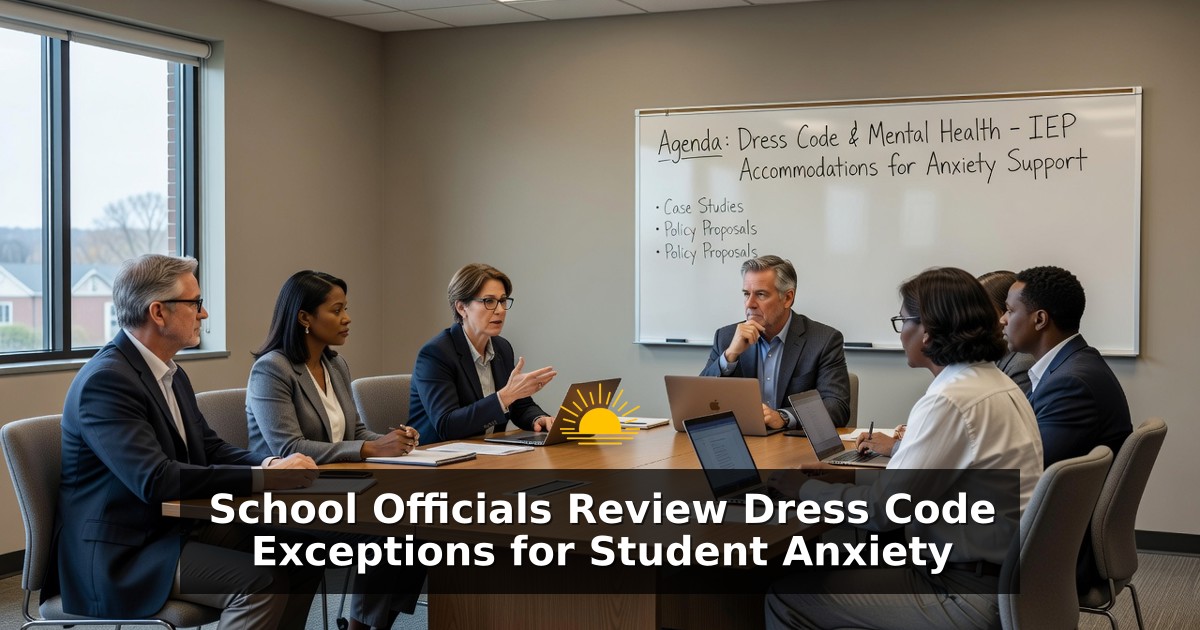
School board members and staff examined the relationship between student dress codes and mental health supports during a regular meeting held on May 26, 2026. The discussion centered on whether accommodations listed in individualized education plans could allow specific clothing choices, such as wearing a hood, when those choices help reduce anxiety. Officials stressed that any exception must rest on documented student needs rather than informal requests. The exchange underscored the importance of aligning campus appearance rules with federal disability protections that apply in Virginia public schools.
Dr. Rashid raised the question of how the division would respond if multiple families sought dress code flexibility based on anxiety diagnoses. The inquiry focused on situations in which a student’s plan states that a particular garment or covering lowers stress and improves classroom functioning. Rashid noted the possibility that such requests could increase over time and asked staff to clarify the proper process. The concern reflected a broader interest in keeping policies both consistent and responsive to individual circumstances.
Ms. Richardson answered on behalf of the administration and outlined the established decision-making structure. She explained that determinations rest with each student’s educational planning team. Eligibility may arise under the Individuals with Disabilities Education Act for special education services or under Section 504 of the Rehabilitation Act and the Americans with Disabilities Act. Richardson emphasized that the team must review relevant information, decide whether an accommodation is appropriate, and record it clearly inside the student’s plan.
Once an accommodation is approved, staff must ensure that every relevant adult on campus understands the student’s authorized access to the specified item. Richardson stated that documentation alone is insufficient without effective communication to teachers, administrators, and other personnel who enforce the dress code. This step prevents misunderstandings and protects the student’s right to the support. The process aims to balance uniform expectations with legally required individualized consideration.
Federal law supplies the framework that Virginia school divisions follow when addressing disability-related needs. The Individuals with Disabilities Education Act requires public schools to provide a free appropriate public education through an individualized education program for eligible students. Section 504 and the Americans with Disabilities Act similarly mandate reasonable accommodations for students whose impairments substantially limit major life activities. Anxiety disorders can meet that standard when they significantly affect learning, concentration, or school participation.
Educational planning teams typically include parents or guardians, teachers, specialists, and administrators who know the student. The group examines evaluation data, classroom observations, and input from the family before writing any accommodation. If wearing a hood or similar item is judged necessary to manage anxiety, the plan must state the condition, the permitted clothing, and the settings in which it applies. Clear language reduces later disputes and guides consistent implementation across the school day.
Dress codes themselves remain a local responsibility in Virginia, yet they cannot override federal disability protections. Divisions routinely adopt appearance standards intended to promote safety, reduce distractions, and foster a focused learning environment. When a documented disability requires a departure from those standards, the accommodation takes precedence. Schools therefore maintain procedures that allow case-by-case review rather than blanket prohibitions that ignore individual needs.
Student well-being forms a central part of the rationale for such flexibility. Anxiety can interfere with attendance, peer interaction, and academic performance when left unaddressed. Simple environmental or clothing adjustments sometimes provide measurable relief and enable a student to remain engaged. Officials noted that thoughtful accommodations can support mental health without undermining the overall purpose of the dress code. The goal is meaningful access to education for every learner.
Communication protocols receive equal attention once an accommodation is written. Teachers who see the student daily must receive timely notice so they do not inadvertently enforce a rule that does not apply. Substitute teachers, bus drivers, and activity sponsors also need awareness when the accommodation extends beyond the classroom. Training and shared digital records help keep information current and reduce the chance of conflicting messages. Consistent messaging protects both the student and the staff members responsible for enforcement.
Potential volume of requests was acknowledged as a practical consideration. If numerous families present similar anxiety-related needs, planning teams must still evaluate each case on its own merits. Staff capacity, documentation quality, and fidelity of implementation become important management issues. Divisions may review aggregate data to identify trends while preserving the individualized nature of every decision. Proactive professional development can prepare educators for an increase in mental-health-related accommodations.
Virginia school divisions operate under state regulations that incorporate the federal requirements. Local policies on student conduct and attire typically contain language affirming compliance with disability law. Annual training for administrators and teachers often includes modules on Section 504 and individualized education programs. These measures help ensure that front-line staff recognize valid accommodations and apply them correctly. Continuous review keeps practices aligned with evolving guidance from state and federal agencies.
The meeting discussion illustrated the everyday intersection of policy and student support. Dress codes serve legitimate institutional interests, yet they must yield when a properly documented disability requires an exception. Educational teams hold the authority and the responsibility to make those determinations. Transparent documentation and broad stakeholder awareness complete the process. Together these steps allow schools to uphold standards while meeting diverse student needs.
Observers of Virginia public education note that mental health considerations have gained greater visibility in recent years. Anxiety, in particular, appears with rising frequency in student support discussions. Accommodations that once seemed unusual now form part of routine planning for many teams. The exchange at the May meeting reflected that shift and reinforced the expectation that policies will adapt through established legal channels. Continued attention to both consistency and compassion remains essential.
In closing remarks related to the topic, participants returned to the core principle of individualized review. No automatic entitlement exists simply because a student experiences anxiety; evidence and team consensus are required. At the same time, once an accommodation is approved it must be honored. The balance protects the integrity of the dress code and the rights of students who need support. That dual commitment guides daily practice across Virginia classrooms.
School leaders indicated that existing procedures already address the scenario raised during the meeting. Families who believe a dress code adjustment is necessary should request a team meeting and supply relevant clinical or educational information. Staff stand ready to convene the appropriate group and document outcomes. Clear pathways reduce uncertainty and help students receive timely assistance. The process itself becomes part of a supportive school climate.
Ultimately the conversation affirmed that dress code policies and disability accommodations can coexist when handled through proper channels. Virginia educators continue to refine their approaches as student needs evolve. Documentation, communication, and team-based decision making remain the foundation. By following these steps, divisions meet legal obligations and promote student well-being in equal measure. The May 26 discussion provided a public reminder of those enduring responsibilities.
accommodation ADA Americans with Disabilities Act Anxiety behavioral issue child documented plans Dr. Rashid educational planning team educational stakeholders eligibility hood IDEA IEPs Ms. Kahn Ms. Richardson Section 504 special education student access Students