Virginia Bill Advances to Make Landlord-Supplied Air Conditioning an Essential Service
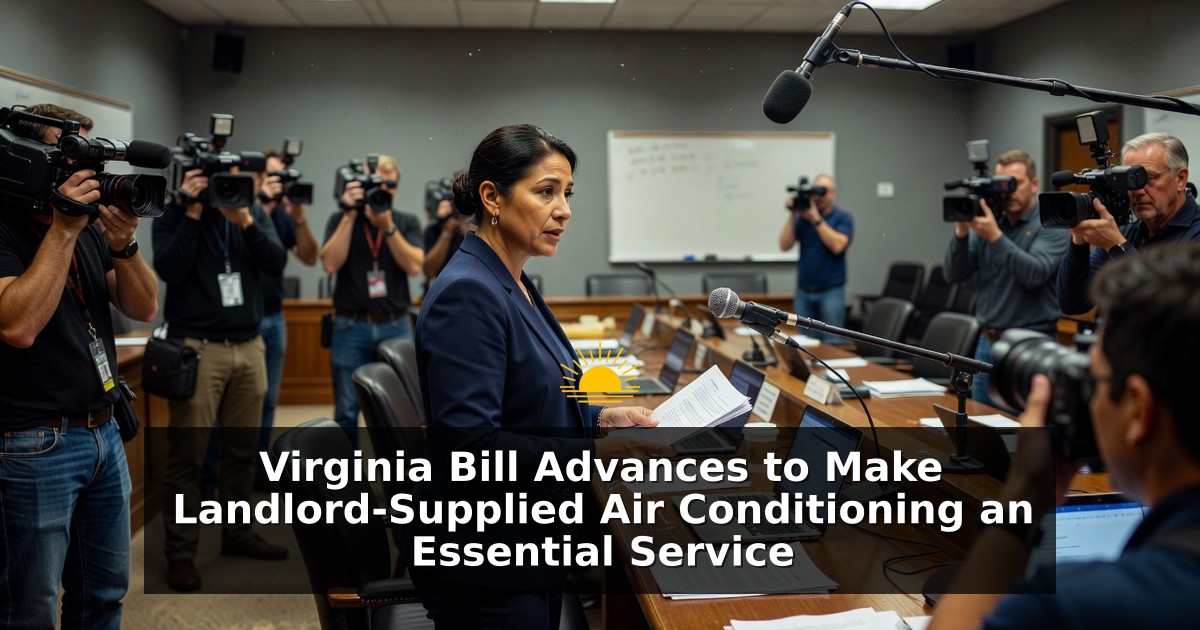
Delegate Martinez has introduced House Bill 519 in the Virginia General Assembly to classify air conditioning as an essential service when it is supplied by the landlord. The legislation amends the Virginia Residential Landlord and Tenant Act to expand the definition of basic living necessities for renters across the commonwealth. A subcommittee of the House General Laws Committee reviewed the measure and recommended that it be reported with amendments. The panel approved the recommendation by a vote of seven to three, clearing the way for further consideration. Supporters of the change point to rising summer temperatures and the need for consistent standards in rental housing.
Background on Essential Services Under State Law
The Virginia Residential Landlord and Tenant Act sets clear duties for property owners who rent residential units to tenants. Essential services have long included heat, running water, hot water, electricity, and gas where those utilities form part of the rental agreement. Landlords must maintain these services in working order or face potential remedies available to tenants under the statute. House Bill 519 specifically adds air conditioning to that list, but only in cases where the landlord already supplies the cooling system or units. This limitation ensures the obligation applies solely to existing installations rather than mandating new equipment in every rental property. The distinction aims to balance tenant protections with practical considerations for property owners.
Subcommittee Review and Recommended Amendments
During the recent hearing, the General Laws subcommittee examined the language of House Bill 519 in detail. Members discussed how the addition of air conditioning would interact with existing provisions on habitability and repair obligations. The panel ultimately voted seven to three to recommend reporting the bill with amendments. Those amendments refine the scope of the requirement and clarify enforcement mechanisms without altering the core intent. Delegate Martinez moved adoption of the subcommittee amendments following the vote. The process reflects standard legislative procedure for refining bills before they advance to the full committee.
Implications for Landlords Across Virginia
Property owners who currently provide air conditioning as part of a rental package would face a new maintenance duty under the proposed change. Failure to keep supplied cooling systems operational could trigger the same tenant remedies that apply to other essential services. These remedies may include the right to notify the landlord, arrange for repairs and deduct reasonable costs, or in extreme cases seek lease termination. Landlords would need to respond promptly to reports of malfunctioning units during periods of high heat. The bill does not require installation of air conditioning in properties that lack it, preserving flexibility for older housing stock. Clear communication of existing cooling amenities in lease documents would become even more important for compliance.
Tenant Protections and Health Considerations
Renters in Virginia often face intense summer heat, particularly in urban areas and the southern regions of the state. Prolonged exposure to high indoor temperatures can pose documented health risks for children, older adults, and individuals with certain medical conditions. By treating landlord-supplied air conditioning as essential, House Bill 519 seeks to give tenants stronger recourse when cooling fails. The measure aligns with broader efforts to update housing standards as weather patterns evolve. Advocacy groups have long argued that climate control deserves recognition alongside heat and water as a basic necessity. The legislation provides a structured legal pathway rather than leaving disputes solely to individual lease negotiations.
Historical Context of the Virginia Residential Landlord and Tenant Act
The Virginia Residential Landlord and Tenant Act has undergone periodic revisions to address changing housing conditions and consumer expectations. Earlier updates strengthened rules on security deposits, eviction procedures, and disclosure requirements. Essential services provisions have remained a cornerstone of the law because they directly affect habitability. Adding air conditioning continues that incremental approach by responding to contemporary needs without overhauling the entire framework. Lawmakers have previously considered similar expansions in response to constituent concerns about extreme weather. The current bill builds on that foundation while limiting the new duty to systems already furnished by the landlord.
Next Steps in the Legislative Process
Following the subcommittee recommendation, House Bill 519 moves toward consideration by the full House General Laws Committee. Members will evaluate the amended version and decide whether to report it to the House floor. If approved there, the measure would proceed to the Senate for parallel review. Final passage would require agreement on any further changes and the signature of the governor. Implementation timelines and any accompanying regulations would be determined after enactment. Stakeholders on both the landlord and tenant sides are expected to monitor the bill closely as it advances through remaining stages.
Broader Effects on Rental Housing Standards
Adoption of the proposal could influence how lease agreements are drafted throughout Virginia. Landlords may update maintenance protocols and inspection schedules for cooling equipment to avoid violations. Tenants would gain clearer expectations about the reliability of air conditioning included in their rent. Local housing authorities and courts would apply the updated definition when resolving related disputes. The change may also encourage preventive maintenance that extends the life of existing systems. Overall, the bill represents a targeted adjustment rather than a sweeping overhaul of rental regulations in the commonwealth.
Ongoing Discussions About Climate and Housing
Virginia communities continue to experience warmer average temperatures and more frequent heat events according to state climate assessments. These conditions have prompted renewed attention to indoor environmental quality in residential settings. House Bill 519 addresses one specific aspect by focusing on air conditioning already provided by landlords. The seven-to-three subcommittee vote indicates majority support for moving the concept forward with refinements. Further debate will likely center on practical enforcement and the precise wording of the amendments. The outcome will help define modern standards for essential services under Virginia law for years to come.
air-conditioning Amendments aye chairman clerk Delegate Martinez delegates essential service essential services House Bill Landlord Moved residential landlord roll seconded subcommittee summary tenant act Virginia Virginia Residential Landlord tenant act vote