Virginia Moves to Authorize Additional Judgeships Amid Rising Caseloads
Updated
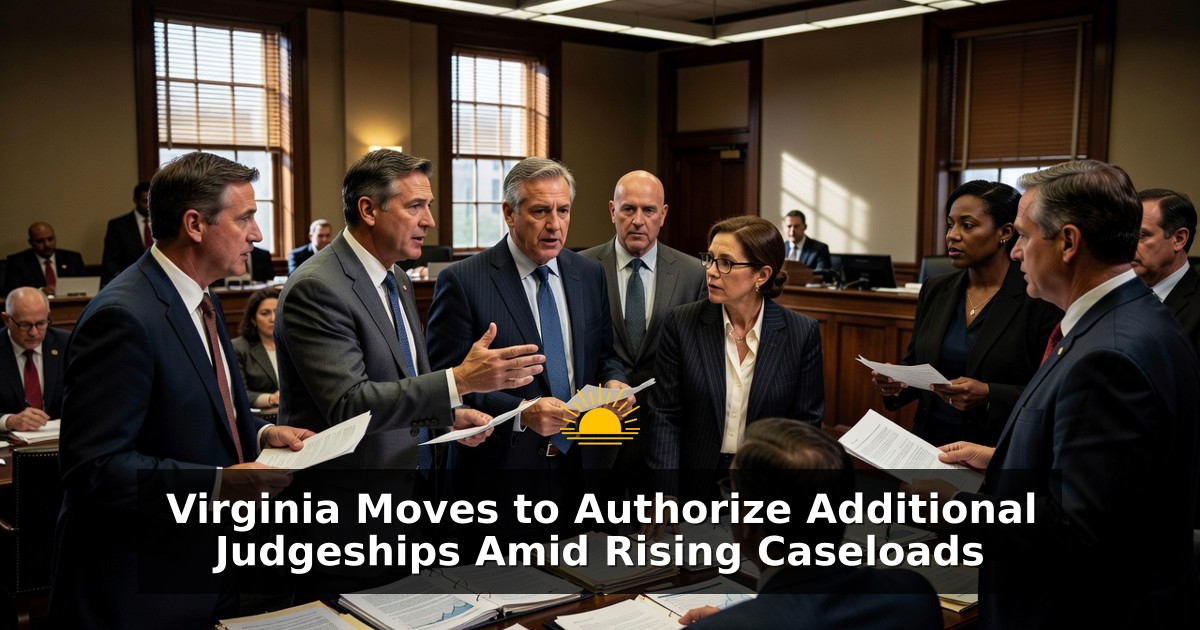
Virginia lawmakers advanced a measure authorizing additional judgeships across several judicial districts and circuits, citing documented increases in caseloads that have strained existing court resources. The proposal, highlighted during committee discussion by Delegate Hope, focuses on both juvenile and general jurisdiction courts to improve the timely handling of cases. Officials indicated that the expansion rests on workload data rather than political considerations, aiming to maintain efficient operations as filings continue to grow. Supporters of the step described it as a practical response to long-standing capacity challenges within the state’s court system.
The authorization covers multiple judicial districts handling juvenile matters as well as broader general district and circuit court responsibilities. By adding positions where merit has been established through formal assessments, the plan seeks to reduce delays that can affect families, businesses, and criminal defendants alike. Court administrators have previously noted that rising volumes in certain regions leave judges with limited time for thorough case review. The current initiative builds on those observations by targeting specific areas identified as most in need of reinforcement.
Workload Data Drives the Expansion Decision
Documented workload metrics formed the core justification presented for the new judgeships. Delegate Hope explained that the recommendations follow established evaluation processes used to measure judicial demand across Virginia. These assessments typically examine filing rates, case complexity, and the time required to reach disposition in both juvenile and adult matters. Lawmakers reviewing the proposal emphasized that authorization would occur only where the data clearly support additional full-time positions.
Juvenile and domestic relations courts face particular pressure from cases involving child welfare, delinquency, and family disputes. General district courts, meanwhile, manage high volumes of traffic, misdemeanor, and small-claims matters that require rapid processing. Circuit courts handle more serious felony trials, major civil litigation, and appeals from lower courts. Adding judges in selected locations is expected to distribute these responsibilities more evenly and prevent backlogs from compounding over successive dockets.
Improving Efficiency Across Court Levels
Proponents argue that extra judicial capacity will allow courts to schedule hearings more promptly and devote adequate attention to each matter. In juvenile settings, quicker resolution can minimize disruption to children’s lives and support earlier intervention services. In general jurisdiction courts, reduced wait times may lower costs for litigants and free law-enforcement resources otherwise tied up in prolonged proceedings. The overall goal remains consistent application of justice without unnecessary delay.
Virginia’s judicial system already operates under constitutional and statutory frameworks that set the number of judges per circuit and district. Any increase therefore requires explicit legislative approval backed by evidence of need. The present discussion reflects that requirement by tying each proposed judgeship to verified workload figures. Once authorized, the new positions would proceed through the normal appointment or election processes applicable to the respective courts.
Broader Implications for Local Communities
Communities served by the affected districts stand to experience more accessible court services if the additional judgeships are filled and become operational. Residents involved in custody disputes, protective-order requests, or criminal cases could see shorter intervals between filing and hearing. Businesses pursuing contract claims or landlords seeking possession remedies may likewise benefit from faster dockets. Public confidence in the courts often correlates with the perception that matters are resolved in a reasonable timeframe.
At the same time, the expansion carries fiscal considerations that lawmakers must weigh, including salary, staff support, and facility needs associated with each new judgeship. Budget documents customarily accompany such authorizations so that the General Assembly can evaluate long-term costs against the operational gains. Transparent presentation of both the workload justification and the funding implications helps maintain accountability throughout the process.
Next Steps in the Legislative Process
Following committee review, the authorization measure would advance to further consideration by the full legislative body according to standard procedure. Final passage would enable the judiciary to begin recruitment or appointment steps for the newly created seats. Implementation timelines typically depend on the availability of qualified candidates and the readiness of local court infrastructure. Monitoring of caseload trends after the positions are filled will determine whether the added capacity meets the projected demand.
Observers of Virginia’s court system note that periodic adjustments to judicial staffing have occurred in prior sessions when similar data demonstrated sustained pressure. The current proposal continues that pattern by focusing on districts and circuits where the need has been quantified. Continued attention to accurate workload measurement remains essential so that future resource decisions rest on comparable evidence. In this manner, the courts can adapt to demographic and legal changes while preserving core functions of fairness and efficiency.
The discussion led by Delegate Hope underscores a commitment to evidence-based allocation of judicial resources. By authorizing judgeships only where documentation supports the request, the legislature seeks to balance access to justice with responsible stewardship of public funds. As the measure proceeds, stakeholders across the affected communities will watch closely to assess its practical effects on daily court operations and case outcomes.
2027 Additional Authorization authorizes committee meeting Courts of Justice decision delegate Hope general courts handle increasing judgeships Judicial judicial circuits judicial system juvenile courts key Virginia Virginia's workload