Loudoun Board Member Flags Bus Behavior as Safety Risk
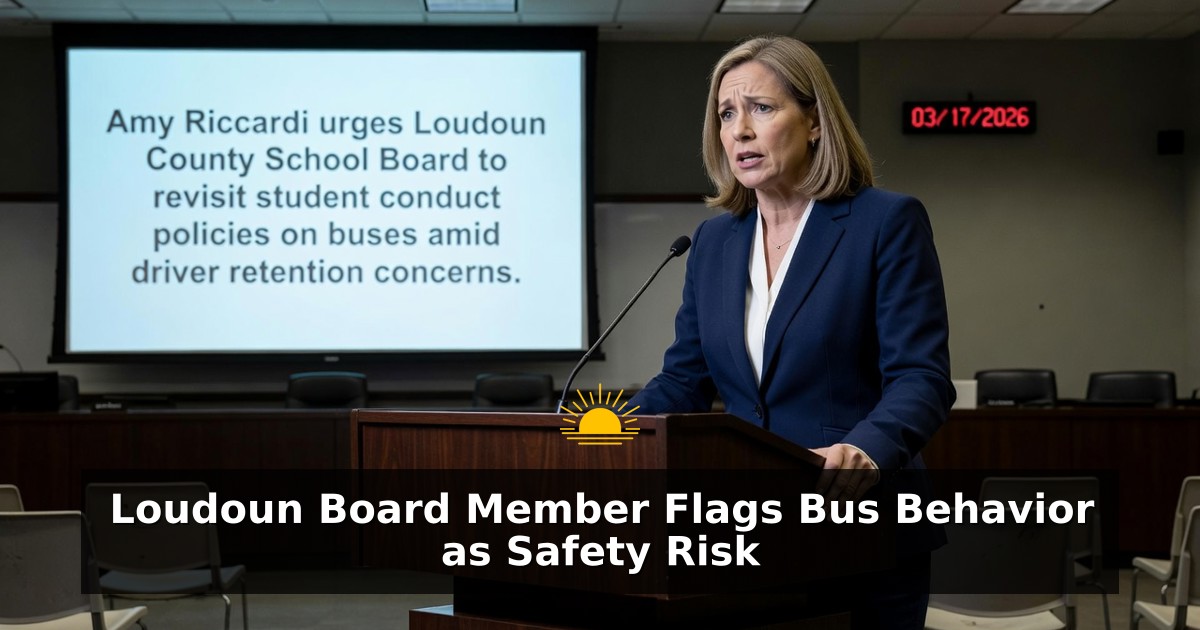
Loudoun County School Board member Amy Riccardi raised concerns about student behavior on school buses during the Finance and Operations Committee meeting on March 17, 2026. She described the issue as a critical safety matter that affects students, drivers, and other people sharing the roads. Riccardi stated that the board must examine existing policies on rider conduct to address potential risks. Her comments formed part of a wider discussion on operational needs within the school division's transportation system.
The Loudoun County School Board consists of April Chandler, Deana Oellig, Melinda Mansfield, Joy Maloney, Kari LaBell, Amy Riccardi, Beth Barts, Arben Istrefi, and Harris Mahedavi. These elected members set policies for Loudoun County Public Schools and oversee major support functions including student transportation. Committee sessions regularly review staffing levels, safety protocols, and service reliability across the district. Riccardi's remarks aligned with the board's responsibility to maintain effective daily operations for families throughout the county.
Student Behavior as a Safety Concern
Riccardi emphasized that disruptive conduct on buses creates hazards in multiple ways and requires serious attention from policymakers. She noted that such behavior can divert a driver's attention from traffic and route management at critical moments. The board member framed orderly buses as essential to protecting everyone involved in the morning and afternoon trips. She indicated that tolerance for ongoing nonsense remains low when safety is at stake. Clear expectations and consistent responses help keep the focus on secure travel for all passengers.
School transportation safety depends on both mechanical standards and the human environment inside the vehicle. Drivers receive training to operate large buses while supervising groups of students of varying ages. When disruptions occur, they can elevate stress and reduce the margin for error on busy roads. Districts across Virginia maintain codes of conduct that specifically cover bus rides to reinforce these expectations. Loudoun County's framework seeks to support calm, predictable journeys that minimize preventable risks.
Link to Bus Driver Retention Challenges
Riccardi connected student behavior concerns to the ongoing effort to keep a full cadre of bus drivers. She suggested the issue could rank among leading reasons some employees leave mid-year or decline to continue. The school board should therefore investigate the matter directly rather than leave it unexamined. Gathering results from exit interviews would identify the top two or three factors behind attrition. Those findings could then shape practical steps to improve working conditions and stabilize staffing.
Bus driver shortages have appeared in many Virginia localities and across the nation in recent years. Contributing factors often include early hours, route complexity, and daily interactions that affect job satisfaction. Reliable transportation remains vital because it enables students to reach classrooms on time and ready to learn. When vacancies persist, remaining staff face heavier loads and routes may require adjustments. Data from departing employees offers a concrete way to pinpoint and resolve the most common obstacles.
Call for Policy Reexamination
Riccardi recommended that the behavior policy return to the full school board for fresh review at an appropriate future meeting. She argued that stronger or clearer rules would assist both recruitment and retention of qualified drivers. Without sufficient drivers, the entire transportation network experiences strain that affects families and school schedules. Revisiting the policy would allow members to determine whether current measures adequately deter unsafe actions. Input from transportation staff would strengthen any updates that emerge from the process.
Typical bus conduct policies outline expectations for seating, noise levels, and respect toward the driver and fellow riders. Consequences usually progress from verbal warnings to parental contact and, in repeated cases, temporary loss of riding privileges. These structures aim to preserve access to education while upholding safety. In Loudoun County, aligning the written rules with real-world driver experiences could make positions more sustainable. Open discussion at the board level ensures transparency as any changes move forward.
Broader Transportation and Safety Context
Effective school bus service rests on a combination of trained personnel, well-maintained vehicles, and orderly passenger behavior. National safety organizations consistently stress that driver concentration is a primary defense against incidents. Community roadways become safer when buses operate without internal distractions that demand extra attention. Local boards therefore treat conduct standards as one component of a complete safety program. Riccardi's focus on the topic underscores how personnel stability and student accountability reinforce each other.
Virginia school divisions track transportation performance and staffing metrics as part of routine public reporting. Many have launched recruitment drives, adjusted pay scales, and improved training to attract candidates. Addressing workplace factors such as student interactions forms another layer of those strategies. Committee conversations provide an early venue for identifying issues before they reach formal board votes. Sustained attention to these details helps the district deliver consistent service throughout the academic year.
Gathering Practical Feedback
Riccardi invited additional thoughts on bus behavior and related operational questions from those familiar with daily routes. She specifically requested summaries of exit interview themes so the board could see the main reasons drivers depart. That information would allow targeted responses instead of generalized assumptions. Collaboration between board members, transportation supervisors, and frontline staff can surface workable ideas quickly. The goal remains a complete driver roster that supports safe and efficient student movement.
Parents and residents share an interest in buses that run on schedule and arrive without incident. Disruptions can cascade into missed instructional time and reduced confidence in the system. Preventive policies paired with fair enforcement reduce the likelihood of repeated problems. By examining both conduct rules and attrition data, the board positions itself to make informed adjustments. Continued oversight through the Finance and Operations Committee and full board meetings will determine the next concrete actions.
Amy Riccardi's comments highlight the intersection of student conduct, roadway safety, and workforce stability in Loudoun County Public Schools. The discussion centers on using available information to strengthen policies and support the people who drive the buses each day. As the board moves through its calendar, transportation issues will remain part of the larger effort to serve students reliably. Careful review of the points raised can contribute to steadier operations and safer conditions for the entire community.