Biden Judge Orders Virginia To Put More Than 1,500 ‘Self-Identified’ Noncitizens Back On The Voter Rolls
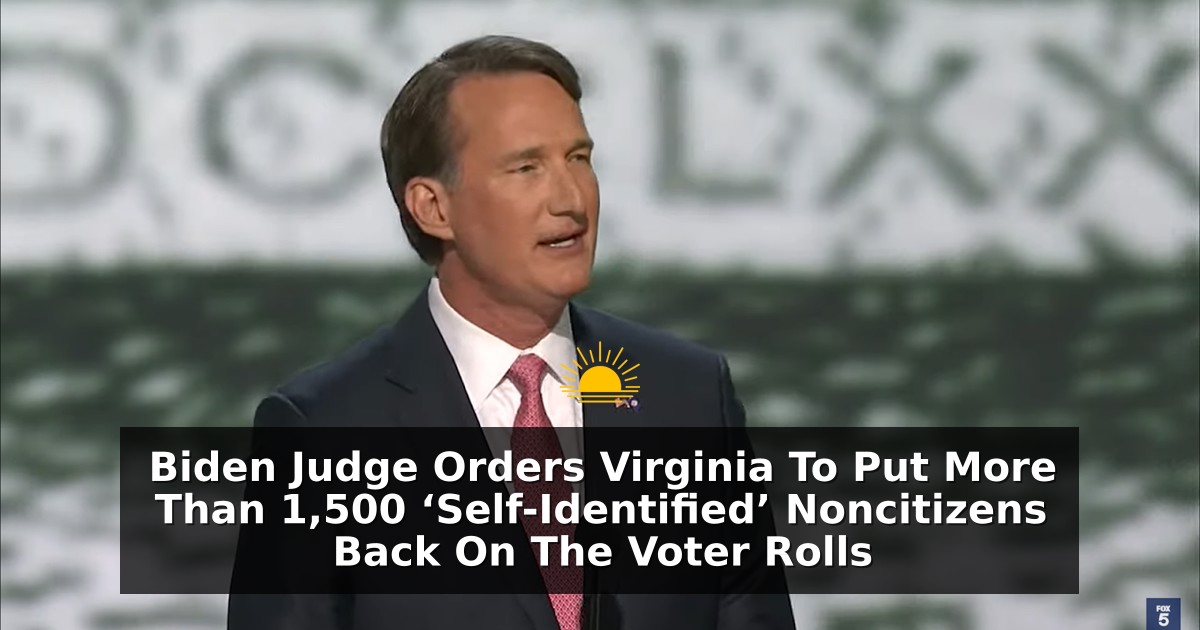
A federal judge ordered Virginia to restore more than 1,500 people the state had removed from its voter rolls after they were flagged as self-identified noncitizens, intensifying an already sharp pre-election fight over list maintenance, federal law, and how quickly states may purge ineligible registrants.
Republican Gov. Glenn Youngkin denounced the order in a statement that framed the ruling as an eleventh-hour intervention. “Let’s be clear about what just happened: only eleven days before a Presidential election, a federal judge ordered Virginia to reinstate over 1,500 individuals — who self-identified themselves as noncitizens — back onto the voter rolls,” Youngkin said. His office cast the removals as routine cleaning of people who had indicated they were not citizens, not as a partisan strike against eligible voters.
The Justice Department under the Biden-Harris administration had sued Virginia the prior week, asking the court to stop the state Department of Elections from removing noncitizens and other ineligible voters so close to Election Day. Federal lawyers argued the removals ran afoul of the National Voter Registration Act of 1993, which limits how and when states may systematically remove names from registration lists in the run-up to a federal election. Virginia officials countered that they were acting on affirmative indications of noncitizenship rather than speculative matching alone.
At the center of the dispute is a familiar tension in election administration. States are expected to keep accurate rolls so that ineligible people do not remain registered, yet federal law also guards against aggressive purges that could sweep up eligible citizens shortly before they try to vote. The NVRA’s quiet-period rules were written after decades of both bloated lists and wrongful removals. Judges interpreting those rules must weigh documentary evidence, timing, and the risk of disenfranchisement against the risk of ineligible ballots.
Youngkin’s administration has made list maintenance a public priority, arguing that self-identification as a noncitizen is among the clearest signals a registrar can receive. Voting-rights groups and the Justice Department have warned that databases and affirmation workflows are imperfect, that naturalized citizens can be miscoded, and that last-minute removals leave little time to cure errors. The Friday order sided with the federal request to put the contested names back on the rolls before November, at least pending further proceedings.
Practically, restoring 1,500-plus registrations does not automatically mean those people will cast ballots. It means local registrars must treat them as registered again for the impending election unless and until a lawful, timely process removes them. Poll workers follow the roll in front of them. If a name is present, the voter is generally offered a regular or provisional ballot according to local practice and ID rules. If a name is absent, the voter may be turned away or limited to a provisional option that is harder to count.
Virginia’s case sits in a national pattern. Multiple states controlled by both parties have faced Justice Department or private lawsuits over NVRA timing, motor-voter cancellations, and citizenship checks. Courts often focus less on the political branding of “noncitizen voting” than on whether the state’s method and calendar complied with federal statute. A ruling days before a presidential election inevitably becomes campaign fuel regardless of the technical holding.
For Virginia voters, the immediate takeaway is narrower: the Department of Elections and local registrars must implement the reinstatement, communicate with localities, and prepare for challenges or provisional ballots if someone appears whose eligibility is still disputed. Candidates and party lawyers will watch canvass rules closely. Election officials, already staffing early voting and preparing Election Day precincts, must absorb a midstream list change without disrupting sites that are already open.
Youngkin’s statement suggests the Commonwealth will continue to argue that self-identified noncitizens should not remain on the rolls and that federal timing rules should not freeze obvious ineligibility. The Justice Department’s posture suggests it will continue to treat near-election removals as presumptively suspect under the NVRA, even when the state cites citizenship indicators. That clash is now a live court order, not merely a press release fight.
Certification of the presidential election in Virginia will still rest on ballots cast by people the system treats as eligible on Election Day. Whether the reinstated names produce a measurable vote total is unknowable from the order alone. What is knowable is that list maintenance, long a back-office chore, is again a front-page legal battle in one of the country’s most watched states, with a federal judge’s deadline measured in days rather than months.
Virginia Biden Democrat Democrats Election Day Elections General Election Glenn Youngkin Governor Immigration Jason Miyares Law Enforcement Miyares presidential election Republican Senator State Department supreme court Tim Kaine Violations Virginia Voter Rolls voting