Virginia Advances Bill Mandating Multilingual Food Allergy Notices in Restaurants
Updated
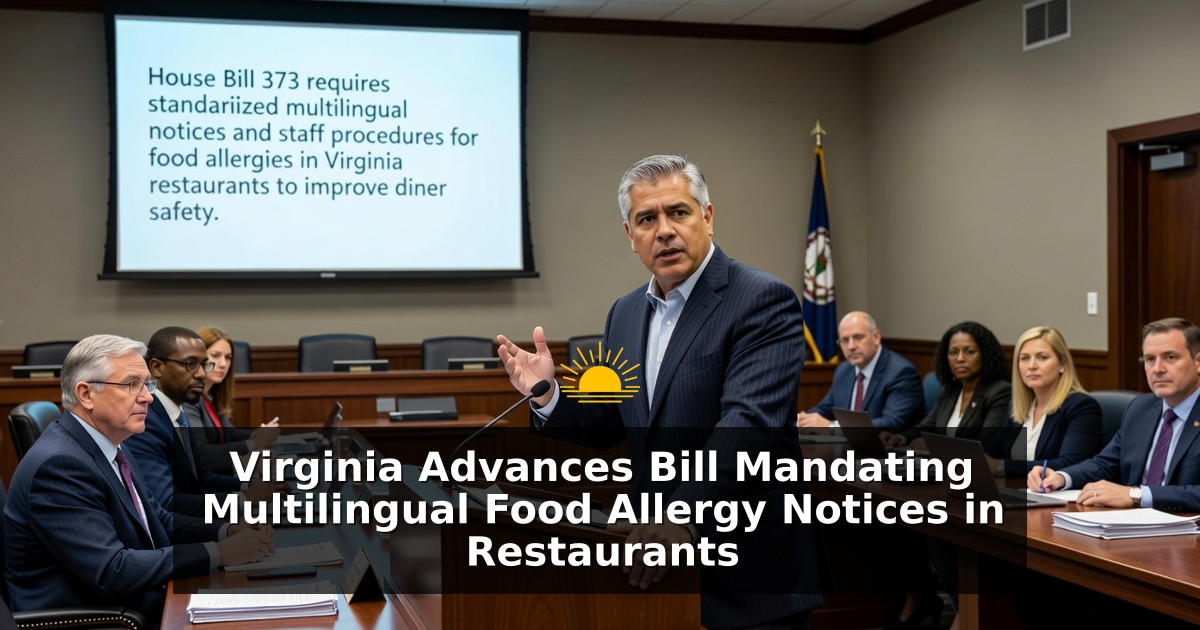
Virginia lawmakers are advancing House Bill 373, legislation designed to improve communication about food allergies in restaurants across the state. Patroned by Delegate Martinez, the measure directs the State Health Commissioner to publish a multilingual notice on the Department of Health website. This notice will outline clear procedures for restaurant staff to follow whenever a customer reports a food allergy. The bill further requires every restaurant to display the notice in a conspicuous location so that both employees and patrons can easily reference it. Supporters of the effort emphasize that consistent guidance can help reduce preventable allergic reactions during dining experiences.
Under the proposed requirements, restaurants must also include a specific phrase on menus or on posted signs that remain visible throughout the establishment. The mandated wording reads, "If you have a food allergy, please notify us," and must appear along with any applicable translations. This dual approach of staff-facing procedures and customer-facing signage aims to create a uniform standard rather than leaving allergy communication to individual restaurant policies. Health officials note that food allergies affect a significant portion of the population and that clear notification protocols can make a measurable difference in outcomes. The legislation seeks to close gaps that currently exist when language barriers or unclear staff training leave diners uncertain about how to report their needs.
Food allergy prevalence continues to shape public health discussions nationwide and within Virginia. Millions of Americans live with conditions that can trigger severe reactions to common ingredients such as peanuts, tree nuts, shellfish, milk, eggs, wheat, soy, and sesame. In restaurant settings, cross-contact during food preparation remains a leading cause of accidental exposure. By standardizing the way staff receive and respond to allergy reports, Bill 373 intends to lower those risks for residents and visitors who dine out regularly. The multilingual component acknowledges Virginia’s diverse communities and the reality that English may not be the primary language for every customer or employee.
The State Health Commissioner’s published notice will serve as the central reference document for the new requirements. Once available on the Department of Health website, the notice is expected to detail step-by-step actions staff should take after a customer discloses an allergy. Those steps typically include verifying ingredients, preventing cross-contact, and communicating clearly with kitchen personnel. Restaurants will then be obligated to post that same notice where employees can consult it during service. Consistency across establishments is viewed as essential so that diners encounter the same expectations whether they visit a small independent eatery or a large chain location.
During recent subcommittee consideration, members reviewed the bill’s provisions and voted unanimously 9 to 0 to recommend reporting it. A subsequent motion and second advanced the measure for further action. The clean vote reflected broad agreement that clearer allergy protocols serve the public interest without imposing overly complex burdens on restaurant operators. Industry representatives have long recognized that food allergies represent both a safety concern and a customer-service priority. Many establishments already train staff on allergen awareness; the bill simply seeks to make core elements of that training uniform and visible.
Implementation would place practical responsibilities on restaurant owners and managers. They must ensure the required phrase and its translations appear on menus or in conspicuous posted signs. They must also keep the official Department of Health notice displayed for staff reference. These steps are intended to create multiple layers of communication so that a customer’s allergy disclosure is less likely to be overlooked during busy service periods. Public health experts observe that even simple written prompts can increase the likelihood that diners speak up and that staff respond appropriately. The legislation therefore pairs passive signage with active procedural guidance.
Virginia’s restaurant sector employs tens of thousands of workers and serves millions of meals each year. Any change in required signage or staff procedures naturally draws attention from both operators and consumer advocates. Bill 373 attempts to strike a balance by relying on a single state-issued notice rather than requiring each business to develop its own materials from scratch. The multilingual aspect further reduces the chance that language differences will impede effective communication. Advocates for allergy awareness have repeatedly stressed that standardized language helps families and individuals feel more confident when eating away from home.
Broader context surrounding food allergy management includes ongoing education campaigns and voluntary industry guidelines. National organizations regularly publish best practices for allergen control in food service, yet adoption remains uneven. State-level mandates such as the one proposed in House Bill 373 can accelerate the spread of those practices. By placing the notice on an official government website, the bill also creates a living resource that the Health Department can update as medical understanding or best practices evolve. Restaurants would then simply maintain the current version of the posted materials.
The measure does not alter existing food safety inspection frameworks but adds a focused layer addressing allergy communication. Inspectors and operators alike would gain a clear benchmark for compliance. Customers, in turn, would encounter the same invitation to notify staff regardless of which Virginia locality they visit. That predictability is especially valuable for travelers and for residents who frequent multiple dining establishments. Public comments during the legislative process have highlighted personal stories of near-misses and the relief that clearer protocols can provide.
As the bill moves forward, stakeholders will continue examining how the notice is drafted and how translations are selected. The core requirements remain straightforward: publish procedures, post them conspicuously, and display the designated customer phrase with translations where applicable. These elements collectively aim to reduce preventable allergic incidents and to foster a dining environment in which safety information is readily accessible. Delegate Martinez’s patronage of the legislation underscores the priority placed on practical public health measures that affect daily life for many Virginians.
Observers note that successful implementation will depend on clear guidance from the Department of Health and on straightforward compliance pathways for restaurants of every size. The unanimous subcommittee vote signals early consensus that the goals of the bill are both attainable and worthwhile. Further legislative steps will determine the final form of the requirements and the timeline for restaurants to meet them. In the meantime, the discussion itself has elevated awareness of how small changes in communication can yield meaningful improvements in customer safety.
House Bill 373 represents a targeted effort to standardize allergy-related interactions between restaurant staff and the public. By combining an official multilingual notice with mandatory customer-facing language, the proposal seeks to make Virginia dining establishments more responsive to a common health concern. The 9-to-0 subcommittee recommendation and subsequent motion to advance the bill mark concrete progress toward that objective. Continued attention to the details of drafting and rollout will shape how effectively the new standards protect diners in the years ahead.
bill conspicuous location customer Delegate Martinez Department of Health food allergy menus motion multiple language notice notice phrase post procedures restaurant staff Restaurants State Health Commissioner subcommittee translation vote website