Virginia Bill Targets Nitrous Oxide Sales to Curb Recreational Abuse
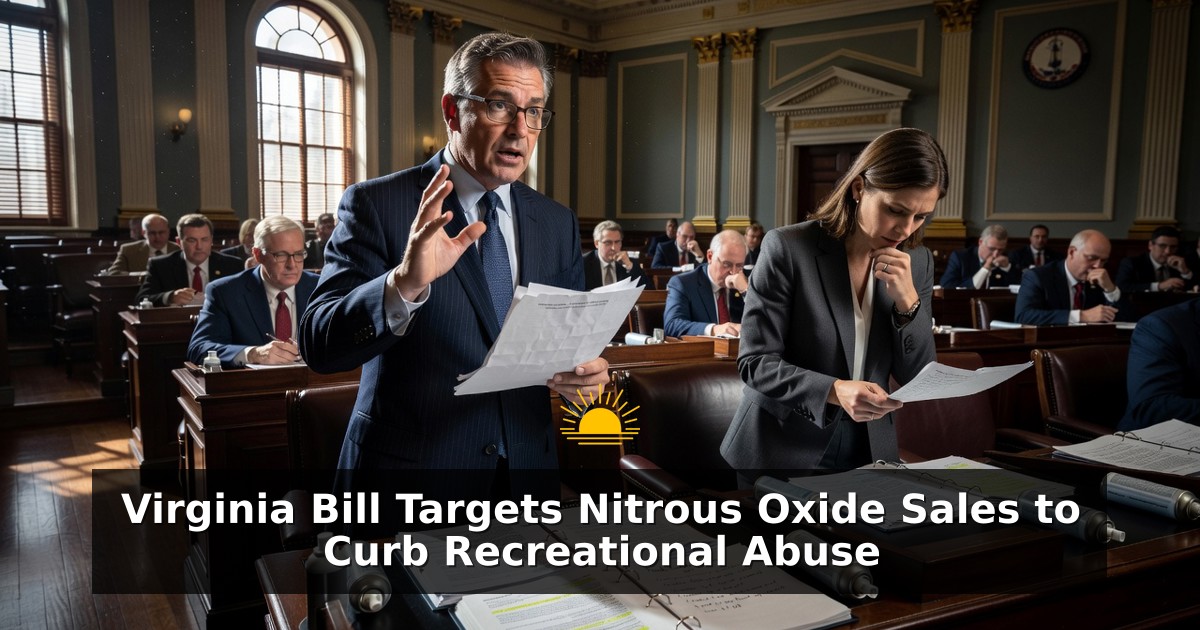
Virginia lawmakers are examining a measure that would impose major restrictions on the sale of nitrous oxide amid growing concerns over its recreational misuse. The proposal centers on an amendment that bars the sale of the substance to any individual for purposes of intoxication, while still allowing access for legitimate applications. Officials described the effort as a way to close existing loopholes that have permitted easy acquisition for non-approved uses. Supporters frame the change as necessary to protect public health without eliminating practical consumer and commercial options.
The discussion occurred during a Criminal Subcommittee session where delegates reviewed the scope of the ban. One House of Delegates member clarified that the amendment prohibits selling nitrous oxide to any person regardless of age unless the transaction serves culinary or industrial needs. This approach aims to stop sales intended to produce a psychological high or state of inebriation. The language was refined in coordination with other stakeholders to strengthen its legal durability and practical enforcement.
Nitrous oxide, commonly known in consumer form as whipped cream chargers or similar canisters, has long held accepted roles in food preparation and certain technical fields. Home users often purchase reusable dispensers for creating whipped toppings and other culinary results rather than single-use products. Industrial applications include specialized manufacturing and automotive contexts where the gas serves functional purposes. The bill seeks to preserve these channels while drawing a clear line against diversion into recreational settings.
Concerns arose during debate about whether everyday household purchases might inadvertently fall under the restrictions. A participant noted that many non-business individuals buy the product for home cooking and related tasks that do not involve altering mental states. In response, another delegate explained that the key distinction rests on intended use. Sales remain permissible when buyers are not seeking to inebriate themselves or modify psychological excitement, according to the clarified wording.
### Health and Safety Drivers Behind the Proposal
Public health data has documented rising incidents linked to nitrous oxide inhalation for euphoric effects. Prolonged or repeated exposure can lead to vitamin B12 deficiency, neurological impairment, and in severe cases oxygen deprivation injuries. Emergency responders have reported cases involving young adults who obtain the canisters from retail outlets with minimal oversight. Lawmakers view the sales ban for intoxication purposes as one tool to reduce these preventable harms across communities.
The amendment reflects a stringent stance by applying the prohibition broadly rather than limiting it solely to minors. By covering any person, the measure attempts to eliminate secondary markets and casual transfers that previously undermined narrower age-based rules. Advocates argue this comprehensive coverage better addresses the full pattern of misuse observed in recent years. At the same time, explicit carve-outs for culinary and industrial buyers are intended to avoid disrupting legitimate supply chains.
Retailers and suppliers would need to verify that purchases align with approved purposes under the proposed framework. This could involve documentation or point-of-sale protocols that distinguish professional and household food uses from other requests. The refined statutory language was developed with input aimed at surviving potential legal challenges while remaining workable for businesses. Officials expressed hope that the careful drafting would support smooth implementation if the bill advances.
### Balancing Consumer Access and Regulatory Goals
Delegates acknowledged the popularity of nitrous oxide products among home cooks who prefer reusable systems over disposable alternatives. These consumers rely on the chargers for routine meal preparation and entertaining without any connection to intoxication. The bill’s supporters insisted that such ordinary activity stays outside the ban because it lacks the intent to produce inebriation. Clear definitions within the text are meant to give both sellers and buyers confidence about compliant transactions.
Similar regulatory efforts in other jurisdictions have sought to control the substance after spikes in recreational popularity. Virginia’s version emphasizes purpose-based restrictions rather than an outright product prohibition. This design allows continued availability through proper channels while targeting the specific behavior of using the gas to achieve a high. Subcommittee members indicated that further review would ensure the final wording achieves that balance effectively.
Enforcement considerations include training for retailers and coordination with local authorities already familiar with controlled substance diversion issues. The proposal does not criminalize possession for legitimate ends, focusing instead on the point of sale. By concentrating on commercial transactions tied to improper intent, sponsors hope to shrink the supply reaching misuse without creating unnecessary barriers for cooks, caterers, and industrial operators.
As the measure proceeds, additional testimony may address implementation details and potential economic effects on suppliers. The core objective remains consistent: prevent the sale of nitrous oxide when the buyer’s goal is intoxication. Culinary and industrial exceptions stand as the primary safeguards for accepted uses. Lawmakers continue to refine the approach so that the resulting statute can withstand scrutiny and deliver measurable reductions in abuse-related incidents.
The subcommittee exchange underscored the challenge of crafting rules that are both broad enough to close loopholes and precise enough to protect ordinary consumers. Participants repeatedly returned to the intent standard as the operative test. When a purchase supports whipped cream preparation or comparable tasks, it falls outside the prohibition. Only sales linked to altering human psychological states or producing inebriation would be barred under the amendment as explained.
Observers note that successful passage would place Virginia among jurisdictions taking firmer action on inhalant misuse. The combination of a universal sales restriction and explicit legitimate-use allowances represents a calibrated response to documented problems. Further legislative steps will determine the final contours of the policy and its timeline for taking effect across the state. Stakeholders on all sides are expected to monitor the bill’s progress closely as it moves through remaining committee and floor stages.
ban buy carved out catering consumers delineation home consumers home use human excitement individuals inebriate Madam Chair non-businesses one time use pass muster professional services psychological reusable whipped cream