Virginia Bill Seeks to End District-Based Seats on Medical Board
Updated
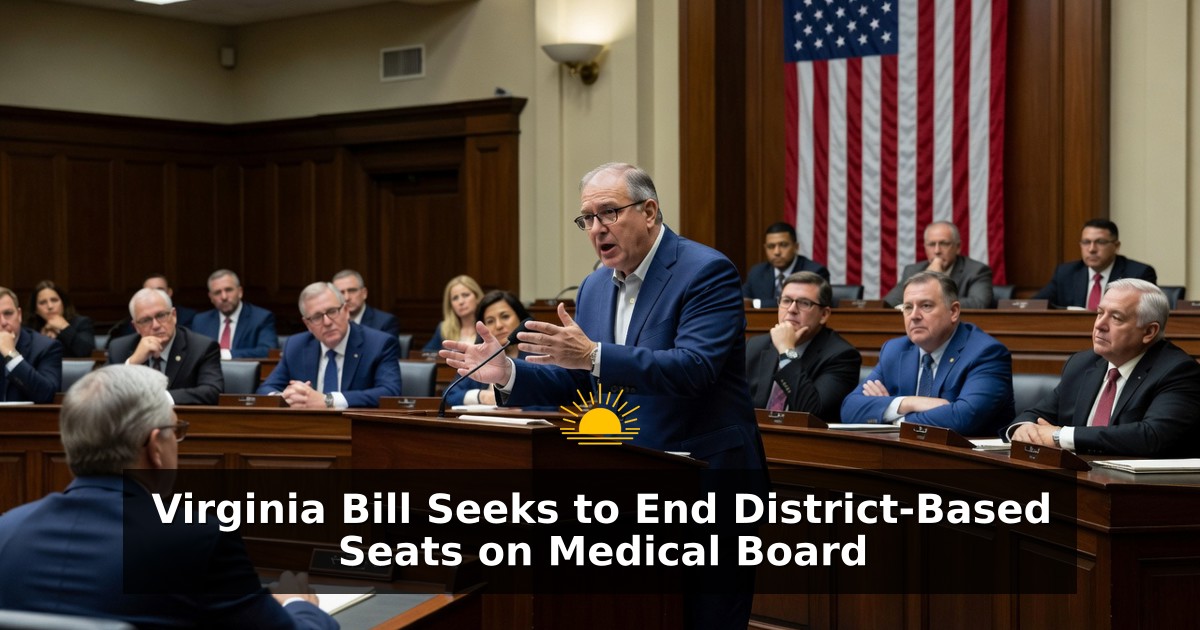
A bill introduced during the February 2026 regular session of the Virginia General Assembly would remove the existing rule that the Board of Medicine must include one member from every congressional district in the state. The measure has drawn formal opposition on the floor, with lawmakers highlighting potential effects on geographic balance in decisions that govern medical practice across Virginia. Delegate Wren rose to speak against the legislation, emphasizing its implications for areas outside Northern Virginia. The Board of Medicine holds authority over who may practice medicine, the locations where practice is permitted, and the conditions attached to that practice. These regulatory functions carry particular weight in regions where healthcare resources are already stretched thin.
Opposition centers on the loss of a structural mechanism that has ensured voices from all parts of the commonwealth participate in board deliberations. Delegate Wren described the current district requirement as the only formal guarantee that rural Virginians maintain representation on the panel. Rural communities make up the majority of the state's geography beyond the Northern Virginia corridor. In many of these localities the nearest medical specialist may be an hour distant by car. A nurse practitioner frequently serves as the sole healthcare provider available within an entire county.
Healthcare Access Challenges in Rural Virginia
Access disparities between urban and rural parts of Virginia have been documented for years through state health department reports and independent analyses of provider distribution. Specialists in fields such as cardiology, oncology, and orthopedics tend to concentrate in population centers, leaving outlying counties dependent on primary care extenders and telehealth links. Board decisions on licensing, scope of practice, and facility standards directly shape whether those limited local resources can expand or must contract. Removing guaranteed district seats could alter the mix of professional experience brought to those deliberations. Lawmakers from rural districts have long pointed to this dynamic when defending geographic criteria for appointments.
The legislation has been characterized by its backers as a modernization step intended to streamline board composition. Critics counter that no congressional district has been shown incapable of supplying a qualified physician willing to serve. Delegate Wren noted during floor remarks that the absence of any such demonstration leaves the practical purpose of the change unclear. The existing framework simply requires one member drawn from each district, a rule framed solely around achieving balanced representation. That principle, opponents maintain, remains relevant given persistent differences in healthcare infrastructure between regions.
Governor Appointment Authority and Board Composition
Under the proposed revision the governor would gain broader discretion to fill every seat on the Board of Medicine without the congressional district constraint. Future governors of either party would inherit the same expanded latitude. Delegate Wren argued that this shift hands unchecked authority to the executive branch over a body whose rulings affect daily medical availability. The board currently operates with a mix of physicians, other licensed professionals, and citizen members appointed to staggered terms. Geographic diversity has functioned as one of several statutory checks on the appointment process.
Virginia's congressional districts themselves reflect a range of demographic and economic conditions, from densely populated suburbs to sparsely settled farming and mountain communities. Ensuring at least one board member understands the practical constraints of practicing in low-density areas has been cited as a safeguard against one-size-fits-all regulation. When a nurse practitioner constitutes the only on-site clinician in a county, rules governing collaborative agreements, prescribing authority, and continuing education carry immediate local consequences. Board members familiar with those settings can surface considerations that might otherwise receive less attention.
Broader Context of Medical Regulation in the Commonwealth
The Board of Medicine's responsibilities extend beyond individual licensure to include oversight of professional conduct, approval of training programs, and guidance on emerging practice models. In recent legislative cycles the General Assembly has examined telemedicine expansion, interstate compact participation, and workforce incentives aimed at underserved localities. Each of those topics intersects with the board's rulemaking role. Maintaining input from every congressional district has been presented as a method for keeping those discussions grounded in statewide realities rather than concentrated regional experience.
Delegate Wren stressed that the district rule exists for the straightforward purpose of representation and nothing more. Floor comments underscored that rural legislators on both sides of the aisle represent constituencies where travel times and provider shortages define everyday healthcare. The nearest hospital emergency department or specialty clinic often lies well outside county lines, elevating the stakes of any policy that influences where physicians choose to locate or how mid-level practitioners may operate. Opponents of the bill contend that eliminating the geographic mandate risks distancing the board from precisely those conditions.
Legislative observers note that appointment processes for professional boards frequently balance expertise, diversity of practice setting, and public accountability. Virginia statutes governing other health regulatory boards incorporate similar considerations to varying degrees. The current debate over the Board of Medicine therefore fits within a longer pattern of adjusting how citizen and professional input is structured. Whether the modernization rationale ultimately prevails will depend on further committee review and floor votes still ahead in the 2026 session.
Supporters of retaining the district requirement argue that qualified candidates exist in every corner of the state and that the administrative burden of locating them has never been demonstrated to outweigh the representational benefit. The absence of identified shortages of potential members from any district forms a central point in the opposition case. As the measure advances, lawmakers continue to weigh the value of formal geographic seats against calls for greater flexibility in gubernatorial selections. The outcome will shape how the Board of Medicine reflects the varied landscapes in which Virginians receive care.
board of medicine congressional district counties Democrats governor discretion house session legislative session modernization mr speaker nova nurse practitioner physician practice conditions Regular Session Representation republican governor rural virginians specialist access structural guarantee Virginia