Charlottesville Council Approves $4 Million Capital Contingency Allocation
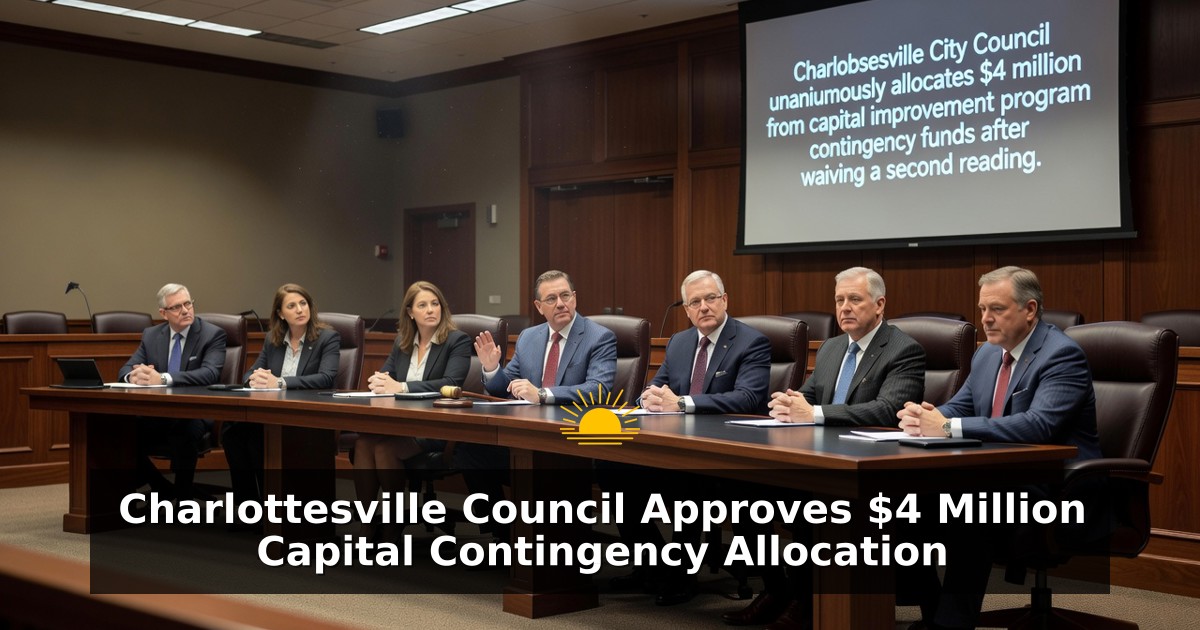
Charlottesville City Council approved a resolution to allocate $4 million from capital improvement program contingency funds during its meeting. The measure included a waiver of the standard second reading requirement and followed a recommendation from the city manager. Council members cast a 4-0 vote in favor of the allocation. The action underscores the city’s continued focus on maintaining and upgrading essential public assets.
Capital improvement programs serve as multi-year financial plans that guide major investments in physical infrastructure across Virginia localities. In Charlottesville these programs typically address roads, public buildings, parks, utilities, and related community facilities. Contingency funds within such programs provide flexibility when unexpected needs or timing opportunities arise. Officials use these reserves to keep priority projects moving without waiting for the next full budget cycle.
Council Procedural Steps and Vote
City councils in Virginia generally require two readings of significant funding resolutions to allow public notice and additional deliberation. Waiving the second reading is permitted when members determine that delay would hinder timely progress. In this instance the council accepted the city manager’s recommendation and proceeded directly to a final vote. The resulting 4-0 tally demonstrated clear consensus among the members present.
The allocation draws exclusively from existing contingency resources already designated inside the capital improvement program. No new taxes or external borrowing were authorized by the resolution. By tapping contingency dollars the council preserved the integrity of the broader capital plan while addressing immediate infrastructure priorities. Local government finance officers routinely monitor these balances to ensure sufficient reserves remain for genuine emergencies.
Infrastructure Priorities in Charlottesville
Charlottesville maintains an extensive inventory of public infrastructure that supports residents, businesses, and visitors. Streets, sidewalks, stormwater systems, and recreational spaces require steady reinvestment to remain safe and functional. Capital contingency allocations help the city respond to wear, weather-related damage, or evolving community needs between regular budget adoptions. The latest $4 million commitment continues that pattern of proactive maintenance and improvement.
Public spaces such as parks, plazas, and greenways form an important part of the city’s quality-of-life infrastructure. Enhancements to these areas often improve accessibility, environmental performance, and recreational opportunities. Funding drawn from capital contingency accounts can accelerate design, repair, or modest expansion work that might otherwise wait years. City staff evaluate project readiness and community benefit before recommending specific uses of contingency dollars.
Financial Context of the Capital Program
Virginia independent cities operate under balanced-budget requirements and carefully structured capital planning processes. Charlottesville’s capital improvement program outlines anticipated revenues, planned expenditures, and reserve policies over a multi-year horizon. Contingency lines exist precisely so that councils can authorize limited adjustments without reopening the entire plan. The $4 million action fits within those established parameters and does not alter long-term debt or tax-rate assumptions.
Transparency surrounding capital spending remains a core expectation of local governance. Meeting materials, manager recommendations, and recorded votes provide the public with a clear record of how contingency resources are deployed. Residents and oversight bodies can track subsequent project implementation through regular financial reports and capital status updates. This accountability framework helps maintain confidence in the stewardship of public funds.
Broader Community Development Goals
Infrastructure investment supports economic vitality, public safety, and environmental resilience throughout the city. Well-maintained roads and utilities reduce long-term repair costs and minimize service disruptions for households and employers. Upgraded public spaces encourage outdoor activity and strengthen neighborhood connections. The council’s allocation aligns with these overlapping objectives by directing resources toward tangible physical improvements.
City managers play a central role in evaluating capital needs and presenting options to elected officials. Their recommendations typically rest on staff assessments of project urgency, available balances, and alignment with adopted comprehensive plans. When councils accept such recommendations and waive additional readings, they signal both trust in the administrative analysis and a desire for efficient decision-making. The 4-0 outcome reflected that shared understanding.
Ongoing Oversight and Next Steps
Following approval, city departments begin the detailed work of obligating funds, issuing contracts, and scheduling construction or procurement activities. Progress is monitored through capital project dashboards and periodic reports back to the council. Any substantial change in scope or cost would require further legislative authorization. This layered oversight ensures that the $4 million remains dedicated to its intended infrastructure purposes.
Charlottesville’s approach mirrors practices used by many Virginia localities that maintain formal capital improvement programs. Contingency allocations of this scale are neither routine nor extraordinary; they represent a calibrated response to identified needs within an already approved financial framework. The unanimous vote and procedural waiver together illustrate how local governments balance deliberation with the practical demands of keeping public facilities in good working order.
Residents can expect future updates on specific project applications of the allocated funds as implementation advances. The council’s action adds measurable capacity to the city’s infrastructure toolkit while remaining firmly grounded in existing budgetary authority. Continued attention to capital planning will shape how Charlottesville stewards its physical assets in the years ahead.
allocate Allocates Capital capital improvement Charlottesville City City Council city manager council fund allocation funds improvement Improvements Million program reading Virginia vote voted waiving