Charlottesville Reviews Salvation Army Thrift Site for Shelter Expansion
Updated
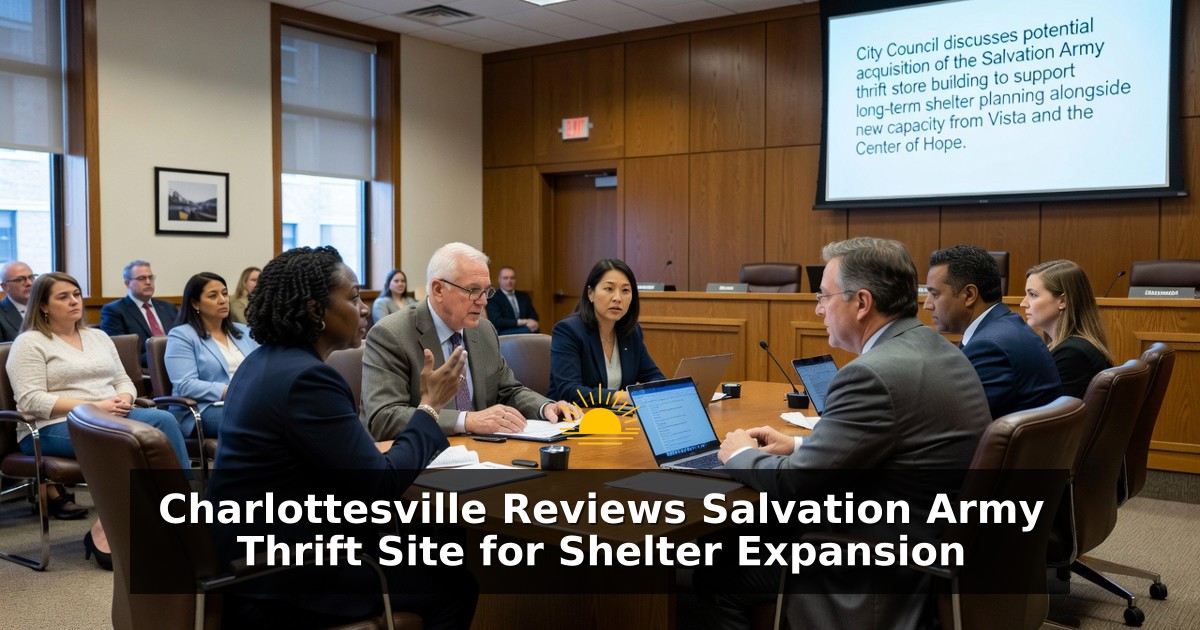
Charlottesville City Council members addressed the future of the Salvation Army thrift store building during their meeting on August 3, 2026. Officials confirmed the property continues to undergo examination for a range of potential municipal uses. Primary attention focused on how the site might support strategic shelter planning across the city. The conversation underscored sustained local interest in securing additional facilities that can meet evolving community needs.
The Salvation Army has signaled that a sale of the thrift store building remains possible. Organization representatives have linked any such transaction to closing an existing gap in their capital campaign. City leaders noted they raised the topic in part to explore whether a purchase could assist both parties. No final decision on ownership transfer has been reached at this stage.
Municipal interest in the property rests on multiple practical considerations connected to shelter operations. The building’s location and layout present options that could complement existing service networks. Officials described the review as part of broader long-term planning rather than an immediate acquisition push. Continued dialogue with the Salvation Army will shape any next steps.
Shelter Capacity Additions This Year
Vista is preparing to open during the current year and will expand overall shelter availability in Charlottesville. The new facility is expected to provide additional beds and support services for individuals experiencing homelessness. City planners view the opening as a meaningful increase in local capacity. Coordination with other providers aims to maximize the impact of this addition.
The Center of Hope is simultaneously working to add more high-barrier shelter beds. High-barrier settings typically include structured rules and on-site supports designed for residents who benefit from greater stability. These extra beds will help address specific segments of the unsheltered population. Together with Vista, the expansion reflects a multi-pronged approach to capacity building.
Context for Ongoing Shelter Planning
Charlottesville has maintained an active focus on homelessness response through partnerships between city government and nonprofit organizations. Point-in-time counts and service data regularly inform decisions about bed inventory and program design. Leaders have emphasized the value of flexible properties that can adapt to changing demand. The thrift store site is one of several options under informal review.
Any potential city use of the building would need to align with zoning, funding, and operational requirements. Staff continue to assess structural conditions, accessibility features, and renovation needs. Public investment decisions of this nature customarily involve multiple layers of analysis before formal proposals advance. Transparency in the process remains a stated priority for council members.
The Salvation Army has long operated thrift stores and social services in communities across Virginia. Proceeds from merchandise sales traditionally support local rehabilitation and assistance programs. Closing a capital campaign gap through a property sale would allow the organization to redirect resources toward core mission activities. City interest therefore intersects with the nonprofit’s own financial planning.
Broader Regional Housing Pressures
Like many independent cities in Virginia, Charlottesville faces constrained housing supply and rising costs that contribute to shelter demand. Local strategies often combine emergency beds, transitional programs, and pathways to permanent housing. Officials monitor regional trends to ensure city efforts remain coordinated with neighboring localities. Property evaluations such as the current thrift store review fit within that larger framework.
High-barrier and low-barrier shelter models each serve distinct client needs. The Center of Hope’s planned bed increase targets individuals who require more structured environments. Vista’s opening is anticipated to broaden options for other populations. Diversified capacity helps reduce reliance on any single facility and improves overall system resilience.
Funding for shelter initiatives typically draws from a mix of local general funds, state grants, and federal sources. Acquisition or adaptive reuse of an existing building can sometimes prove more cost-effective than new construction. Early conversations about the Salvation Army site allow staff to gather preliminary cost and feasibility data. Those findings would later inform any budget requests.
Community and Operational Considerations
Neighborhood impacts, transportation access, and proximity to support services factor into site selection for shelters. The thrift store building’s established commercial presence may ease certain transition concerns. City staff are expected to examine these variables carefully should formal negotiations begin. Stakeholder input usually accompanies major facility decisions.
The August 3 discussion remained exploratory and did not include binding commitments. Council members received updates on the status of talks and the parallel progress at Vista and the Center of Hope. Maintaining open communication with the Salvation Army was presented as essential. Future meetings may revisit the topic as new information becomes available.
Long-term shelter planning in Charlottesville also considers seasonal demand fluctuations and the needs of specialized populations. Properties that offer adaptable interior space provide operational flexibility. The thrift store site is being weighed against those criteria along with other potential locations. Comprehensive review helps ensure public resources are directed efficiently.
Partnerships between the city and established nonprofits have historically strengthened service delivery. The Salvation Army’s potential sale decision could create a rare opportunity for municipal acquisition. Officials framed their interest as mutually beneficial if terms can be aligned. Both organizations continue to evaluate whether the path forward serves their respective missions.
As Vista prepares to open and the Center of Hope expands high-barrier capacity, overall bed counts in Charlottesville are projected to rise this year. These developments reduce immediate pressure while longer-range facility options remain under study. The thrift store conversation forms one element of that extended planning horizon. City leaders indicated they will keep the public informed of significant progress.
Continued examination of the Salvation Army thrift store building illustrates the deliberate pace of local shelter strategy. Multiple reasons underpin the city’s interest, ranging from location attributes to timing with nonprofit capital needs. The absence of a finalized sale leaves room for further discussion and due diligence. Charlottesville’s approach prioritizes careful matching of facilities to documented community requirements.
August 2026 building sale capital campaign Center of Hope Charlottesville City Council community planning council meeting high barrier shelter homeless services local government property acquisition Salvation Army shelter shelter beds shelter expansion social services strategic planning thrift store Virginia Vista