Chesapeake Bay Ospreys Endure Their Worst Breeding Season on Record
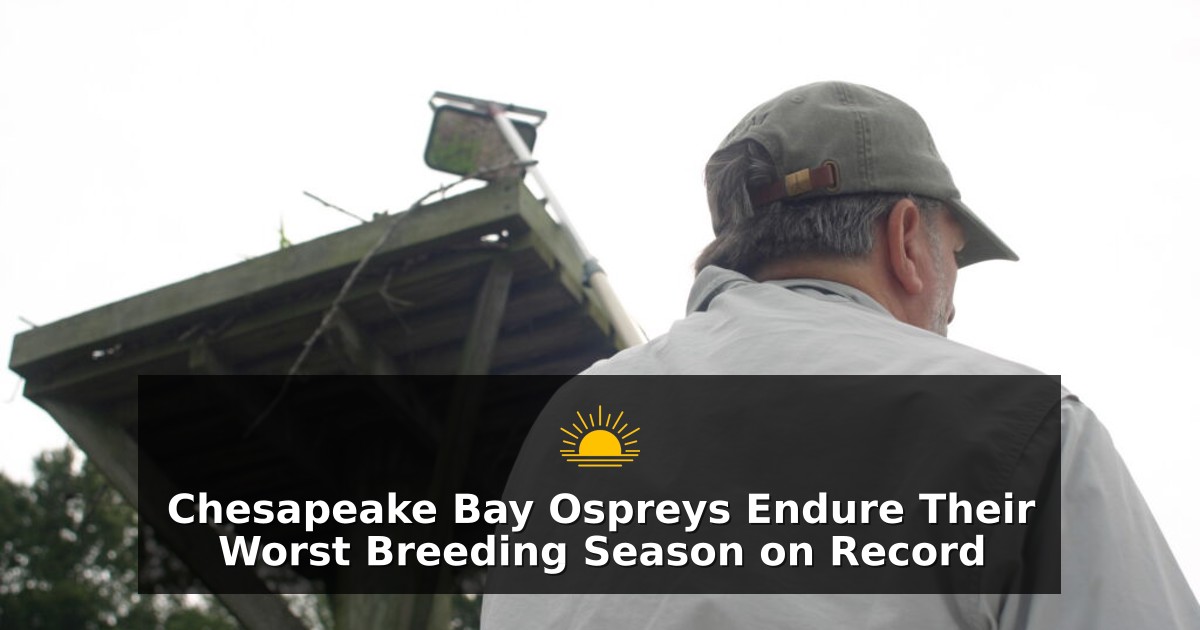
Ospreys along the Chesapeake Bay had a difficult breeding season this year, according to a monitoring effort that found the lowest reproductive results in its record. The finding does not mean the bird is disappearing from the bay, but it does show how quickly environmental stress can affect a species that has become a familiar part of the region's shoreline.
Ospreys build large nests near water and return to many of the same platforms each spring. Their diet depends heavily on fish, which makes them useful indicators of conditions in rivers, creeks and open bay waters. Volunteers and researchers can learn a great deal by tracking how many eggs hatch and how many Osprey pairs usually divide the work. One bird guards the nest while the other searches for food, returning with fish that can be torn into pieces for the chicks. A sudden change in weather can lengthen the time between meals. Small chicks are especially vulnerable because they need frequent feeding and cannot yet regulate their body temperature well.
Researchers caution against assigning the entire result to one cause. Wildlife populations respond to multiple pressures, including weather, prey availability, disease, pollution and disturbance near nest sites. A single season can be unusual, but repeated poor seasons would be more concerning.
The record is useful even when it is discouraging. Long-term observations help researchers separate a temporary bad year from a developing pattern. They can compare nest success with rainfall, temperature, fish surveys and water-quality measurements, then identify which conditions deserve closer attention.
Residents can help by giving nesting birds room during the breeding season, keeping boats away from active platforms and reporting damaged structures to local wildlife groups. Ospreys are protected birds, and people should not approach nests, handle chicks or attempt repairs without expert guidance.
The monitoring results also provide a reminder that conservation is not finished when a species becomes common again. Ospreys recovered dramatically after past declines linked to chemical pollution, but recovery does not make them immune to new pressures. Climate changes, shoreline development and altered fish habitat can all influence the next generation.
For the Chesapeake region, the immediate priority is continued observation and practical restoration. A bad season should prompt questions rather than panic. If scientists and communities can identify the causes, they may be able to improve nesting habitat, protect fish and reduce stress during the years when weather is hardest on the bay.
This article is an original rewrite based on recent Virginia Mercury reporting about the Chesapeake Bay osprey breeding season.Why the bay matters
The Chesapeake is shared by six states and the District of Columbia, yet local conditions can differ sharply. A tributary may have plentiful fish while another experiences warm water or low flow. That is why the monitoring network follows nests across a wide area instead of relying on one location.
The work also connects wildlife observations to broader efforts to restore the bay. Cleaner water, healthier wetlands and stable fish populations benefit people as well as birds. Ospreys are visible ambassadors for those goals because their nests are easy to observe and their behavior can be recorded without capturing the animals.young survive long enough to leave the nest.
A season marked by stress
The latest results came after a year marked by heat, drought and shifting weather. Low rainfall can change the flow of rivers and affect water temperature. Storms can damage nests at the moment birds are trying to protect eggs or feed young. Even when adult birds remain healthy, a shortage of accessible fish can make it difficult to raise a full brood.
Virginia Chesapeake Bay Drought Food Health Health Care Repairs Storms Virginia Water