House Bill 436 Sparks Concerns Over University Project Financing
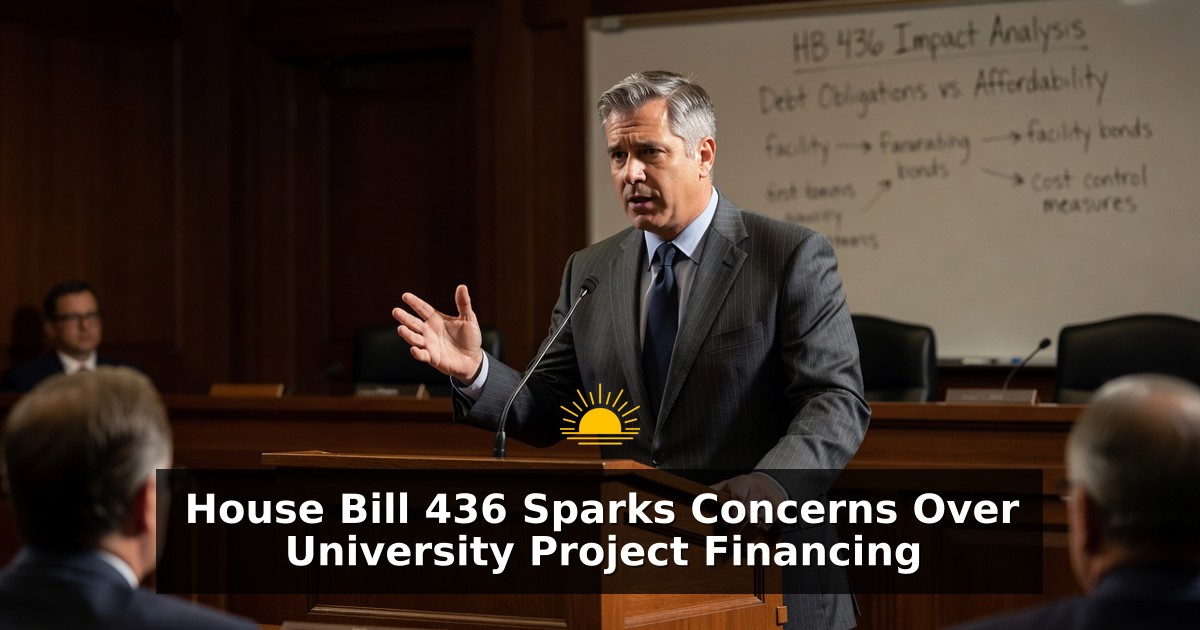
A representative appearing before the Higher Education Subcommittee expressed appreciation for legislative efforts aimed at controlling college costs through tuition and fees while raising pointed concerns about House Bill 436. The measure would alter established methods of financing capital projects to which institutions have already committed resources and debt. Officials indicated that these changes could complicate management of outstanding obligations and create immediate operational difficulties. The discussion underscored the delicate balance between expanding access and preserving stable financial structures that support essential campus infrastructure.
Virginia’s public colleges and universities routinely finance major facilities through a combination of state support, institutional reserves, and long-term debt instruments. Student health centers represent one category of project frequently funded in this manner because they deliver critical medical, counseling, and wellness services to enrolled students. Altering the rules that govern how future debt service is structured can affect bond covenants, credit ratings, and cash-flow projections already locked into multi-year budgets. Institutions therefore monitor any legislative shift that touches capital financing with particular care.
## Existing Commitments and Debt Structures
The representative specifically cited debt already issued for a student health center as an example of the practical problems the bill could generate. Under current arrangements, universities schedule principal and interest payments according to predictable revenue streams that include designated fees and auxiliary enterprise income. House Bill 436 would revise those financing pathways, potentially requiring renegotiation of terms or reallocation of funds that have already been pledged. Such mid-course adjustments introduce uncertainty at a time when many campuses are still managing the residual effects of earlier enrollment fluctuations and construction cost inflation.
Financial officers at public institutions must also consider the broader portfolio of outstanding bonds when evaluating new legislation. A change that appears modest in isolation can cascade across multiple projects if rating agencies reassess overall debt capacity. Maintaining favorable credit ratings remains essential because it directly influences the interest rates institutions pay on future borrowings. Any perception of instability in the financing framework can therefore translate into higher long-term costs for students and taxpayers alike.
## Student Health Centers and Campus Infrastructure
Student health centers have become central to contemporary campus life, offering primary care, mental-health counseling, and preventive services that reduce barriers to academic success. Construction and renovation of these facilities often rely on revenue bonds backed by student fees that are carefully calibrated to remain affordable. When legislation modifies the allowable uses or repayment structures tied to those fees, institutions face the prospect of either raising other charges or deferring maintenance on existing buildings. Both outcomes run counter to the shared goal of keeping higher education accessible.
Beyond health centers, universities carry debt for residence halls, dining facilities, research laboratories, and classroom buildings. Each of these assets contributes to the educational mission and to the overall attractiveness of the institution for prospective students. Stable financing rules allow planners to sequence projects over decades, matching debt service to projected enrollment and auxiliary revenues. Sudden statutory changes disrupt that long-range planning and can leave partially completed initiatives in precarious positions.
## Affordability Goals and Legislative Intent
Lawmakers have repeatedly emphasized the importance of restraining growth in tuition and mandatory fees so that Virginia families can anticipate college costs with greater certainty. The representative acknowledged that objective and voiced support for continued dialogue on affordability and access in the months ahead. At the same time, the testimony made clear that well-intentioned reforms must be examined for unintended consequences on projects already under way. Preserving the integrity of existing financial commitments is viewed as a prerequisite for any sustainable expansion of student aid or cost-containment measures.
National data consistently show that capital costs and deferred maintenance represent significant pressure points for public higher education budgets. Virginia institutions have worked to limit the share of those costs passed directly to students, yet they still require reliable mechanisms for issuing and servicing debt. House Bill 436’s proposed alterations therefore sit at the intersection of two legitimate public priorities: protecting taxpayers and current students from sudden fee increases, and ensuring that campuses can continue to modernize facilities that support learning and well-being.
## Looking Ahead to Further Discussions
The representative closed by expressing hope that stakeholders could reconvene in the coming months to address affordability and access in a comprehensive manner. That invitation suggests an openness to refine the bill or to develop companion measures that safeguard existing debt structures while still advancing cost-control objectives. Subcommittee members customarily use such interim periods to gather additional fiscal impact statements, bond-counsel opinions, and institutional data before deciding whether to advance legislation.
Observers of Virginia higher-education policy note that successful reforms typically emerge from iterative conversations among legislators, university finance officers, students, and rating agencies. The concerns articulated about House Bill 436 fit within that established pattern of careful scrutiny. By identifying concrete examples such as student-health-center debt, the testimony supplied a tangible reference point for subsequent analysis. Continued engagement offers the prospect of aligning financing rules with both fiscal prudence and the enduring goal of affordable public higher education.
In summary, the hearing highlighted the tension between innovative policy proposals and the practical realities of managing long-term institutional debt. House Bill 436 would reshape financing practices that undergird projects already under way, raising legitimate questions about transitional impacts. At the same time, the expressed willingness to keep discussing affordability signals that common ground may yet be found. The coming legislative months will determine whether adjustments can be crafted that protect existing commitments while still advancing the shared interest in accessible college education for Virginia students.
Affordability affordable bill colleges Debt delegate Elizabeth Hooper fees finance projects future debt Legislation Madam Chair Morgan opposition Patron Student Health Center subcommittee transparency tuition Virginia Tech