Virginia Delegate Presses House for Car Tax Relief Amid Affordability Push
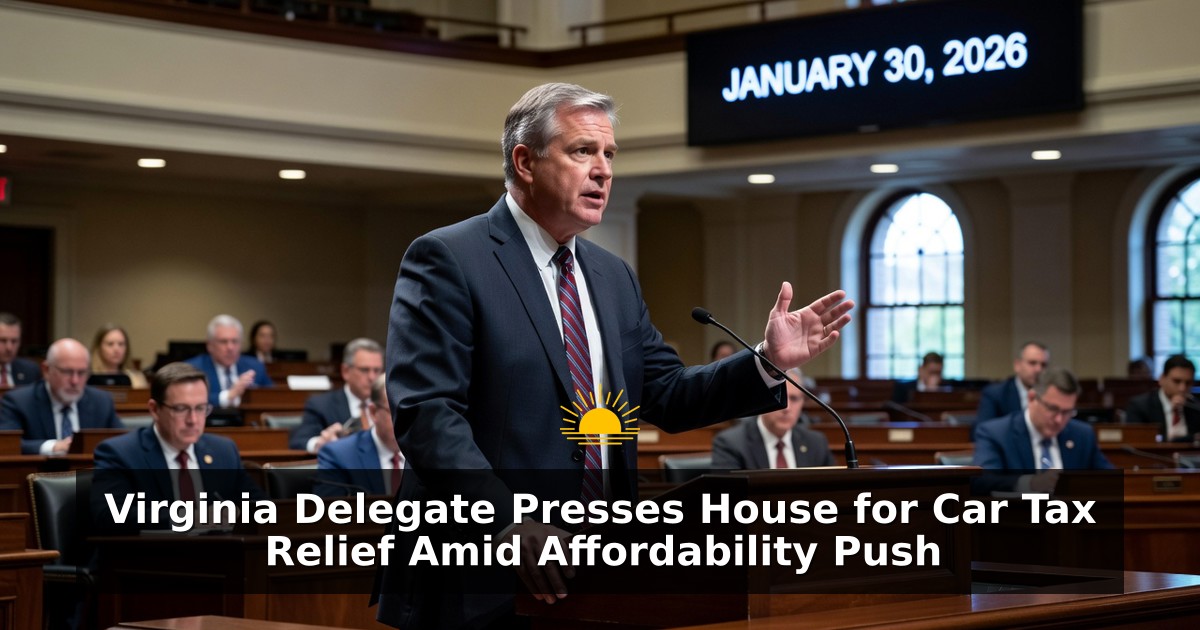
Delegate Terry Kilgore of Scott County addressed the Virginia House of Delegates on January 30, 2026, during a regular session, pressing colleagues to advance measures that would reduce or eliminate the personal property tax on vehicles commonly known as the car tax. He framed the issue as central to the session’s repeated emphasis on making life more affordable for residents across the commonwealth. Kilgore argued that continued study of the tax’s costs was unnecessary because lawmakers already understand its fiscal impact. He called instead for concrete steps within the ongoing budget process to deliver relief. His remarks underscored a long-standing point of contention in Virginia fiscal policy that affects vehicle owners in every locality.
The car tax in Virginia is a local personal property tax levied on automobiles, trucks, and certain other vehicles, with rates and assessment practices set by cities and counties. For decades it has ranked among the most visible and frequently criticized levies faced by ordinary households, because the annual bill arrives separately from income or sales taxes and can rise with vehicle value assessments. Past statewide efforts have sought to cap, reimburse, or phase out portions of the tax, reflecting bipartisan recognition of its burden on working families and retirees. Kilgore’s speech revived that debate by linking immediate action to the broader affordability agenda announced for the 2026 session. He maintained that incremental relief could begin without further delay.
Affordability Focus and Rejection of Further Study
Kilgore opened by noting that lawmakers had heard repeatedly that the current session should prioritize affordability for Virginia citizens. He contended that genuine progress on that goal required starting to do away with the car tax rather than postponing decisions. According to his floor remarks, additional studies would only kick the can down the road when the costs are already well known. He pointed out that an incremental approach could begin by exempting or reducing the tax on vehicles valued up to five thousand dollars, referencing a bill previously advanced by the delegate from Salem. Such a threshold, he suggested, would provide meaningful help to many households while remaining fiscally manageable. The argument positioned the car tax as a direct lever for lowering everyday expenses.
Economic analyses of Virginia’s tax structure have long shown that personal property taxes on vehicles disproportionately affect middle-income families who rely on cars for work and daily life. Local governments depend on the revenue for schools, public safety, and infrastructure, which complicates full repeal and explains why prior reforms often took the form of state reimbursements to localities. Kilgore acknowledged the need for careful budgeting yet insisted that the known price tag should not prevent action this year. He urged the majority party to examine options inside the budget process so that relief could be enacted without waiting for another study cycle. The speech portrayed delay as inconsistent with the session’s stated priorities.
Incremental Steps and Budget Opportunities
Rather than demanding immediate total elimination, Kilgore advocated beginning with modest, achievable reductions that could expand over time. He specifically highlighted the five-thousand-dollar starting point associated with the Salem delegate’s earlier proposal as a practical entry point. This phased method, he said, would allow the General Assembly to test fiscal impacts while still delivering tangible savings to vehicle owners. By embedding the change in the budget, lawmakers could pair tax relief with corresponding revenue adjustments or spending priorities. Kilgore expressed hope that such an approach would attract support across party lines and avoid prolonged procedural hurdles. The emphasis remained on starting the process during the present legislative calendar.
Virginia’s experience with car-tax relief dates back to earlier administrations that introduced partial reimbursements and assessment caps, demonstrating both the political popularity and the administrative complexity of reform. Localities have varied widely in how they assess vehicles and set rates, creating uneven burdens that statewide legislation seeks to address. Kilgore’s call aligned with that history by favoring incrementalism over abrupt change. He stressed that citizens already feel the pinch of the tax and that further research would not alter the fundamental case for reduction. Integrating the measure into budget negotiations, he argued, offered the most direct path to results before the session adjourns.
Campaign Commitments and Bipartisan Appeal
Kilgore reminded colleagues that the governor had publicly supported car-tax relief during the preceding campaign, creating an expectation of follow-through. He framed the issue as one that should transcend partisan divisions and invited the majority party to join in advancing legislation. The delegate asked members to work together in a bipartisan manner and to conduct the discussion courteously while still achieving passage this year. His closing appeal centered on delivering financial relief that ordinary Virginians could notice in their household budgets. By tying the proposal to both campaign promises and the session’s affordability theme, he sought to build momentum for concrete votes.
Observers of Virginia politics note that vehicle personal property taxes remain a perennial campaign topic precisely because they are highly salient to voters. Successful past reforms have typically required compromise between state budget writers and local officials who fear revenue loss. Kilgore’s remarks did not outline a full financing plan but insisted that the necessary figures are already available and that the budget process is the proper venue for final decisions. He reiterated that studying the matter repeatedly serves no purpose when the goal of greater affordability is already clear. The speech concluded with a straightforward request for enactment of car-tax relief before the year ends.
Broader Context of Tax Relief Debates
Debates over the car tax sit within a larger conversation about the overall tax burden on Virginia families, including income, sales, and real-property levies. Proponents of reduction argue that lowering the vehicle tax puts money directly back into consumers’ hands and can stimulate local economies through increased disposable income. Critics often caution that localities need stable funding streams and that any state-mandated cut must be accompanied by replacement revenue. Kilgore’s floor statement did not engage every counter-argument in detail; instead it focused on the urgency of beginning relief now. He presented the choice as one between continued inaction and practical steps that match the rhetoric of affordability.
As the House continues its work on the biennial budget and related tax measures, the car-tax question is likely to surface in committee discussions and floor amendments. Kilgore’s intervention ensures that the issue remains visible among competing priorities. Whether incremental exemptions, rate caps, or broader phase-outs advance will depend on negotiations still ahead. For the moment, the delegate from Scott County has placed on the record a clear call for action grounded in the session’s own stated goals. Lawmakers now face the task of translating that call into legislative language that balances relief for citizens with the fiscal responsibilities of state and local government.
The January 30 exchange illustrates how long-standing tax policy questions regain prominence when affordability dominates the legislative agenda. Kilgore’s insistence on skipping further studies and moving straight to budget solutions reflects impatience with procedural delays that have marked earlier attempts at reform. By invoking both the governor’s campaign stance and the possibility of bipartisan cooperation, he sought to create political space for compromise. The ultimate outcome will be measured by whether any reduction in the car tax appears in the final budget or accompanying statutes. Until then, the debate he joined continues to highlight the tension between popular desire for lower taxes and the practical demands of public finance in Virginia.
Email the House of Delegates at:
Jessica Anderson: DelJAnderson@house.virginia.gov,
Bonita Anthony: DelBAnthony@house.virginia.gov,
Alex Askew: DelAAskew@house.virginia.gov,
Terry Austin: DelTAustin@house.virginia.gov,
Jason Ballard: DelJBallard@house.virginia.gov,
Robert Bloxom, Jr.: DelRBloxom@house.virginia.gov,
Gretchen Bulova: DelGBulova@house.virginia.gov,
Katrina Callsen: DelKCallsen@house.virginia.gov,
Karen Carnegie: DelKCarnegie@house.virginia.gov,
Betsy Carr: DelBCarr@house.virginia.gov,
Stacey Carroll: DelSCarroll@house.virginia.gov,
Mike Cherry: DelMCherry@house.virginia.gov,
Nadarius Clark: DelNClark@house.virginia.gov,
Laura Cohen: DelLJCohen@house.virginia.gov,
Joshua Cole: DelJCole@house.virginia.gov,
Nicole Cole: DelNCole@house.virginia.gov,
Kelly Convirs-Fowler: DelKConvirs-Fowler@house.virginia.gov,
Mitchell Cornett: DelMCornett@house.virginia.gov,
Rae Cousins: DelRCousins@house.virginia.gov,
Will Davis: DelWDavis@house.virginia.gov,
Karrie Delaney: DelKDelaney@house.virginia.gov,
Lindsey Dougherty: DelLDougherty@house.virginia.gov,
Mark Downey: DelMDowney@house.virginia.gov,
Michael Feggans: DelMFeggans@house.virginia.gov,
Hyland Fowler, Jr.: DelBFowler@house.virginia.gov,
Lily Franklin: DelLFranklin@house.virginia.gov,
Margaret Franklin: DelMFranklin@house.virginia.gov,
Debra Gardner: DelDGardner@house.virginia.gov,
Thomas Garrett, Jr.: DelTGarrett@house.virginia.gov,
Jackie Glass: DelJGlass@house.virginia.gov,
Timothy Griffin: DelTGriffin@house.virginia.gov,
Elizabeth Guzman: DelEGuzman@house.virginia.gov,
Karen Hamilton: DelKHamilton@house.virginia.gov,
Cliff Hayes, Jr.: DelCHayes@house.virginia.gov,
Dan Helmer: DelDHelmer@house.virginia.gov,
Rozia Henson, Jr.: DelRHenson@house.virginia.gov,
Phil Hernandez: DelPHernandez@house.virginia.gov,
Charniele Herring: DelCHerring@house.virginia.gov,
Keith Hodges: DelKHodges@house.virginia.gov,
Patrick Hope: DelPHope@house.virginia.gov,
Hillary Kent: DelHKent@house.virginia.gov,
Karen Keys-Gamarra: DelKKeys-Gamarra@house.virginia.gov,
Terry Kilgore: DelTKilgore@house.virginia.gov,
Paul Krizek: DelPKrizek@house.virginia.gov,
Amy Laufer: DelALaufer@house.virginia.gov,
Destiny LeVere Bolling: DelDLeVereBolling@house.virginia.gov,
Jay Leftwich, Jr.: DelJLeftwich@house.virginia.gov,
Alfonso Lopez: DelALopez@house.virginia.gov,
Fernando Martinez: DelMMartinez@house.virginia.gov,
John McAuliff: DelJMcAuliff@house.virginia.gov,
Adele McClure: DelAMcClure@house.virginia.gov,
Garrett McGuire: DelGMcGuire@house.virginia.gov,
Ellen McLaughlin: DelEMcLaughlin@house.virginia.gov,
Joseph McNamara: DelJMcNamara@house.virginia.gov,
Kirk McPike: DelKMcPike@house.virginia.gov,
Delores McQuinn: DelDMcQuinn@house.virginia.gov,
Leslie Mehta: DelLMehta@house.virginia.gov,
Will Morefield: DelJMorefield@house.virginia.gov,
May Nivar: DelMNivar@house.virginia.gov,
Israel O’Quinn: DeliOquinn@house.virginia.gov,
Delores Oates: DelDOates@house.virginia.gov,
Justin Pence: DelJPence@house.virginia.gov,
Eric Phillips: DelEPhillips@house.virginia.gov,
Kimberly Pope Adams: DelKPopeAdams@house.virginia.gov,
Cia Price: DelMPrice@house.virginia.gov,
Sam Rasoul: DelSRasoul@house.virginia.gov,
Atoosa Reaser: DelAReaser@house.virginia.gov,
David Reid: DelDReid@house.virginia.gov,
Andrew Rice: DelARice@house.virginia.gov,
Chris Runion: DelCRunion@house.virginia.gov,
Charles Schmidt, Jr.: DelCSchmidt@house.virginia.gov,
Don Scott: DelDScott@house.virginia.gov,
Phillip Scott: DelPScott@house.virginia.gov,
Holly Seibold: DelHSeibold@house.virginia.gov,
Briana Sewell: DelBSewell@house.virginia.gov,
Irene Shin: DelIShin@house.virginia.gov,
Marcus Simon: DelMSimon@house.virginia.gov,
Shelly Simonds: DelSSimonds@house.virginia.gov,
JJ Singh: DelJSingh@house.virginia.gov,
Rip Sullivan, Jr.: DelRSullivan@house.virginia.gov,
Anne Tata: DelAFTata@house.virginia.gov,
Josh Thomas: DelJThomas@house.virginia.gov,
Virgil Thornton, Sr.: DelVThornton@house.virginia.gov,
Luke Torian: DelLTorian@house.virginia.gov,
Kathy Tran: DelKTran@house.virginia.gov,
Howard Wachsmann, Jr.: DelOWachsmann@house.virginia.gov,
Wendell Walker: DelWWalker@house.virginia.gov,
Jeion Ward: DelJWard@house.virginia.gov,
Lee Ware: DelLWare@house.virginia.gov,
Vivian Watts: DelVWatts@house.virginia.gov,
Michael Webert: DelMWebert@house.virginia.gov,
Madison Whittle: DelMWhittle@house.virginia.gov,
Bill Wiley: DelBWiley@house.virginia.gov,
Rodney Willett: DelRWillett@house.virginia.gov,
Wren Williams: DelWWilliams@house.virginia.gov,
Tony Wilt: DelTWilt@house.virginia.gov,
Thomas Wright, Jr.: DelTWright@house.virginia.gov,
Scott Wyatt: DelSWyatt@house.virginia.gov,
Eric Zehr: DelEZehr@house.virginia.gov,
Email the Salem City Council:
Renée Turk, rturk@salemva.gov,
Anne Marie Green, agreen@salemva.gov,
Randy Foley, rfoley@salemva.gov,
Hunter Holliday, hholliday@salemva.gov,
Email the Salem School Board:
Andy Raines, andyraines@salem.k12.va.us,
Macel Janoschka, mjanoschka@salem.k12.va.us,
Teresa Sizemore, tsizemore-hernandez@salem.k12.va.us,
Mike Crawley, mcrawley@salem.k12.va.us,
Chris King, cking@salem.k12.va.us,
City of Salem Virginia Virginia House of Delegates Adele McClure Affordability Alex Askew Alfonso Lopez Amendments Amy Laufer Andy Raines Anne Marie Green Anne Tata Atoosa Reaser Barry Knight Betsy Carr Bill Wiley Bonita Anthony Briana Sewell Buddy Fowler Budget Cars Charlie Schmidt Charniele Herring Chris King Chris Runion Cia Price Cliff Hayes Dan Helmer David Reid Debate Debra Gardner Delores McQuinn Delores Oates Destiny LeVere Bolling Don Scott Elizabeth Bennett-Parker Elizabeth Guzmán Ellen McLaughlin Eric Phillips Eric Zehr Families Garrett McGuire Governor Gretchen Bulova Hillary Kent Holly Seibold House of Delegates Hunter Holliday Irene Shin Israel O'Quinn Jackie Glass Jas Jeet Singh Jason Ballard Jay Leftwich Jeion Ward Jessica Anderson John McAuliff Joseph McNamara Josh Thomas Joshua Cole Justin Pence Kacey Carnegie Karen Hamilton Karen Keys-Gamarra Karrie Delaney Kathy Tran Katrina Callsen Keith Hodges Kelly Convirs-Fowler Kimberly Pope Adams Laura Cohen Lawmakers Lee Ware Legislation Leslie Mehta Lily Franklin Lindsey Dougherty Luke Torian Macel Janoschka Madison Whittle Marcus Simon Margaret Franklin Mark Downey Marty Martinez May Nivar Michael Feggans Michael Webert Michelle Maldonado Mike Cherry Mike Crawley Mitchell Cornett Nadarius Clark Nicole Cole Otto Wachsmann Patrick Hope Paul Krizek Phil Hernandez Phillip Scott Policy Politics Rae Cousins Randy Foley Renée Turk Rip Sullivan Robert Bloxom Rodney Willett Rozia Henson Salem Salem City Council Salem School Board Sam Rasoul Schools Scott Scott Wyatt Shelly Simonds Speech spending Stacey Carroll Taxes Teresa Sizemore Terry Austin Terry Kilgore Tim Griffin Tom Garrett Tommy Wright Tony Wilt Virgil Thornton Virginia Virginia House Virginia House of Delegates Vivian Watts Wendell Walker Will Davis Will Morefield Wren Williams