Delegate Bloxom Raises Cost and Catch Concerns Over Turtle Excluders for Crab Pots
Updated
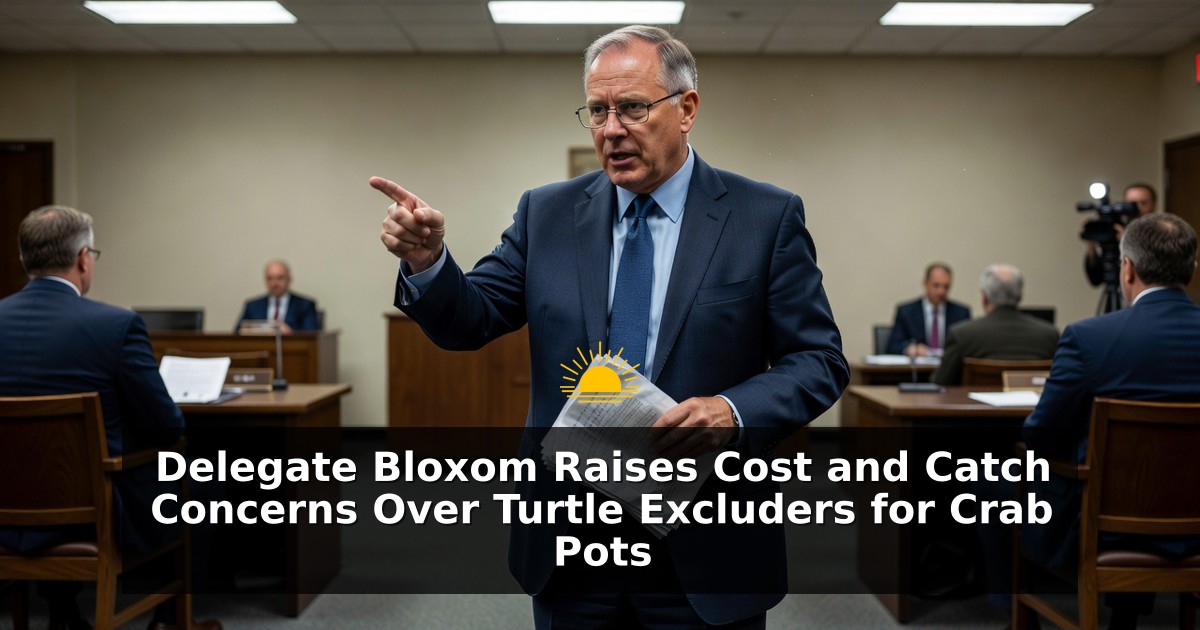
Delegate Bloxom voiced pointed concerns during a Chesapeake Subcommittee hearing about a proposal that would require turtle excluders on crab pots used by commercial watermen. He challenged the origin of statistics cited in support of the devices and warned that the equipment could slash catches by more than half while adding meaningful new costs to an already expensive gear setup. The discussion centered on how any new mandate might affect the economic viability of commercial crabbing in the Chesapeake Bay region. Officials and stakeholders continue to weigh wildlife protection goals against the practical realities faced by working watermen who depend on the resource.
Bloxom noted that he had neither seen nor heard of the issue rising to the level suggested by the figures being quoted. He stated that turtle excluders would cut catches by over 50 percent, describing the reduction as a major operational hit. Each device, he said, would add at least six dollars to the cost of a pot. Fully rigged crab pots already range from roughly sixteen dollars to as much as eighty dollars, according to the remarks offered in the hearing. For a commercial operator running a fleet of one thousand pots, those incremental costs would accumulate quickly into a substantial new expense.
Economic Pressures on Commercial Watermen
Commercial crabbing remains a cornerstone of coastal livelihoods in Virginia, particularly along the Eastern Shore and other Bay communities. Watermen typically maintain large inventories of pots that must be purchased, rigged, maintained and replaced on a regular cycle. Adding a mandatory excluder to every pot multiplies both the upfront outlay and the ongoing replacement burden. Bloxom emphasized that the cumulative financial impact on operators with sizable fleets would be significant and could alter the economics of the fishery. Industry participants have long pointed to thin margins, fuel costs, labor and regulatory compliance as persistent pressures; any new gear requirement layers additional capital demands onto that existing structure.
The hearing underscored the difference in scale between recreational and commercial activity. Bloxom indicated he held no objection to recreational crabbing methods, citing the way those pots are typically fished and checked. Commercial operations, by contrast, involve more intensive pot tending and higher volumes, which in his view changes the practical implications of any excluder rule. Regulators often distinguish between the two sectors when crafting gear rules, yet the precise design of any future requirement will determine whether that distinction holds in practice. Clear data on actual bycatch rates, device effectiveness and catch retention remain central to resolving those differences.
Questions Surrounding Supporting Data and Study Design
A core element of Bloxom’s remarks focused on the provenance of the statistics used to justify the proposed devices. He expressed curiosity about the source of the numbers being cited and observed that the matter had not previously registered as a prominent concern in his experience. Without transparent references, he suggested, it becomes difficult for lawmakers and stakeholders to evaluate the scale of the problem or the necessity of the prescribed solution. Legislative subcommittees routinely request underlying studies, field trials and peer-reviewed findings before advancing gear mandates that carry broad economic consequences.
Bloxom also registered specific reservations about the third amendment under discussion. He argued that the amendment appeared to call for a study structured around a predetermined outcome rather than an open inquiry. In his assessment, designing research that presupposes its own conclusion undermines the credibility of the process and the usefulness of any resulting recommendations. He framed this as his primary drawback with the current proposal, stressing the need for studies that allow evidence to shape policy rather than the reverse. Subcommittee members frequently debate the scope, funding and independence of such studies when natural-resource rules are under review.
Balancing Conservation Goals and Fishery Sustainability
Sea turtle and terrapin interactions with fishing gear have prompted management measures in multiple coastal states over the years. Bycatch reduction devices and excluders aim to allow target species to enter pots while excluding larger reptiles that can become trapped and drown. Proponents argue that carefully engineered devices can achieve meaningful conservation gains with limited impact on harvest. Critics, including some commercial operators, counter that real-world catch losses, fouling, handling time and added expense can exceed laboratory or limited-trial projections. The Chesapeake Subcommittee exchange reflected this longstanding tension between protective intent and operational feasibility.
Virginia’s crab fishery operates under a complex set of seasons, size limits, bushel quotas and gear restrictions already administered by state natural-resource agencies. Any additional mandate would need to mesh with those existing rules and with interstate management frameworks that govern the shared Bay resource. Lawmakers typically seek input from watermen associations, scientific staff, conservation organizations and enforcement personnel before finalizing changes. The hearing provided one forum for that input, with cost, catch efficiency and study integrity emerging as the dominant themes raised by Bloxom.
Path Forward for Policy Makers
Subcommittee deliberations of this type often lead to requests for additional data, pilot programs or revised amendment language. Stakeholders on all sides generally agree that durable rules rest on verifiable evidence of both the bycatch problem and the performance of proposed solutions under commercial conditions. Transparent cost estimates, side-by-side catch comparisons and independent review of study protocols can help narrow disagreements. Bloxom’s comments highlighted the importance of those elements before any broad requirement is imposed on the commercial fleet.
The discussion also illustrated the broader challenge of crafting regulations that protect vulnerable species without eroding the economic foundation of working waterfront communities. Crabbing supports not only individual watermen but also processors, dealers, restaurants and related shore-side businesses across the region. Abrupt or poorly calibrated gear changes can ripple through that network. At the same time, sustained turtle populations form part of the Bay’s ecological health and hold value for tourism, education and biodiversity goals. Finding durable middle ground remains the task before legislators and agency staff.
As the Chesapeake Subcommittee continues its work, the concerns recorded in the hearing are likely to shape subsequent drafts and supporting analyses. Questions about statistical sources, projected catch reductions, per-pot costs and the framing of future studies will need clear answers if consensus is to emerge. Commercial operators with large pot inventories will watch closely for any signal that compliance costs and harvest impacts have been fully quantified. Recreational participants, meanwhile, appear less directly affected under the distinctions drawn during the session. The ultimate balance struck will influence both the health of turtle populations and the resilience of Virginia’s commercial crabbing industry for years ahead.
amendment concerns catch reduction Chesapeake commercial crabbing commercial fishing crab catch crab pots expenses fisheries pot costs pot rigging recreational crabbing regulations statistics study design subcommittee third amendment turtle excluders Virginia watermen