Virginia Lawmaker Flags Grid Shortfalls and Energy Mix Needs
Updated
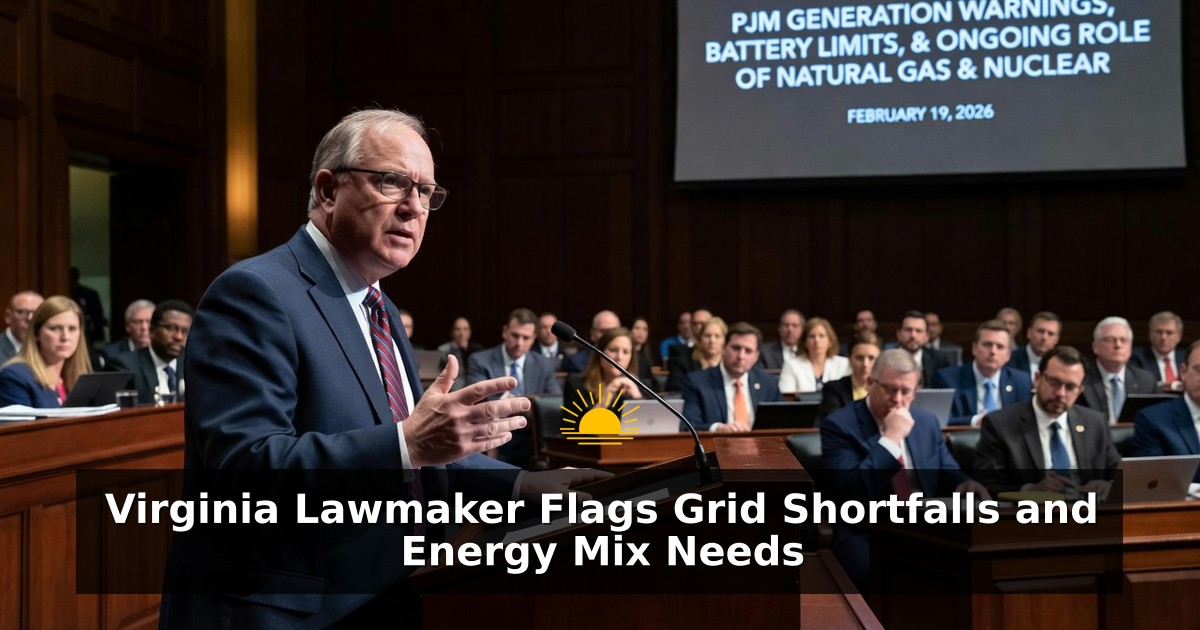
Delegate Tony Wilt addressed fellow lawmakers during the February 19, 2026, regular session of the Virginia General Assembly regarding mounting pressures on electric affordability and reliability across the Commonwealth. He pointed to repeated cautions from commissioners at PJM Interconnection, the regional transmission organization that coordinates the bulk electric system serving Virginia and neighboring states. Those officials have indicated the grid faces a serious risk of insufficient generation resources to satisfy rising demand. Wilt framed the situation as a collision course that requires immediate legislative attention to avoid future shortfalls.
PJM operates one of the largest wholesale electricity markets in the world and covers territory spanning multiple Mid-Atlantic and Midwest states. Recent assessments from the organization have highlighted a tightening supply-demand balance driven by power plant retirements, slower-than-needed construction of replacement capacity, and accelerating load growth. Virginia sits within this footprint and has recorded some of the highest rates of electricity imports among PJM members. Wilt stressed that the Commonwealth therefore carries a clear responsibility to contribute additional in-state generation rather than rely indefinitely on external supplies.
Data center expansion in Northern Virginia has become a primary driver of projected demand increases, according to utility filings and independent grid studies. These facilities require continuous, high-volume power that traditional residential and commercial loads do not match. At the same time, older fossil-fuel units continue to exit the system under environmental and economic pressures. The combination leaves planners searching for resources that can deliver both energy and capacity when weather conditions reduce output from variable renewable sources.
Advances in Battery Storage Requirements
During the current session lawmakers advanced measures that expand battery storage mandates, including provisions aimed at long-duration technologies. Proponents argue that storage can shift excess daytime solar generation into evening hours and provide limited backup during brief outages. Wilt acknowledged the value of these tools yet cautioned that current deployments remain far from grid-scale volumes needed to cover multi-hour winter peaks. He also noted that the capital costs associated with large battery installations continue to challenge overall system affordability for ratepayers.
Battery systems store electricity rather than generate it, a distinction Wilt underscored as fundamental. When dispatchable plants already operate at full output and wind or solar production drops to near zero, little surplus energy exists to charge the batteries in the first place. Winter cold snaps frequently produce exactly these conditions across the PJM region, with prolonged high heating demand coinciding with low renewable availability. Under such scenarios storage alone cannot close the gap left by inadequate generation capacity.
Industry analyses consistently show that most commercial battery installations today offer four hours or less of full-power discharge. Emerging long-duration chemistries promise longer run times yet remain expensive and limited in commercial deployment. Wilt stated he does not oppose battery technology; he simply maintains that storage cannot serve as a full substitute for actual generation resources. Both must expand in parallel if reliability targets are to be met without sharp price spikes.
Maintaining an All-of-the-Above Resource Portfolio
Wilt observed that members on both sides of the aisle publicly endorse an all-of-the-above energy strategy. He welcomed recent recognition of nuclear power as a necessary component of that mix, citing its ability to supply steady baseload electricity with minimal emissions. Existing nuclear stations in Virginia already contribute substantial carbon-free output, and discussions continue around potential uprates or new small modular designs. Nuclear units, however, require long lead times and significant capital, making them complementary rather than immediate replacements for other fuels.
Natural gas generation must also remain available for the foreseeable future, according to the delegate. Gas-fired plants provide flexible, dispatchable power that can ramp quickly when renewable output falters or when unexpected outages occur. PJM capacity auctions and reliability studies have repeatedly shown that premature retirement of gas resources without firm replacements elevates the risk of emergency procedures during extreme weather. Wilt argued that policy choices should therefore preserve existing gas capacity while cleaner alternatives scale up.
Virginia utilities already operate a diverse fleet that includes nuclear, natural gas, hydroelectric, biomass, and growing shares of solar. State energy plans and integrated resource filings emphasize the need to balance decarbonization goals against reliability and cost constraints. Independent monitors have warned that overly rapid removal of dispatchable units could force greater reliance on costly emergency imports or temporary generators. Maintaining gas in the portfolio offers a bridge that supports both near-term reliability and longer-term transition objectives.
Broader Implications for Affordability and Planning
Electricity prices in Virginia have faced upward pressure from transmission upgrades, fuel costs, and new infrastructure required to serve data centers and electrification loads. Wilt linked these affordability concerns directly to the generation shortfall risk identified by PJM. When supply margins tighten, wholesale market prices rise and those increases eventually appear in retail bills. Ensuring adequate in-state generation helps moderate volatility and reduces exposure to neighboring-state constraints.
Regional coordination remains essential because electricity flows freely across PJM borders. Actions taken in Virginia affect reliability for Maryland, Pennsylvania, and other members, just as decisions elsewhere influence Virginia’s import options. Wilt called on colleagues to treat the warnings from PJM commissioners as a shared obligation rather than a distant technical matter. Legislative support for a balanced resource mix, he indicated, forms one practical response to the documented capacity gaps.
Long-term forecasts prepared by grid operators and state agencies project continued load growth through the end of the decade. Meeting that growth while retiring older plants will require simultaneous investment in nuclear life extensions, new gas peakers or combined-cycle units where appropriate, utility-scale storage, and transmission reinforcements. Wilt’s remarks positioned natural gas and nuclear as indispensable elements alongside batteries and renewables. The February 19 session discussion therefore centered on aligning statutory requirements with physical realities of winter peak demand and import dependence.
Observers note that similar debates are occurring in other PJM states as each jurisdiction weighs clean-energy statutes against reliability metrics. Virginia’s status as a leading importer magnifies the stakes of its policy choices. By highlighting battery limitations and the continuing need for dispatchable fuels, Wilt sought to ground the conversation in operational data rather than aspirational targets alone. The coming months of legislative and regulatory work will test whether the Commonwealth can expand generation fast enough to avert the shortfalls PJM has flagged.
all of the above battery storage commissioners warning Delegate Tony Wilt dispatchable sources electric grid energy affordability energy mix February 19 2026 generation capacity grid reliability long duration storage Natural Gas nuclear energy peak winter demand PJM interconnection Regular Session renewables limits storage technology Virginia Virginia energy policy Virginia House Virginia legislature