Virginia Subcommittee Reviews Hunting Dog Permit Proposal
Updated
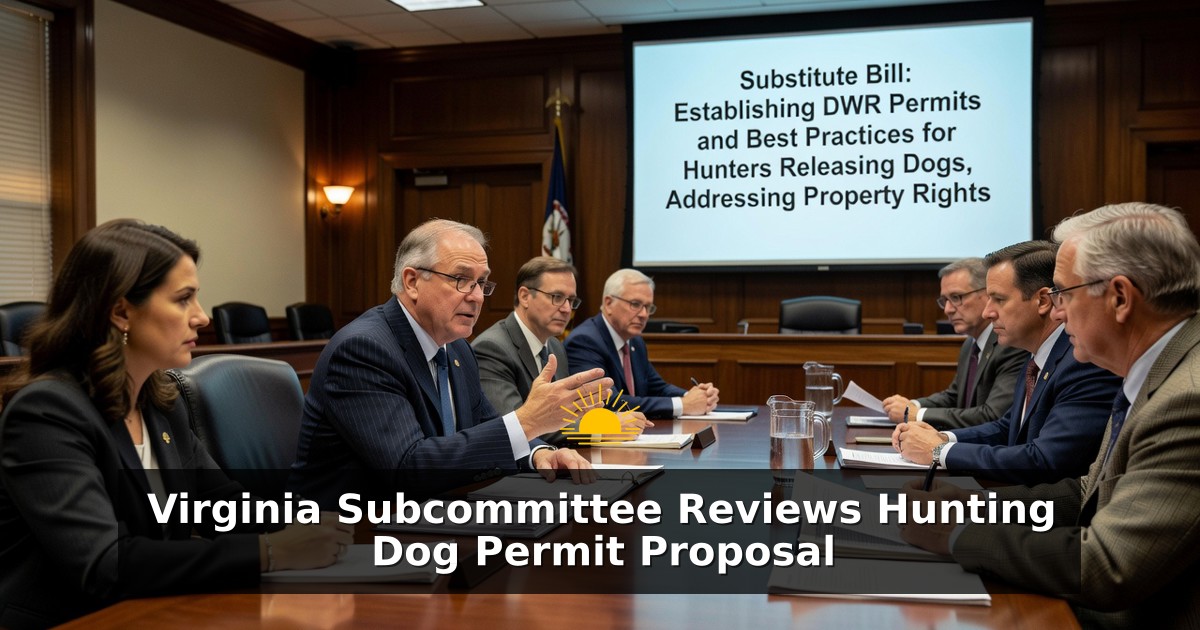
Virginia lawmakers in the Agriculture Subcommittee recently examined a substitute bill that would establish new rules for hunters who release dogs on property across the commonwealth. Delegate Wilt requested a detailed explanation of the measure during the hearing to clarify precisely what activities would be allowed and what actions would be restricted. The discussion centered on creating a structured framework through the Department of Wildlife Resources that aims to protect landowners without eliminating traditional hunting practices. Officials described the proposal as an effort to define clear boundaries that respect both recreational access and private property interests.
The bill would create a permit process administered by the Department of Wildlife Resources for hunters seeking to release dogs. Under the outlined provisions, individuals would obtain a permit and then adhere to a set of established best practices designed to guide responsible behavior on the land. These best practices would serve as the operational rules of the road, ensuring that dog releases occur in a manner that minimizes conflicts with property owners. The presenter emphasized that compliance with these standards would form the core expectation for anyone participating in the activity under the new system.
Administrative enforcement would address certain violations short of criminal intent. Reckless or repeated disregard for property rights could result in administrative violations processed through rules developed by the Department of Wildlife Resources. Such cases would be handled within the agency’s existing regulatory structure rather than immediately escalating to court proceedings. This approach seeks to provide a graduated response that corrects problematic patterns while reserving stronger measures for more serious conduct.
Intentional acts that deliberately violate property boundaries would remain subject to existing criminal law. The distinction drawn during the hearing separates careless or habitual noncompliance from purposeful wrongdoing. By keeping intentional offenses under criminal statutes, the bill maintains established legal tools for addressing clear trespass or damage. Lawmakers heard that this dual-track system allows administrative remedies to handle everyday disputes while preserving criminal accountability where warranted.
Hunting with dogs has long formed part of Virginia’s outdoor heritage, particularly in rural regions where hound hunting traditions remain strong. At the same time, landowners have raised ongoing concerns about dogs entering private parcels without permission, potentially disrupting livestock, crops, or personal use of the land. The subcommittee discussion reflected these competing interests by focusing on practical mechanisms that could reduce friction. The permit-and-best-practices model was presented as one pathway toward clearer expectations for all parties involved.
Department of Wildlife Resources already manages a wide range of hunting regulations, licensing, and wildlife conservation programs throughout the state. Adding a specific permit layer for dog releases would expand that administrative role to include education on best practices and oversight of compliance. Agency rules developed under the bill would need to define the precise standards hunters must follow once permitted. Clear communication of those standards would be essential so that participants understand both their privileges and their responsibilities.
Property rights advocates have consistently argued that uncontrolled dog releases can undermine the ability of owners to control access to their land. Hunters and sporting groups counter that reasonable access supports wildlife management and preserves cultural practices passed down through generations. The substitute bill attempts to navigate this tension by requiring permits and adherence to best practices rather than imposing an outright ban or leaving the status quo unchanged. Subcommittee members sought concrete details on how the balance would operate in daily situations.
During the exchange, Delegate Wilt pressed for an unambiguous picture of permitted versus prohibited conduct under the substitute language. The response outlined that obtaining the permit and following best practices would constitute lawful activity, while reckless or consistent disregard could trigger administrative consequences. Intentional violations would continue to face criminal penalties as they do today. This clarification was described as important for both hunters who want to remain compliant and landowners who want reliable protections.
Implementation questions remain about how the Department of Wildlife Resources would draft, publicize, and enforce the best-practice standards. Training materials, outreach to hunting organizations, and straightforward reporting channels for property owners would likely form part of any workable system. The administrative violation process would need fair procedures that allow hunters to respond to allegations while giving landowners a meaningful avenue for relief. Careful design of these elements would determine whether the framework reduces conflicts in practice.
The broader policy debate reflects Virginia’s diverse landscape of farms, forests, and residential parcels that often sit near hunting areas. Effective rules must account for varying local conditions while remaining consistent enough for statewide application. Lawmakers continue to weigh how best to support ethical hunting opportunities alongside the fundamental right of citizens to secure their property. The Agriculture Subcommittee hearing advanced that conversation by focusing on specific permit and enforcement tools.
Observers note that similar tensions appear in other states where pack hunting or free-running dogs intersect with private land. Virginia’s approach of pairing permits with best practices and tiered enforcement offers one model for addressing the issue through existing wildlife agencies. Whether the substitute bill advances further will depend on continued legislative review and input from affected stakeholders. The hearing provided an initial public airing of the core provisions and the rationale behind them.
In summary, the proposal centers on a Department of Wildlife Resources permit requirement coupled with mandatory best practices for dog releases. Administrative handling of reckless or repeated violations would complement criminal law coverage of intentional acts. Delegate Wilt’s questions helped surface these operational details for the subcommittee. The discussion underscored the ongoing effort to define fair rules that honor both hunter access and landowner rights across Virginia.
administrative violations Agriculture Subcommittee best practices consistent disregard criminal law delegate wilt Department of Wildlife Resources dog release DWR hunter permits hunters hunting regulations legislative hearing permits property owners property rights reckless disregard rules of the road substitute bill virginia assembly