Virginia Senate Panel Backs Amended Mail Scanning Measure for Health Facilities
Updated
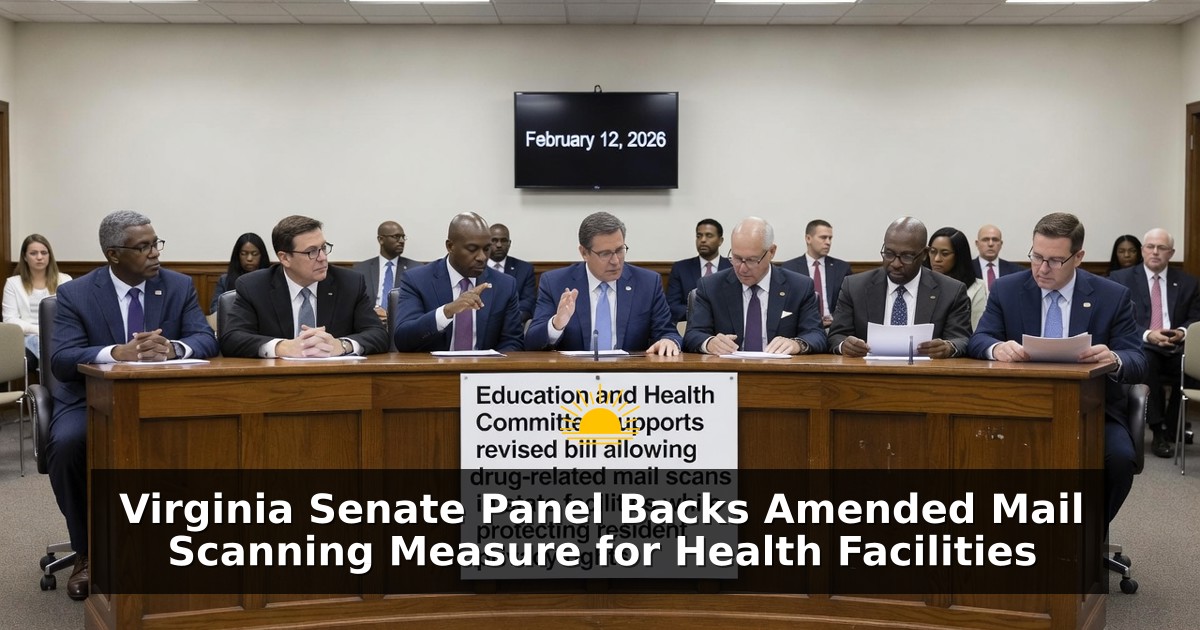
The Virginia Senate Education and Health Committee on February 12, 2026, advanced support for an amended bill authorizing the scanning of incoming mail at Department of Health facilities to detect possible drugs. Committee members examined the measure after noting significant differences from its earlier description during House consideration. Officials from the Department of Health had identified a concrete problem at one facility in which mail arrived containing drugs or materials laced with drugs. The core request centered on permitting facilities to scan such mail and then forward the contents to residents electronically rather than through physical delivery.
Privacy advocates and lawmakers initially raised strong objections because the House-side description suggested staff would read residents’ correspondence. That approach appeared to conflict directly with established rights to privacy for individuals in state care. Questions also arose about whether legal mail from attorneys would receive special protection under any new authority. These concerns prompted extended discussions aimed at clarifying the bill’s actual scope and preventing unintended overreach into personal communications.
Lawmakers subsequently collaborated with the Department of Behavioral Health to refine the statutory language. The revised text makes clear that facility staff will not read the substance of residents’ mail. Instead, the process focuses solely on scanning for contraband. When suspicion of drug introduction arises, a defined procedural pathway now exists for further handling without opening every piece of correspondence as a matter of routine. With those safeguards in place, the committee indicated its support for the updated version of the legislation.
Disability Law Center Endorses Revised Approach
The Disability Law Center of Virginia publicly supported the amended mail bill once the privacy protections were strengthened. Advocates emphasized that residents of behavioral health and other Department of Health facilities retain fundamental rights even while receiving care in structured settings. Scanning technology, when limited to detecting physical contaminants, can address legitimate safety risks without converting every envelope into an open record for staff review. The center’s position underscored the importance of precise statutory wording that distinguishes mechanical screening from content inspection.
State facilities have long confronted challenges related to the introduction of controlled substances through postal channels. Drugs concealed in paper, ink, or packaging materials pose health dangers to residents and staff alike. Electronic delivery of scanned images after clearance offers one practical method for interrupting that pathway while still allowing residents timely access to their correspondence. The amended bill seeks to formalize that method under clear limits rather than leaving practices to informal facility discretion.
Legal mail received particular attention during the committee review. Correspondence between residents and their attorneys carries heightened confidentiality expectations under both state and federal principles. The revised language aims to preserve those protections by confining scanning to the detection of physical anomalies rather than textual review. Committee members sought assurance that any implementation protocols would include training and oversight sufficient to prevent accidental or intentional reading of privileged materials.
Broader Context of Safety and Resident Rights
Balancing institutional security with individual liberties remains a recurring task for Virginia lawmakers who oversee health and behavioral health systems. Facilities operated under the Department of Health and the Department of Behavioral Health serve populations that may include individuals with complex medical, psychiatric, or substance-use needs. Ensuring a drug-free environment supports treatment goals, yet any new search authority must withstand scrutiny under privacy standards that apply to persons in state custody or care.
The February 12 hearing illustrated how bill descriptions can diverge between chambers and how subsequent negotiation can realign text with original intent. What began as an alarming proposal in the eyes of some observers became, after amendment, a narrower tool focused on scanning rather than reading. Supporters argued that the changes adequately addressed the core objection while still equipping facilities to respond to documented smuggling attempts. The Disability Law Center’s endorsement added weight to the claim that the final language struck an acceptable equilibrium.
Implementation details will likely require further administrative rules once the measure moves forward. Facilities will need consistent equipment standards, chain-of-custody procedures for any items flagged during scanning, and clear notice to residents about how their mail will be processed. Oversight mechanisms, including possible reporting requirements back to the General Assembly, could help verify that scanning remains limited to its intended purpose. Such follow-through measures often determine whether statutory promises translate into daily practice that respects both safety and dignity.
Committee members noted that the Department of Behavioral Health had engaged constructively in drafting the substitute language. That collaboration produced a version the panel could endorse without the earlier privacy alarms. The process demonstrated the value of inter-branch and inter-agency dialogue when legislation touches sensitive areas of personal autonomy inside government-run institutions. Residents, families, and advocacy organizations will continue to monitor how the authority is exercised if the bill becomes law.
The discussion also highlighted the practical reality that mail remains a vital link for many individuals residing in state facilities. Letters from family, friends, and legal counsel contribute to emotional stability and continuity of community ties. Any system that delays or alters that flow must therefore operate with transparency and restraint. By converting physical mail into electronic images after a non-invasive scan, the amended approach attempts to preserve the communicative function while interrupting a known vector for contraband.
Looking ahead, the measure’s progress through the remainder of the legislative session will test whether the consensus achieved in the Education and Health Committee holds. Additional stakeholders may seek further refinements, particularly around data retention of scanned images and the handling of false-positive detections. Neutral observers will watch for evidence that the final statute continues to prohibit content reading and maintains workable exceptions for legal correspondence. The committee’s expressed support on February 12 rested squarely on the presence of those guardrails.
In summary, the Virginia Senate Education and Health Committee concluded that an amended mail-scanning bill adequately responds to drug-introduction risks inside Department of Health facilities without authorizing the reading of residents’ private letters. Collaboration with the Department of Behavioral Health and backing from the Disability Law Center reinforced the view that the revised text meets both safety and privacy objectives. The episode serves as a case study in how legislative language can be adjusted to align operational needs with constitutional and statutory rights. Continued attention to implementation will determine the real-world success of the balance lawmakers sought to achieve.
2026-02-12 amended language behavioral health bill amendment committee hearing Department of Behavioral Health Department of Health drug laced mail drug prevention Education and Health facility mail health facilities house side legal mail mail inspection mail scanning privacy rights right to privacy Senate of Virginia Virginia Senate