Virginia Students Highlight Environmental Risks from Data Center Power Lines
Updated
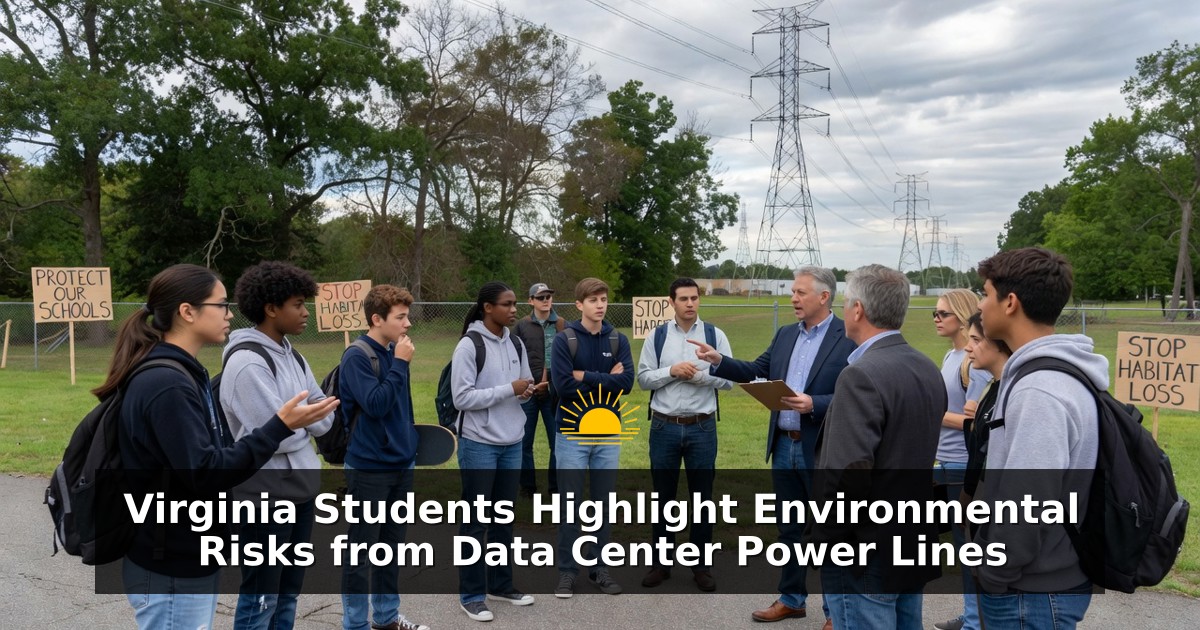
Students in Northern Virginia have voiced growing concerns about the environmental effects of high-voltage power lines constructed to support the region's expanding data center industry. These lines, according to participants in recent discussions involving Congressman Suhas Subramanyam, primarily serve commercial data facilities rather than residential customers. Young residents described how the infrastructure projects clear forested areas and approach school grounds, playgrounds, and athletic fields. The conversations underscored fears that natural habitats face lasting disruption while educational outdoor spaces lose value. Local observers noted that the rapid pace of development has intensified questions about long-term land use in the commonwealth.
Congressman Suhas Subramanyam met with students to examine the specific impacts of power infrastructure linked to data centers across Northern Virginia communities. Participants explained that the lines deliver electricity exclusively to large computing facilities and do not feed household grids in the immediate vicinity. One student, identified as Mirhan, recounted personal school experiences that fostered an appreciation for local wildlife now placed at risk by habitat clearance. He and others pointed to the steady encroachment of transmission corridors near educational campuses as a source of daily worry. These exchanges framed the issue as both an ecological and a quality-of-life matter for families living nearby.
Environmental Impacts on Forests and Wildlife
High-voltage transmission projects required by data centers have led to the removal of substantial forest cover in parts of Loudoun and Prince William counties. Biologists and local conservation groups have documented how cleared rights-of-way fragment continuous woodland that once supported deer, songbirds, and smaller mammals. The resulting open corridors alter migration patterns and reduce available nesting sites for species dependent on dense canopy. Students emphasized that these changes diminish opportunities for hands-on nature study that schools traditionally offered through nearby green spaces. Over time, the cumulative loss of habitat can lower biodiversity in areas already under development pressure.
Power line construction also introduces soil disturbance and potential erosion along steep or wooded slopes common in Northern Virginia. Runoff from exposed ground can carry sediment into streams that feed the Potomac River watershed, affecting water quality downstream. Maintenance of the corridors often involves herbicide application to control vegetation, raising additional questions about chemical exposure for nearby wildlife and water sources. Residents living close to the routes have reported changes in the character of once-quiet wooded neighborhoods. These physical alterations form the core of the environmental case presented by the students.
Proximity to Schools and Recreational Spaces
Several proposed and existing transmission routes pass close to public schools, playgrounds, and athletic complexes used daily by children. Students described the visual and spatial intrusion of tall towers and humming lines as a distraction during outdoor classes and sports practices. Parents and educators have echoed worries that the industrial appearance of the infrastructure reduces the appeal of school grounds as safe recreational environments. In some locations the cleared swaths have removed shade trees that previously cooled playgrounds during warmer months. The combination of habitat loss and diminished outdoor amenities has prompted calls for more careful siting decisions.
Data center electricity demand in Virginia continues to climb as technology companies expand cloud computing and artificial intelligence operations. State energy planners and utility companies have identified the need for new high-capacity lines to keep pace with that growth. Yet the students stressed that ordinary households receive no direct power benefit from the dedicated commercial feeders. This distinction has fueled perceptions that local landscapes are being sacrificed for private industrial gain. Community members have urged elected officials to weigh residential quality of life more heavily when approving future corridors.
Broader Land-Use and Educational Consequences
The conversion of forest to transmission right-of-way permanently changes the educational landscape available to Virginia students. Field trips and science lessons that once relied on intact nearby woods now confront fragmented or fenced-off terrain. Mirhan and fellow students linked their early outdoor learning experiences to a lasting respect for wildlife that they fear younger classmates may never develop. Teachers have noted reduced opportunities for ecology units that depend on accessible natural areas. These educational losses compound the purely ecological damage already underway.
Local governments in Northern Virginia face difficult trade-offs between economic development and conservation of remaining open space. Data centers generate significant tax revenue and construction jobs, yet the supporting power infrastructure carries visible environmental costs. Planning commissions routinely hear testimony about forest fragmentation, stormwater impacts, and visual blight. Students participating in the recent dialogue with Congressman Subramanyam added a youthful perspective that centers on long-term stewardship rather than short-term fiscal gains. Their testimony illustrated how infrastructure decisions made today will shape the outdoor heritage available to the next generation.
Utility representatives maintain that modern transmission design incorporates measures to limit environmental footprints, including selective clearing and habitat restoration where feasible. Independent reviews, however, continue to document net losses of mature forest and interior habitat. The students argued that even mitigated projects still produce disproportionate harm when sited near schools and established neighborhoods. They called for greater transparency about the ultimate beneficiaries of each new line and for stronger buffers around educational facilities. Such demands reflect a broader public desire for balanced growth that does not erase the natural features defining Virginia communities.
As Northern Virginia’s data center corridor expands, the tension between digital infrastructure and environmental protection remains unresolved. The concerns raised by students before Congressman Suhas Subramanyam highlight the human dimension of technical power-planning decisions. Forest loss, wildlife displacement, and the industrialization of school surroundings form a consistent set of facts that local leaders must address. Continued dialogue among residents, educators, utilities, and elected officials will determine whether future projects can reduce these documented impacts. For now, the students’ accounts stand as a clear record of the stakes involved for Virginia’s land and its youngest citizens.
athletic fields Broadrun River classroom communities dangers Data Centers destruction elementary school encroaching environmental forests interests playgrounds Power power lines residents river Schools science Students unsightly wildlife