Loudoun County Weighs Speed Cameras for School Zone Safety
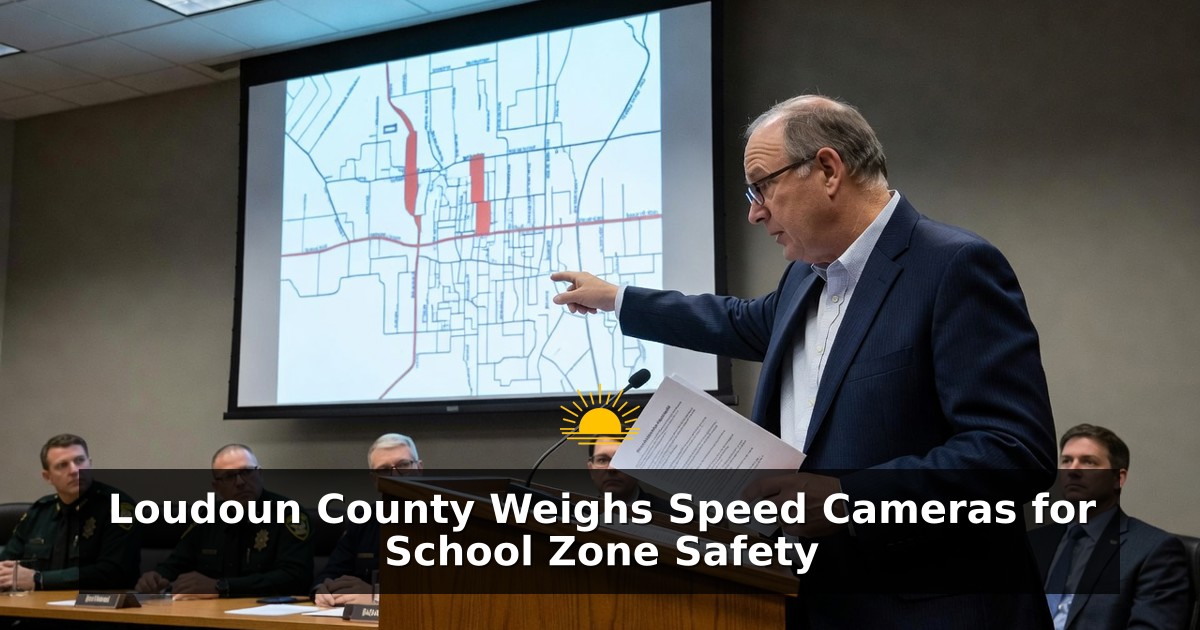
Loudoun County School Board member Jon Pepper raised the prospect of installing speed cameras in school zones during a Finance and Operations Committee meeting. He pointed to stretches such as Braddock Road, where the posted limit drops to 25 mph near schools, and noted how difficult it can be for drivers to maintain that speed. Pepper referenced existing camera systems already operating farther along Braddock Road in Fairfax County near Stone Middle School and other campuses. The exchange centered on devices that would activate only during school hours to target the periods of highest pedestrian activity.
Officials confirmed that active conversations are underway with the Loudoun County Sheriff's Office and members of the board. The same topic may appear on a future Joint Committee agenda that brings school and county leaders together. Leesburg has already placed speed-zone cameras into service inside Loudoun County, offering a nearby operational model. These discussions aim to determine whether similar technology could strengthen compliance with school-zone limits and reduce risks for students walking or biking to class.
The Loudoun County School Board oversees safety and transportation policies for the county’s public schools. Current board members are Melinda Mansfield, Anne Donohue, April Chandler, Deana Griffiths, John Beatty, Lauren Shernoff, Sumera Rashid, Arben Istrefi, and Jon Pepper. Board members routinely examine infrastructure and enforcement tools that affect daily student travel. Collaboration with law-enforcement partners remains a standard part of that oversight work.
School Zone Speeding Risks and National Context
School zones concentrate young pedestrians, cyclists, and family vehicles during narrow morning and afternoon windows. Transportation safety research consistently identifies speeding as a major contributor to crashes in these areas. Even modest reductions in vehicle speed sharply lower the likelihood of severe injury when a collision occurs. Automated cameras supply steady monitoring without requiring an officer to be present at every location. That consistency helps free deputies for other duties while still addressing repeat speeding patterns.
Fairfax County has operated photo speed enforcement in designated school zones for several years. Those systems rely on radar or roadway sensors to detect vehicles exceeding the limit by a defined threshold and then capture evidence for citation. Published evaluations from Fairfax and similar suburban programs show clear drops in average speeds once cameras are visible and active. Loudoun County shares comparable road designs and growth pressures, including the Braddock Road corridor that links the two jurisdictions. Aligning enforcement approaches along such routes could produce more predictable conditions for families who cross county lines.
Legal Authority and Ordinance Requirements
Virginia statutes authorize localities to deploy photo speed monitoring within school crossing zones once proper local ordinances are in place. Those ordinances typically specify operating hours, signage standards, speed thresholds that trigger a violation, and the handling of civil penalties. Conversations between the School Board and the Sheriff’s Office include review of the precise ordinance language Loudoun County would need. Leesburg’s existing program illustrates that the technology can be integrated with local law-enforcement workflows and public communication efforts. Any countywide expansion would follow the same public-notice and adoption steps required for other traffic-safety measures.
Cameras would function only during posted school hours, focusing enforcement on the times when children are most likely to be present. Advance warning signs are a required element so that drivers know photo enforcement is in effect. Placement decisions usually rest on crash history, traffic volume, and proximity to school entrances or crosswalks. The Braddock Road segment cited in the meeting exemplifies a location where the combination of traffic volume and a sudden drop to 25 mph creates ongoing compliance challenges.
Operational and Fiscal Considerations
Program costs generally cover camera installation, maintenance, image review, and citation processing. Fine revenue is commonly structured to offset those expenses first, with any surplus directed toward additional safety improvements such as signage, sidewalks, or crossing guards. Transparent reporting on violation numbers, speed trends, and revenue use helps maintain public confidence. Neighboring jurisdictions that publish regular performance summaries provide ready templates Loudoun County could adapt.
The Joint Committee setting offers a practical venue for aligning School Board priorities with county budget and ordinance authority. Sheriff’s Office technical input will shape decisions on equipment standards, data security, and integration with existing citation systems. Coordinated planning also allows officials to examine whether cameras should be fixed at high-priority sites or rotated among several school zones. Each approach carries different implications for coverage, cost, and driver awareness.
Community Impact and Student Travel Patterns
Loudoun County continues to experience steady enrollment growth and residential development that increase both vehicle and pedestrian volumes near schools. Many students rely on walking or bicycling for at least part of their trip, making lower vehicle speeds especially important. Parents and school administrators often cite inconsistent adherence to 25 mph limits as a persistent concern during arrival and dismissal. Automated enforcement supplies a tool that works around the clock during school periods rather than depending solely on periodic patrols.
Educational outreach usually accompanies new camera programs so that drivers understand the rules and the safety rationale. Materials distributed through schools, community centers, and online channels reinforce the message that the devices exist to protect children rather than to generate revenue. Feedback opportunities during the ordinance process give residents a chance to comment on proposed locations and operating parameters. Such engagement has proven useful in other Virginia localities when introducing automated enforcement.
Evidence from Established Programs
Evaluations conducted in Fairfax County and in other states document measurable declines in the percentage of vehicles traveling well above the school-zone limit after cameras are installed. Some studies report reductions in speeding violations of 50 percent or greater within the first several months. Crash data, while slower to accumulate, frequently show fewer injury incidents involving pedestrians once average speeds fall. These outcomes supply a factual basis for Loudoun County leaders as they weigh local adoption.
Leesburg’s experience supplies an additional in-county reference point. Town officials have already navigated procurement, signage, public notice, and coordination with law enforcement. Lessons from that rollout can shorten the learning curve for any broader county initiative. Shared training and vendor arrangements may further reduce start-up costs if multiple Loudoun jurisdictions elect to participate.
Next Steps in the Review Process
Further detail is expected to emerge once the Joint Committee calendars the subject and the Sheriff’s Office completes its internal assessment. Board members will then be positioned to decide whether to request formal ordinance language or to gather additional traffic-speed studies at candidate sites. Throughout the process the emphasis remains on verifiable safety gains for students. Officials continue to examine the full range of engineering, education, and enforcement options that together create safer school-zone environments.
The discussion initiated by Jon Pepper underscores a practical question facing many growing suburban counties: how best to keep vehicle speeds compatible with the presence of children during school hours. With conversations already active among the School Board, the Sheriff’s Office, and potential Joint Committee participants, Loudoun County is gathering the information needed for an informed decision. Any eventual program would rest on clear legal authority, transparent operations, and demonstrated benefits drawn from neighboring examples already in daily use.
active conversations board Braddock Road Braddock Road school zone county attorney's office Fairfax County joint committee Leesburg ordinance ordinance change school times school zone school zone cameras sheriff's department sheriff's office Speed Cameras speed zone speed zone cameras Stone Middle supervisors