Falls Church Mayor Backs Limits on Land Use Lawsuit Standing
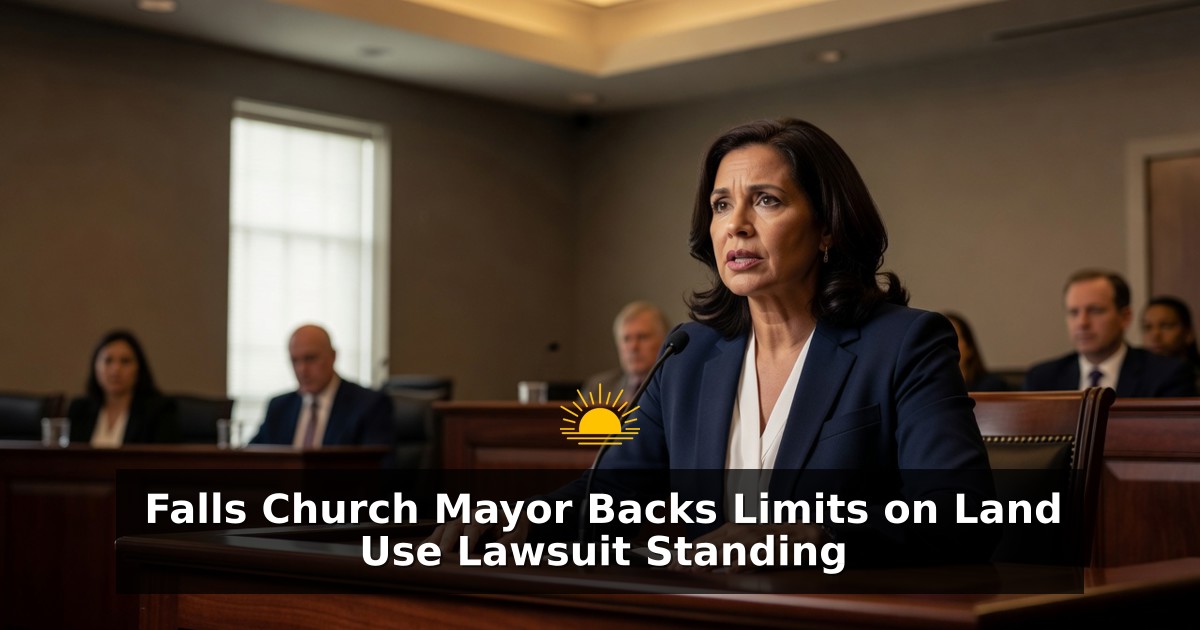
Falls Church Mayor Ladi Hardy testified before a Virginia Civil Subcommittee in support of legislation designed to limit standing for plaintiffs in land use lawsuits. Speaking on behalf of the entire Falls Church City Council, Hardy described how neighboring localities have adopted modest zoning reforms only to see those measures stalled by litigation. She explained that the suits often come from residents unable to show particularized harm yet still granted access to the courts under existing rules. Hardy told lawmakers the pattern wastes public money and slows badly needed housing production across the commonwealth.
The mayor opened her remarks by thanking the delegates who introduced the measure and by underscoring the democratic process already followed by nearby governments. Those communities spent years gathering public input before approving zoning changes aimed at easing the housing shortage. Majority votes by elected councils then enacted the reforms. Shortly afterward, a small number of opponents filed suit even though they could not demonstrate direct personal injury from the new rules.
Costly Defense of Local Decisions
Hardy reported that millions of dollars in taxpayer funds have been spent defending the challenged policies in court. The prolonged legal fights have produced almost no new housing units despite the original intent of the zoning updates. She noted that the financial and administrative burden falls squarely on local budgets already stretched by other service demands. As a result, the practical outcome of years of planning and public engagement has been paralysis rather than construction.
From her vantage point in Falls Church, Hardy said the chilling effect on other Virginia localities is unmistakable. Municipal leaders closely watch what happens to their neighbors when innovative land-use decisions are tied up for years. When good-faith reforms adopted after extensive hearings become mired in litigation, officials elsewhere grow reluctant to attempt similar steps. This hesitation persists even though the commonwealth continues to face a well-documented shortfall in housing supply.
Housing Supply Pressures Across Virginia
Virginia communities, particularly those in the northern region near the nation’s capital, have struggled with rising home prices and limited inventory for more than a decade. Local governments have explored a range of tools, including modest density increases and greater flexibility for accessory units, to expand options without altering community character wholesale. Hardy emphasized that such carefully tailored changes represent responsible responses to market realities rather than radical departures from existing plans. Yet the threat of extended court battles has made many councils wary of moving forward.
She argued that solving the housing crisis requires every locality in the commonwealth to feel able to act without immediate fear of draining public resources on defensive litigation. Current standing doctrines, in her account, allow challenges that lack a concrete injury connection and thereby convert policy disagreements into multi-year legal contests. The mayor maintained that clearer limits on who may sue would restore balance between citizen access to courts and the ability of elected governments to implement majority-supported plans. Without that adjustment, she warned, the pattern of delay and deterrence will continue.
Democratic Process and Public Engagement
Hardy repeatedly returned to the extensive public processes that preceded the reforms now under legal attack. Neighborhood meetings, formal hearings, and extended comment periods gave residents multiple opportunities to shape the final ordinances. Elected officials then cast recorded votes reflecting the weight of that input. Only after those steps did the lawsuits arrive, filed by parties Hardy characterized as holding at best indirect interests in the outcome.
The mayor framed the proposed bill as a targeted correction rather than a blanket shield against all challenges. Legitimate claims brought by those who can show particularized harm would remain fully available. What the legislation seeks to curb, according to her testimony, are actions that effectively nullify democratic land-use decisions through sheer duration and expense. She told the subcommittee that localities need confidence they can address supply shortages without automatically exposing taxpayers to open-ended legal costs.
Broader Implications for Local Governance
Observers of Virginia local government note that land-use authority has long been one of the most closely guarded municipal powers. When court interpretations of standing expand the pool of potential plaintiffs, the practical scope of that authority shrinks. Hardy’s appearance added a concrete municipal voice to the debate, illustrating how one city’s experience can ripple outward to discourage action elsewhere. Her council’s formal backing of the bill signals that even smaller independent cities see the issue as urgent.
If the measure advances, supporters expect it would reduce the volume of speculative suits while preserving core judicial review. Opponents of standing limits traditionally argue that broad access protects property rights and environmental values. Hardy’s testimony did not engage those counter-arguments in detail; instead she focused on the observable results in neighboring jurisdictions: depleted budgets, stalled projects, and growing caution among peer governments. She closed by urging the subcommittee to report the bill favorably so that localities can pursue housing solutions free from the constant prospect of multi-year litigation.
The hearing formed part of ongoing legislative examination of how state law intersects with local zoning powers. Hardy’s remarks placed the lived experience of Northern Virginia communities at the center of that discussion. By detailing both the financial toll and the deterrent effect on future reforms, she sought to give lawmakers a clear picture of why her council views the standing question as central to any serious housing strategy. The subcommittee now holds the next procedural step in determining whether the proposed limits will move forward in the current session.
bill support chilling effect Civil Subcommittee commonwealth council delegates democratic reforms Falls Church Housing Crisis housing supply Ladi Hardy land use lawsuits litigation local government localities planning public funds standing Virginia zoning reform