Charlottesville Council Weighs $4 Million for Emergency Shelter and Housing
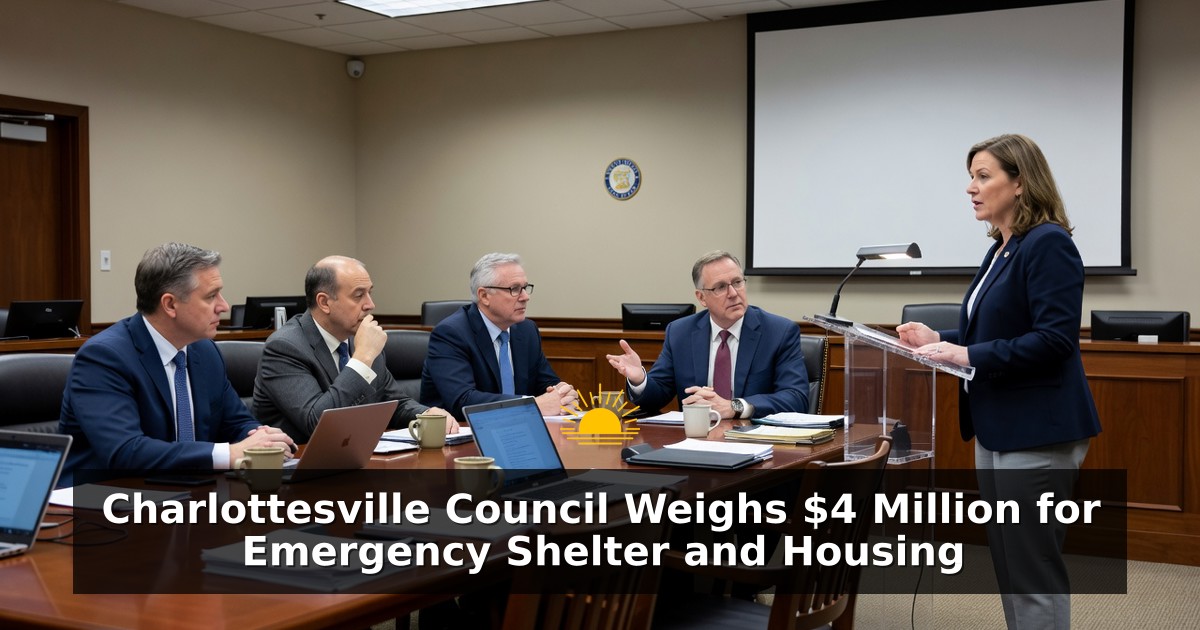
Charlottesville City Council is considering a resolution that would authorize the allocation of up to $4 million for emergency sheltering services and direct housing initiatives. The proposed funding would be developed in collaboration with the Department of Human Services. Officials aim to expand access to safe shelter and stable housing options for residents experiencing homelessness. The measure reflects ongoing local efforts to respond to immediate needs while supporting longer-term housing pathways.
Community leaders have identified emergency shelter capacity and rapid housing placement as persistent priorities in the city. Rising housing costs and limited affordable units have placed additional pressure on existing support systems. The resolution under discussion seeks to provide flexible resources that can be directed toward both temporary shelter beds and direct housing assistance. City staff would work with the Department of Human Services to design and implement the funded programs.
Details of the Funding Proposal
The resolution would permit the city to commit as much as $4 million toward a combination of emergency sheltering services and direct housing initiatives. These resources could support expanded shelter operations, motel or temporary lodging arrangements when needed, and assistance that helps individuals move more quickly into permanent housing. Collaboration with the Department of Human Services is intended to ensure that services align with existing case management and eligibility processes. The funding ceiling of $4 million provides the city with latitude to scale responses according to documented need and available partnerships.
Direct housing initiatives typically include short-term rental assistance, security deposit support, and connections to landlords willing to accept program participants. Emergency sheltering components focus on immediate safety, overnight accommodations, and basic needs such as meals and hygiene facilities. By combining both approaches, the proposal attempts to address crisis situations while reducing the length of time people remain without stable housing. Council members are examining how the allocation would complement other local and regional housing resources already in place.
Role of the Department of Human Services
The Department of Human Services would serve as a primary partner in planning and delivering the supported programs. Department staff bring established relationships with nonprofit shelter providers, outreach teams, and housing navigators who work daily with unhoused residents. This collaboration is expected to streamline referrals, reduce duplication of effort, and improve coordination of wraparound supports such as behavioral health services and employment assistance. Clear roles between city funding and departmental operations will be necessary for effective oversight and reporting.
Human Services personnel routinely track shelter utilization rates, length of stay, and housing placement outcomes. Data from these tracking systems can help guide decisions about how the new allocation is spent over time. The department also maintains connections to the broader Continuum of Care network that serves the Charlottesville area and surrounding localities. Integrating the proposed funds into this existing framework is viewed as a practical way to maximize impact for residents seeking shelter and housing stability.
Local Context of Homelessness and Housing Need
Charlottesville, like many Virginia localities, continues to face challenges related to homelessness and the shortage of affordable housing units. Point-in-time counts and service provider reports have documented individuals and families living in shelters, transitional programs, or unsheltered locations. Economic pressures, including rent increases and limited inventory of entry-level apartments, contribute to housing instability for lower-income households. Emergency shelter remains a critical safety net when people lose housing or cannot immediately secure a permanent unit.
Direct housing initiatives have gained attention across the Commonwealth as communities seek alternatives to long shelter stays. Programs that rapidly rehouse people often pair temporary financial assistance with case management to help participants maintain tenancy. In Charlottesville, such approaches are intended to free shelter capacity for those with the most acute needs while offering a pathway out of homelessness. The $4 million authorization under consideration would give local officials additional tools to pursue both shelter expansion and housing placement simultaneously.
Oversight and Implementation Considerations
If approved, the allocation would require careful administrative oversight to ensure funds are used efficiently and in accordance with city procurement and reporting standards. Performance metrics such as the number of individuals sheltered, average length of shelter stay, and successful housing placements would likely be tracked and shared with Council. Partnerships with nonprofit organizations that already operate shelters or housing programs could accelerate implementation and leverage existing expertise. Transparent communication about progress and challenges would help maintain public confidence in the use of the resources.
City officials must also consider how the new funding interacts with state and federal sources that support homelessness response. Coordination can prevent gaps in service and avoid overlapping expenditures on similar activities. Seasonal fluctuations in shelter demand, particularly during colder months, may influence the timing of certain expenditures. Flexibility within the $4 million ceiling would allow adjustments as conditions on the ground evolve throughout the fiscal period.
Broader Implications for Community Stability
Expanding emergency shelter and direct housing options carries implications beyond the individuals immediately served. Stable housing is closely linked to improved health outcomes, school attendance for children, and reduced strain on emergency medical and public safety systems. When residents can access reliable shelter and move into permanent housing more quickly, neighborhoods experience fewer disruptions associated with unsheltered homelessness. The proposed investment therefore intersects with multiple city goals related to public health, education, and quality of life.
Charlottesville’s approach also fits within wider Virginia conversations about housing affordability and homelessness prevention. Local governments across the state have explored similar combinations of shelter capacity and housing subsidies to meet rising need. By authorizing up to $4 million in collaboration with the Department of Human Services, the City Council is positioning the locality to respond more nimbly to both immediate crises and longer-term housing gaps. Continued monitoring of outcomes will determine how effectively the resources translate into safer conditions and greater housing stability for residents.
The resolution represents one concrete step in an ongoing local process of identifying needs, aligning departmental capacity, and directing financial resources toward practical solutions. Council discussion centers on ensuring that any approved funds produce measurable improvements in access to shelter and housing. Stakeholders will watch closely to see how the final parameters of the allocation are defined and how quickly services can be expanded once funding is in place. The focus remains on delivering safe, reliable options for those currently without stable housing in Charlottesville.
allocate allocation approval Charlottesville City City Council considering council direct discusses Emergency emergency shelter funding Housing housing initiatives initiatives Million resolution services Sheltering Virginia