Dental Hygienists Oppose Virginia Bill on International Dentist Licensing Path
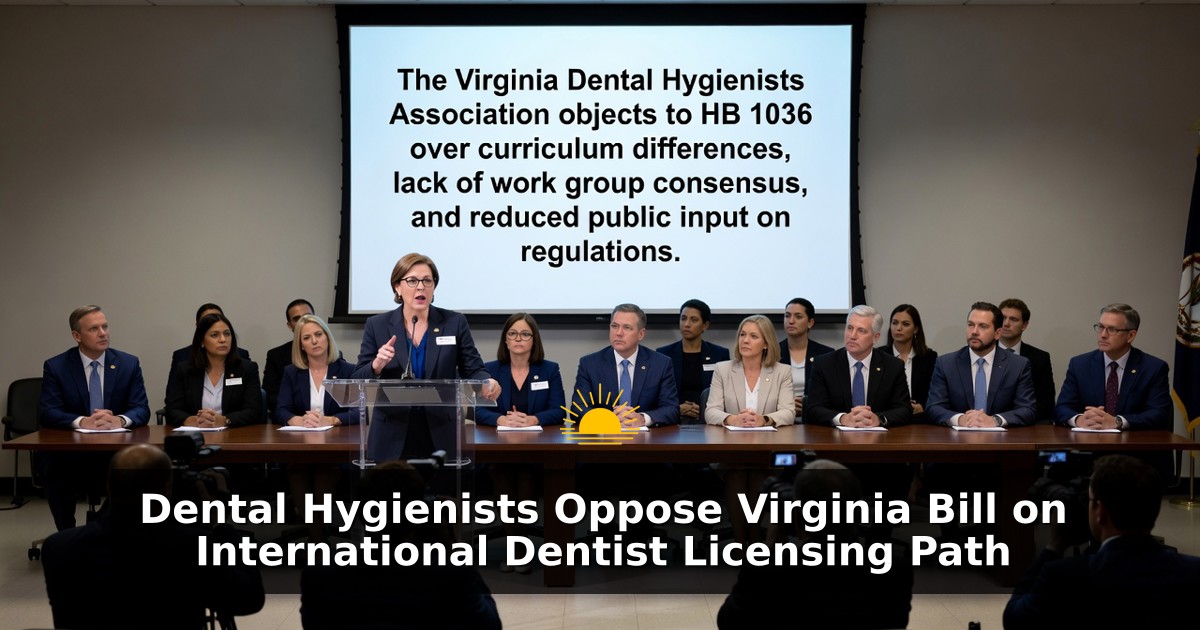
Lawmakers in Virginia are weighing a proposal that would create a new pathway for internationally trained dentists to obtain licenses as dental hygienists in the commonwealth. House Bill 1036 has drawn formal opposition from the Virginia Dental Hygienists Association, which argues the measure overlooks fundamental differences in professional education and training standards. Association representative Barrett Hardeman presented the group's position during a recent Health Professions Subcommittee hearing, stressing respect for immigrants seeking better opportunities while underscoring patient safety priorities. The organization maintains that dental schools and dental hygiene programs deliver distinctly separate curricula that prepare graduates for different clinical roles. Officials noted that the bill could allow practice without the specific hygiene-focused preparation currently required under state licensing rules.
Hardeman told subcommittee members that not all dental schools operate at equivalent levels of rigor or content coverage. Dental education centers on diagnosis, treatment planning, and complex restorative procedures, whereas dental hygiene programs emphasize preventive care, periodontal assessment, patient education, and specialized instrumentation techniques. These distinctions mean that completion of a dental degree abroad does not automatically equip an individual with the competencies expected of a licensed hygienist in Virginia. The association contends that bridging this gap requires structured, accredited training rather than an abbreviated conversion process. Without such requirements, the group fears inconsistencies in the quality of care delivered to patients across the state.
**Summer Work Group Findings and Missing Safeguards**
A work group convened during the previous summer examined related licensing questions and failed to reach consensus on how best to proceed. Participants reviewed potential options for integrating internationally educated dental professionals into the hygiene workforce yet could not agree on a unified framework. Representatives connected to the broader dental community proposed a series of protective measures during those discussions. Those suggested guardrails closely resembled provisions already incorporated into House Bill 1026, which addresses pathways for certain chiropractic practitioners. HB 1036, however, does not contain comparable limitations or oversight mechanisms, according to the testimony presented.
The absence of those safeguards forms a central pillar of the hygienists' opposition. Association leaders argue that clear educational benchmarks, supervised clinical hours, and competency evaluations would help maintain professional standards if any new pathway advances. They point out that other health professions have adopted measured approaches when expanding licensure options for foreign-trained applicants. By omitting similar language, the current bill leaves open questions about how readiness for independent hygiene practice would be verified. Stakeholders familiar with the summer deliberations say the lack of agreement should prompt caution rather than rapid statutory change.
**Regulatory Oversight and Public Participation Concerns**
Another major objection centers on the bill's treatment of future regulations. HB 1036 would exempt the development of implementing rules from the Virginia Administrative Process Act. That statute normally requires agencies to provide public notice, accept comments, and hold hearings before finalizing significant regulatory changes. When dissent already exists among professional groups, the hygienists association believes robust public input becomes especially important. Exempting the process could limit opportunities for practitioners, educators, patients, and other interested parties to shape the details of any new licensing pathway.
Supporters of full Administrative Process Act coverage note that transparent rulemaking helps identify unintended consequences before they affect clinical settings. Dental hygiene practice involves direct patient contact in both private offices and public health environments, making consistent standards essential. The association maintains that abbreviated regulatory procedures risk overlooking practical implementation challenges. These could include verification of foreign credentials, assessment of English-language clinical communication skills, and alignment with existing infection-control and scope-of-practice rules. Maintaining the standard public process would allow those issues to surface and receive thorough consideration.
**Broader Context of Dental Workforce and Education Standards**
Virginia, like many states, continues to monitor dental workforce distribution and access to preventive services. Dental hygienists play a key role in delivering cleanings, applying sealants, conducting oral health screenings, and educating patients on home care. Their education typically occurs in programs accredited by recognized national bodies and includes extensive hands-on clinical experience under faculty supervision. International dental graduates often complete rigorous programs in their home countries, yet those programs rarely mirror the preventive and periodontal focus of U.S. hygiene curricula. Licensing boards therefore traditionally require additional coursework or examinations when professionals seek to change roles or jurisdictions.
Existing Virginia statutes already outline pathways for foreign-trained dentists who wish to practice dentistry after meeting credential evaluation, examination, and sometimes additional training requirements. Extending a streamlined route into hygiene practice raises separate questions because the two professions, while complementary, remain distinct. The hygienists association emphasizes that its opposition does not target immigrant professionals themselves. Instead, the group focuses on preserving educational parity and ensuring that any new license holders demonstrate the full range of skills patients expect. Similar debates have occurred in other states exploring alternative licensure models, often resulting in hybrid approaches that combine credential review with targeted bridging programs.
**Legislative Considerations Moving Forward**
As the measure advances through the committee process, lawmakers must balance workforce flexibility against the need for uniform competency standards. Testimony from the Virginia Dental Hygienists Association highlights the value of incorporating lessons from the summer work group and from parallel legislation such as the chiropractic bill. Adding explicit educational prerequisites, clinical competency checks, and full adherence to the Administrative Process Act could address several of the stated concerns. Conversely, proceeding without those elements may leave regulatory details to be resolved later with reduced stakeholder involvement.
Professional associations on all sides of the issue continue to monitor the bill's progress and stand ready to supply additional data on curriculum content, patient outcomes, and licensing trends. The discussion reflects wider national conversations about how best to integrate internationally educated health professionals while upholding domestic training expectations. For now, the clear position of the dental hygienists remains one of opposition unless substantial modifications are introduced. Subcommittee members heard the association's call for careful deliberation grounded in the differences between dental and dental hygiene education, the incomplete consensus of prior study efforts, and the importance of open regulatory development. Further hearings and potential amendments will determine whether HB 1036 ultimately advances in its current form or undergoes significant revision before any floor consideration.
Administrative Process Act Barrett Hartman bill chiropractors consensus curricula dental hygienist schools dental hygienists dental schools dissent Families guardrails House Bill immigrants Madam Chair opposition public input regulations study summer United States Virginia Virginia Dental Hygienous Association Virginia General Association work group