Virginia Lawmakers Advance Bill Expanding Athletic Trainers Role in Dry Needling Therapy
Updated
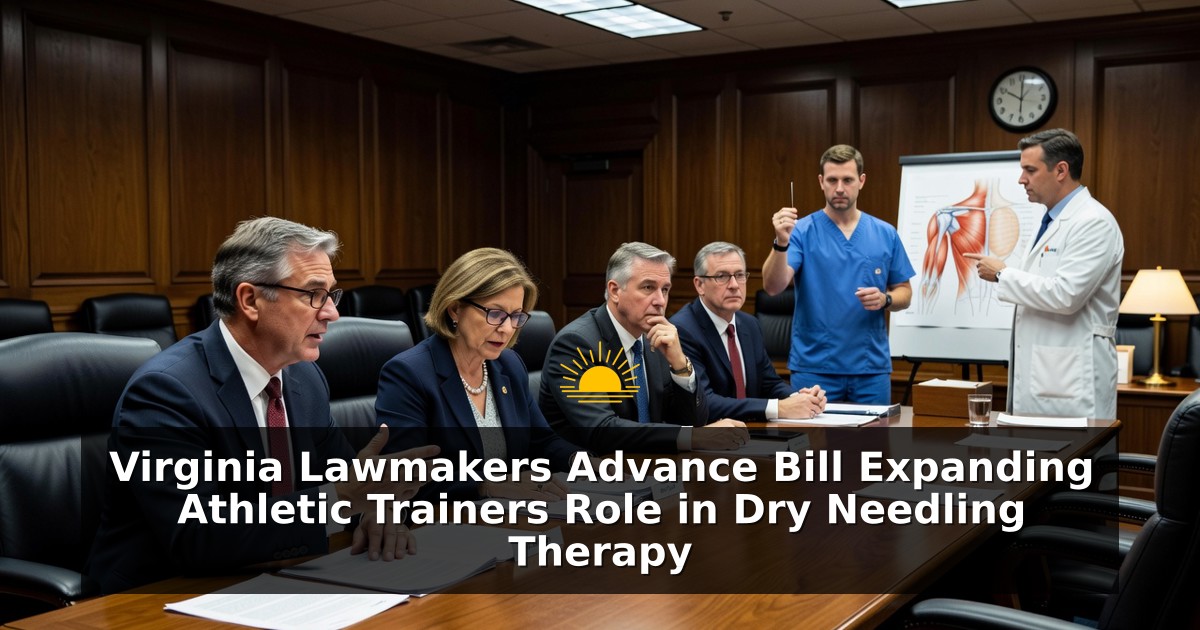
Virginia lawmakers are considering a measure that would broaden the professional responsibilities of athletic trainers across the state by formally adding dry needling to their authorized scope of practice. House Bill 841, reviewed by the Health Professions Subcommittee, seeks to address growing demand for timely care among athletes and active individuals dealing with musculoskeletal issues. The proposal centers on allowing qualified athletic trainers to use the technique as part of routine injury management. Supporters of the legislation emphasize that the change could reduce delays in receiving specialized treatment for common sports-related conditions.
Dry needling involves the insertion of thin, solid needles into specific muscle trigger points or tissues to alleviate discomfort and promote healing. Practitioners employ the method to enhance blood flow in affected areas while helping restore normal range of motion for patients. Conditions frequently addressed through this approach include back pain, persistent headaches, and various forms of tendonitis that often arise from athletic activity or repetitive strain. Medical literature describes the procedure as distinct from acupuncture, focusing instead on anatomical and physiological responses within soft tissue structures.
The bill highlights the potential for athletic trainers to deliver this therapy more promptly in settings such as schools, universities, and professional sports environments. By expanding access at the point of injury assessment, the measure aims to shorten recovery timelines for individuals who might otherwise face extended waits for referrals to other licensed providers. Athletic trainers already serve as frontline responders for sports injuries, making them well positioned to integrate dry needling when appropriate training standards are met. Officials reviewing the legislation noted that faster intervention can support better long-term outcomes for both competitive athletes and recreational participants.
Additional education requirements form a core component of HB-841 to ensure patient safety remains paramount. Athletic trainers seeking to offer dry needling would need to complete specialized classroom instruction covering theoretical foundations of the technique. Didactic components would address anatomy, needle handling protocols, and identification of contraindications before any practical application begins. Hands-on laboratory sessions would follow, allowing trainees to develop precise insertion skills under supervised conditions. A formal examination process would then verify competency in both knowledge and technical execution prior to independent practice.
Proponents argue that these layered training mandates align with standards already established in other health professions that utilize dry needling. Physical therapists and certain physicians have incorporated the modality for years under similar educational frameworks, providing a model for athletic training programs. The subcommittee discussion underscored that rigorous preparation helps minimize risks such as improper needle placement or inadequate sterile technique. By embedding these safeguards directly into the bill language, lawmakers intend to maintain high professional accountability while expanding service availability.
Sports medicine experts observe that dry needling can complement existing rehabilitation strategies used by athletic trainers, including manual therapy, therapeutic exercise, and taping methods. When combined thoughtfully, the approach may accelerate reductions in muscle tightness and referred pain patterns that hinder return-to-play decisions. Families with student athletes could particularly benefit from on-site availability during practices or competitions, avoiding travel to distant clinics for initial relief. Community recreation programs and youth leagues might also see improved injury management resources if more certified trainers gain authorization.
The legislation arrives amid broader conversations about healthcare workforce capacity and the distribution of specialized services throughout Virginia. Rural and suburban areas often experience longer wait times for advanced musculoskeletal care compared with urban centers. Enabling athletic trainers who already work in those communities to provide dry needling could help bridge some of those geographic gaps. Data from sports injury surveillance systems consistently show high volumes of soft-tissue complaints among high school and collegiate populations, reinforcing the practical relevance of the proposed change.
Critics of scope expansions in allied health fields sometimes raise questions about overlapping professional boundaries and the need for clear referral pathways. In response, the framework outlined for HB-841 stresses that dry needling would remain an advanced skill reserved for those who demonstrate documented proficiency. Athletic trainers would continue operating within collaborative relationships with physicians and other licensed clinicians when cases exceed their training parameters. This structured approach seeks to preserve interdisciplinary coordination while empowering trainers to address straightforward presentations more efficiently.
Implementation details would likely involve the relevant state regulatory board establishing precise hour requirements and approved course providers once the bill advances. Educational institutions offering athletic training degrees might adapt curricula to include elective dry needling modules for interested students. Continuing education pathways would also become available for currently licensed professionals seeking to add the credential later in their careers. Such flexibility supports gradual adoption without disrupting existing service delivery models across the commonwealth.
Public health observers note that improved access to modalities like dry needling may contribute to reduced reliance on pharmacological pain management for certain musculoskeletal complaints. Non-invasive or minimally invasive options that target tissue dysfunction directly can form part of multimodal care plans favored in contemporary sports medicine. Athletes recovering from tendonitis or chronic muscle tension often report functional gains when dry needling is introduced at appropriate stages of rehabilitation. Tracking outcomes after any statutory change would help quantify these benefits over subsequent seasons.
As the Health Professions Subcommittee continues its examination of HB-841, stakeholders from athletic training associations, medical societies, and patient advocacy groups are expected to provide further input. The measure reflects an ongoing effort to modernize practice acts in response to evolving clinical evidence and workforce realities. If enacted, the expansion would position Virginia among jurisdictions that recognize dry needling as a permissible tool within athletic training when proper safeguards are observed. Continued legislative scrutiny will determine the final contours of training thresholds and oversight mechanisms.
The discussion surrounding the bill illustrates how targeted adjustments to professional scopes can influence everyday healthcare experiences for active residents. From high school playing fields to adult recreational leagues, the availability of timely dry needling services holds potential to support healthier movement patterns and quicker resolutions of common injuries. Lawmakers balancing access goals with safety imperatives appear focused on crafting language that satisfies both priorities. Future hearings may refine specific provisions before any floor consideration occurs in the full General Assembly session.
athletes athletic trainers back pain blood flow classroom education dry needling examination skills hands-on skills HB-841 headaches health professions Health Professions Subcommittee injury treatment pain relief scope of practice sports injuries tendonitis therapy access training requirements Virginia legislation