Virginia Subcommittee Advances HB642 on Adult-Use Cannabis Framework
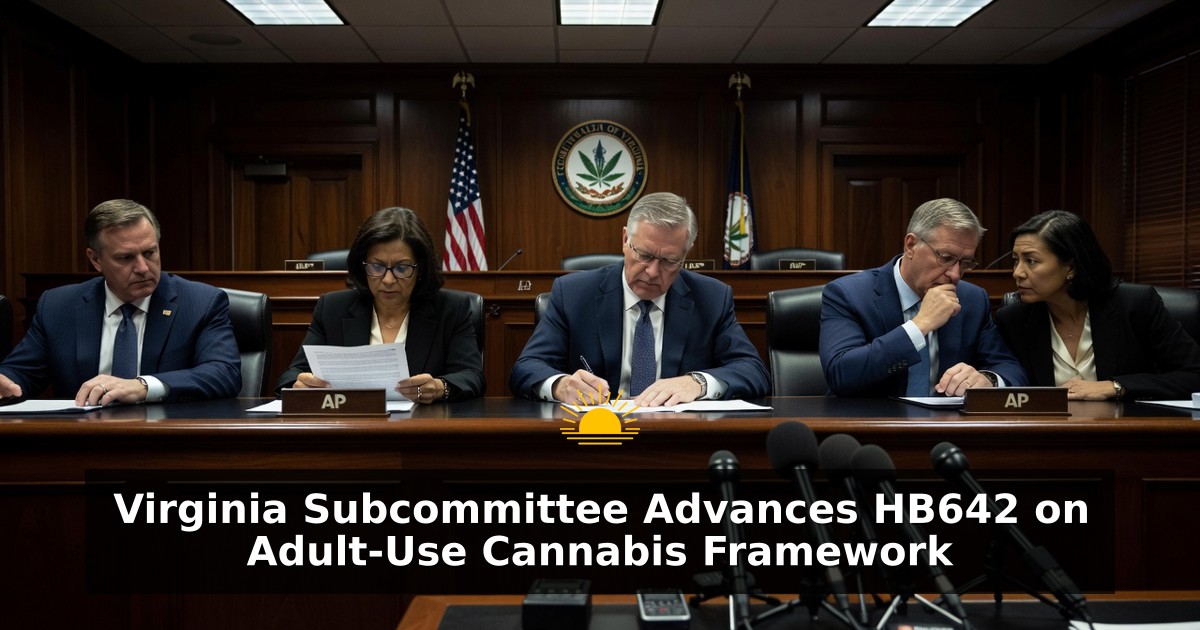
A House subcommittee in Virginia has advanced House Bill 642 with a substitute that establishes a comprehensive regulatory framework for adult-use cannabis across the Commonwealth. The measure addresses rules for a potential retail market, sets penalties for violations, and includes programs intended to address past harms linked to prohibition. Lawmakers on the panel reviewed the substitute language during the session and focused on strengthening enforcement tools while adjusting oversight structures. The action moves the legislation forward for further consideration in the budget process.
The core of HB642 centers on creating clear guidelines for legal adult-use cannabis operations if the framework takes effect. Supporters of structured regulation have long argued that defined rules help separate lawful commerce from unregulated activity. The bill outlines standards that would govern cultivation, distribution, and sales once a retail system is authorized. It also incorporates elements aimed at community reinvestment related to earlier enforcement practices under prohibition.
Penalties and Board Composition Revisions
The substitute version before the subcommittee increases penalties for any illegal sales of marijuana. This change seeks to deter unauthorized transactions that could undermine a regulated market and create public safety concerns. Higher sanctions would apply to individuals or entities operating outside the legal channels established by the framework. Officials indicated the adjustment aims to protect both consumers and compliant businesses by reinforcing the boundary between permitted and prohibited activity.
In addition to the penalty provisions, the substitute alters the makeup of the board of directors of the Virginia Cannabis Control Authority. Under the revised structure, the governor appoints four members of the board. The speaker of the House appoints two members, and the Senate Committee on Rules appoints one member. This distribution spreads appointment authority across the executive and legislative branches. The seven-member configuration is intended to balance perspectives in the authority’s decision-making process.
The revised appointment method places greater emphasis on shared responsibility for selecting directors who will oversee licensing, compliance, and market operations. Board members would guide implementation of retail rules and related programs once the broader framework is in place. Changes of this nature often reflect legislative interest in ensuring diverse input on an emerging industry. The structure also aligns the authority’s governance with other state boards that draw members from multiple appointing sources.
Retail Market Rules and Harm-Reduction Programs
HB642 includes detailed provisions for a retail cannabis market that would operate under state supervision. These rules cover product standards, testing requirements, packaging, and age verification to limit access by minors. The framework seeks to create a controlled environment in which adult consumers can purchase cannabis products from licensed outlets. Clear operational guidelines are designed to reduce the presence of untested or contaminated products that sometimes appear in unregulated settings.
Programs to address past harms from prohibition form another component of the legislation. Such initiatives typically examine the effects of earlier criminal penalties on communities and individuals. The bill contemplates measures that could support expungement processes, reinvestment in affected areas, or educational outreach. These elements aim to acknowledge historical disparities while building a forward-looking regulatory system. Implementation details would be refined through subsequent administrative actions by the Cannabis Control Authority.
Subcommittee Recommendation and Fiscal Review
The subcommittee unanimously recommended reporting the bill with the substitute and referring it to the appropriations committee. Unanimous support signals broad agreement among the panel members on the revised language. Referral to appropriations is a standard step for measures that may carry fiscal implications, including startup costs for regulatory infrastructure or ongoing oversight expenses. Lawmakers on the money committee will examine funding needs associated with board operations, enforcement capacity, and any reinvestment programs.
Further review in appropriations will allow detailed scrutiny of potential revenue from licensing fees and taxes alongside expenditure requirements. The process ensures that any new regulatory body receives adequate resources to fulfill its mandate without creating unplanned budget pressures. Stakeholders from industry, public health, and community organizations often provide input during these later stages. The timeline for full House consideration depends on the appropriations panel’s schedule and any additional amendments that may arise.
Broader Context for Cannabis Policy in Virginia
Virginia has taken incremental steps on cannabis policy in recent years, moving from decriminalization measures toward more structured approaches. Medical cannabis programs already operate under existing statutes, providing a foundation of licensed cultivation and dispensary experience. Adult-use discussions have focused on how to transition from limited access models to a full retail system while maintaining public health safeguards. HB642 represents one of the more detailed attempts to codify that transition through a single comprehensive bill.
Economic analyses frequently cite potential job creation in cultivation, processing, retail, and ancillary services if a regulated market opens. Local governments would also face decisions about zoning, local opt-out provisions, and coordination with state licensing. Public health agencies typically emphasize education on responsible use, impaired driving prevention, and youth access prevention as parallel priorities. The substitute’s higher penalties for illegal sales are viewed by some observers as a complementary tool to keep activity within licensed channels.
Oversight by a reconstituted Cannabis Control Authority board is expected to play a central role in translating statutory language into workable regulations. The appointment formula giving the governor four seats, the speaker two seats, and the Senate Committee on Rules one seat creates a specific balance of influence. This arrangement may affect how quickly guidance documents and licensing rounds are issued once enabling legislation is finalized. Continuity of expertise from any existing board members would depend on transition language that may still be refined.
As the bill proceeds, attention will turn to how the increased penalties interact with existing criminal statutes and whether additional clarifying amendments appear in later committees. The unanimous subcommittee vote provides momentum, yet the appropriations referral underscores that fiscal feasibility remains a key hurdle. Continued legislative work will determine whether the comprehensive framework outlined in HB642 advances toward final passage and eventual implementation across Virginia.
adult use cannabis appointments appropriations board of directors Governor HB642 illegal sales Marijuana past harms penalties prohibition recommendations regulatory framework retail market Senate Committee on Rules speaker subcommittee substitute Violations Virginia Virginia Cannabis Control Authority