Virginia Subcommittee Reviews Bill on Racial Bias in Patient Treatment
Updated
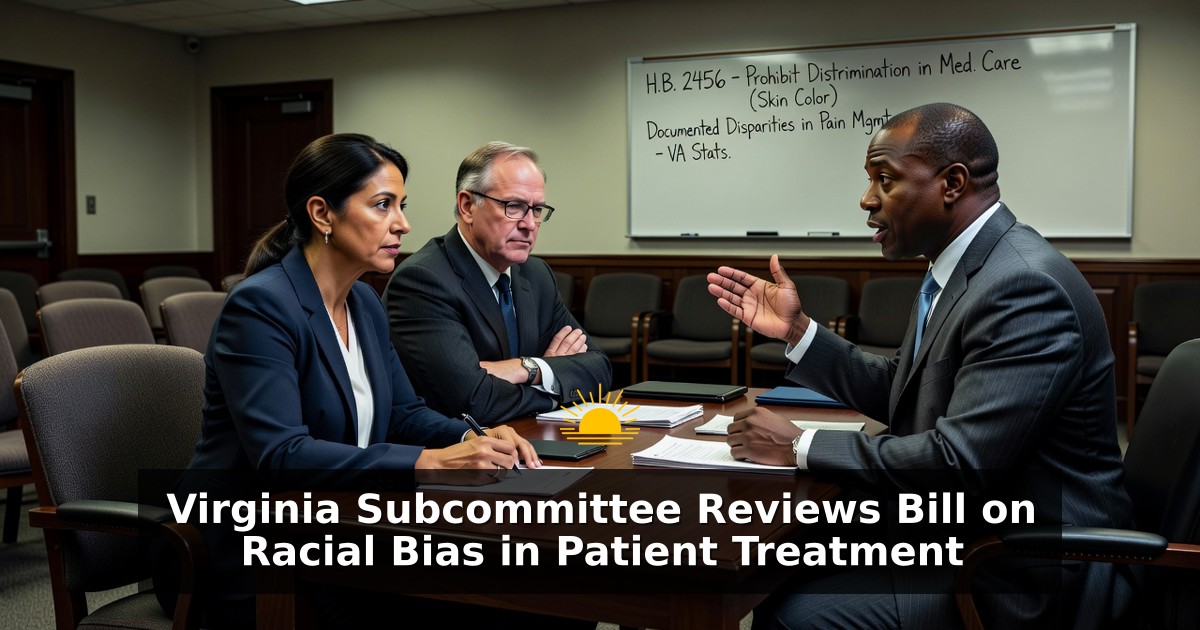
Virginia lawmakers on the Health Professions Subcommittee are examining legislation intended to address racial bias in patient care settings across the state. The proposal focuses on prohibiting discrimination against patients on the basis of skin color and responds to documented differences in how medical professionals assess and treat pain. Delegate Price spoke in defense of the measure during the subcommittee session, emphasizing that the bill reacts to existing divisions rather than creating them. Supporters frame the effort as a practical step to protect patient outcomes by establishing clear legal boundaries around biased clinical judgments.
The discussion centers on longstanding concerns that some clinicians hold inaccurate assumptions about biological differences linked solely to race. A 2016 report from researchers at the University of Virginia found that a portion of medical trainees and practitioners endorsed false beliefs that Black patients experience pain differently from white patients. Those beliefs correlated with disparities in recommended pain treatment, according to the peer-reviewed findings. The only consistent physical distinction identified in the research was skin color, underscoring that the variations in care stemmed from perception rather than verified physiology.
Delegate Price told the subcommittee that personal accounts from members and members of the public illustrated the real-world effects of such assumptions. The delegate argued that dismissing the underlying evidence would ignore established research and lived experiences shared during the hearing. Price stressed that the legislation aims to save lives by confronting bias that already influences clinical decisions. The remarks positioned the bill as a response to division originating from racial judgments rather than an attempt to introduce new divisions into medical practice.
Historical Context of Pain Treatment Disparities
Medical literature has recorded differences in pain management for years, with multiple studies showing that Black patients often receive lower doses of analgesics or face longer waits for treatment in emergency settings. The University of Virginia research added specificity by surveying medical students and residents about biological myths, including notions that Black individuals have thicker skin or less sensitive nerve endings. Those misconceptions appeared in a measurable share of respondents and aligned with less aggressive pain-relief recommendations for Black patients in hypothetical cases. Subsequent analyses have reinforced that such gaps persist even after controlling for insurance status, age, and reported pain levels.
Public health experts note that untreated or undertreated pain can lead to prolonged recovery, higher rates of chronic conditions, and reduced trust in the healthcare system. When clinicians rely on race-based heuristics instead of individual assessment, patients may experience avoidable suffering and poorer long-term health metrics. Virginia’s proposed measure seeks to convert these observations into enforceable standards by declaring discrimination based on skin color unlawful in professional medical conduct. Advocates maintain that shifting the conversation from moral persuasion to legal accountability provides clearer guidance for licensing boards and practitioners.
Subcommittee members heard arguments that the bill is neither extreme nor polarizing but instead grounds itself in documented clinical patterns. Price reiterated that the legislation does not invent new categories of difference; it simply prohibits acting on unfounded racial assumptions that the University of Virginia study and related research have already identified. The delegate underscored the distinction between morality and legality, stating that the measure would make it illegal to discriminate against patients according to skin color. Clarity on that point, Price said, remains essential for both providers and the public.
Implications for Medical Practice and Oversight
If advanced, the bill would likely direct the relevant health regulatory boards to incorporate explicit prohibitions into standards of practice and disciplinary frameworks. Practitioners could face review for patterns of care that systematically diverge along racial lines without clinical justification. Training programs might expand modules on evidence-based pain assessment that emphasize individualized evaluation over group-based assumptions. Hospitals and clinics would need to audit protocols to ensure that pain scales, medication protocols, and triage decisions remain free from race-linked shortcuts.
Supporters point out that similar anti-discrimination principles already govern other aspects of healthcare delivery, including insurance coverage and facility access. Extending those principles to bedside decision-making around pain aligns with broader patient-safety goals. Critics of race-based clinical myths argue that accurate physiology education, combined with legal clarity, reduces the risk that outdated beliefs continue to shape treatment. The subcommittee process allows lawmakers to weigh testimony, research summaries, and potential implementation costs before deciding whether to move the proposal forward.
The University of Virginia findings continue to serve as a reference point in national conversations about equity in medicine. Follow-up studies have examined how early educational interventions can reduce endorsement of biological falsehoods among new physicians. Virginia’s legislative effort builds on that body of work by pairing awareness with a prospective legal standard. Delegate Price’s comments framed the bill as a protective measure that acknowledges bias already present in some clinical encounters and seeks to limit its impact on patient lives.
Broader Legislative and Professional Landscape
Health professions subcommittees routinely review bills that update scopes of practice, continuing-education requirements, and patient-protection rules. This particular proposal fits within that oversight role by targeting a specific form of differential treatment that research has linked to measurable harm. Lawmakers must balance the desire for clear prohibitions against concerns about administrative burden or unintended effects on clinical judgment. Neutral observers note that successful implementation would depend on precise regulatory language and consistent enforcement by licensing authorities.
Patients and advocacy organizations have long called for stronger safeguards against bias in pain care, citing both statistical disparities and individual stories of undertreatment. The subcommittee hearing provided a venue for those concerns to be aired alongside the scientific record. By focusing on skin color as the sole biological marker referenced in the disputed beliefs, the legislation attempts to isolate an unjustified variable from legitimate medical considerations such as genetics, comorbidities, or patient-reported symptoms. The approach keeps the policy tethered to the evidence base rather than to broader social debates.
As the measure proceeds through the legislative process, stakeholders will examine how existing anti-discrimination statutes interact with the new language. Professional associations may offer guidance on documentation practices that demonstrate individualized care. Medical schools in Virginia could review curricula to ensure that students encounter the University of Virginia study and related findings early in their training. These complementary steps would reinforce the legal standard with educational and cultural supports inside the profession.
The core assertion presented to the subcommittee remains straightforward: documented beliefs about racial differences in pain sensitivity have influenced treatment recommendations, and those beliefs lack biological foundation beyond skin color. Making discrimination on that basis illegal supplies a concrete tool for accountability. Delegate Price’s defense of the bill centered on that factual foundation and on the practical goal of safeguarding patients from preventable harm. Further deliberation will determine the final form of any statute and the timeline for its potential enactment.
anti-discrimination bill bias in medicine biological differences board certified doctors health equity Health Professions Subcommittee legality vs morality medical treatment pain management patient care patient experiences race-based medicine racial bias saving lives skin color discrimination subcommittee hearing subcommittee members University of Virginia UVA report Virginia legislation