Virginia Lawmakers Weigh House Bill 444 on Debt Lawsuit Transparency
Updated
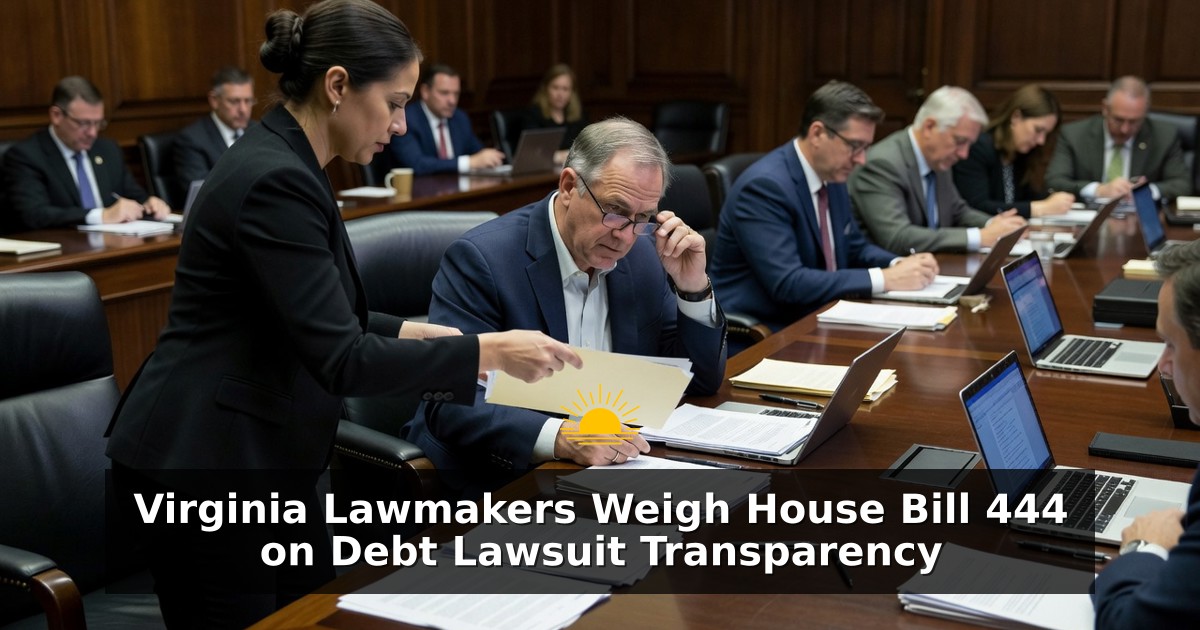
House Bill 444 has drawn attention in Virginia as lawmakers examine ways to address widespread confusion surrounding debt collection lawsuits. Supporters say the measure would require creditors and third-party collectors to include additional identifying information when filing suit. The goal is to help residents recognize the origin of claimed debts and decide whether to respond. Nearly 200,000 consumers face such lawsuits across the commonwealth every year, according to data cited in legislative discussions. Many of those cases involve entities the defendant has never dealt with directly.
Eshan Calra of the Pew Charitable Trusts testified in support of the bill before a House civil subcommittee. He explained that large numbers of defendants fail to appear in court because they cannot identify the plaintiff or the original source of the alleged debt. In numerous instances the original provider of goods or services is no longer the party bringing the action. Instead a third-party purchaser of the debt initiates the lawsuit, leaving the consumer without clear context. Calra told lawmakers that clearer disclosures would allow more people to participate meaningfully in their cases.
The Scope of Debt Collection Litigation
Debt collection suits represent a substantial share of civil filings in Virginia courts. Industry practices often involve the sale of delinquent accounts to specialized buyers who then pursue legal recovery. These transfers can occur multiple times, further distancing the current claimant from the original transaction. As a result, summons documents sometimes list company names unfamiliar to the person being sued. Without readily available details linking the claim to a specific account or purchase, many recipients set the paperwork aside. Default judgments frequently follow when no answer is filed.
Research on consumer debt litigation shows that lack of recognition is a primary reason for non-participation. When defendants do engage, courts more readily identify errors such as incorrect balances, already-paid accounts, or debts past the statute of limitations. Participation also opens pathways to negotiated resolutions. Creditors, in turn, gain higher prospects of voluntary repayment plans rather than relying solely on enforced judgments. House Bill 444 seeks to institutionalize the provision of basic identifying data so that these outcomes become more common.
Key Provisions Under Consideration
The legislation would mandate that any party suing to collect a consumer debt supply information sufficient for the defendant to verify the claim. Required elements could include the name of the original creditor, the date of the last payment or charge, and an account reference that matches records the consumer might still possess. Third-party debt buyers would face the same obligations as original creditors. Proponents argue these steps impose minimal administrative burden while reducing the volume of uncontested yet inaccurate judgments. The bill does not alter substantive debt-collection rights; it focuses on procedural clarity at the outset of litigation.
Consumer advocates note that added costs such as attorney fees, court expenses, and interest often accumulate after a default judgment is entered. When a defendant appears and successfully challenges inaccuracies, judges routinely waive or reduce those extras. Clearer initial disclosures increase the likelihood of early appearances and therefore of cost adjustments. At the same time, creditors benefit when consumers who acknowledge valid debts enroll in structured payment arrangements. Both sides, according to testimony, stand to gain from fewer purely procedural defaults.
Broader Context of Consumer Protections
Virginia has periodically updated its consumer-credit statutes to reflect changes in the debt marketplace. The rise of debt buying as a distinct industry has prompted similar transparency measures in other states. Studies conducted by nonpartisan research organizations have documented parallel patterns nationwide: high volumes of suits, low appearance rates, and frequent mismatches between court filings and consumers’ recollections. House Bill 444 aligns with that body of findings by targeting the information gap rather than the underlying right to collect. Lawmakers continue to weigh the precise list of data elements that would satisfy the bill’s requirements.
Legal aid organizations report that clients regularly present summonses bearing plaintiff names they do not recognize. In many of those consultations the underlying obligation proves either incorrect, time-barred, or already resolved. Providing original-creditor details and account history at the pleading stage would allow earlier triage of such cases. Court clerks and judges could also benefit from fewer motions to set aside default judgments entered against parties who never understood the claim. Efficiency gains in high-volume civil dockets remain an ancillary consideration for supporters.
Potential Effects on Court Processes
If enacted, the measure would apply to new debt-collection filings throughout Virginia’s general district and circuit courts. Plaintiffs would incorporate the additional information into standard complaint forms or attach supporting schedules. Defendants receiving more complete packages would possess a practical basis for investigating their own records or seeking advice. Higher response rates could shift a portion of cases from default dockets to contested or settled tracks. Observers caution that implementation details, including any safe-harbor language for good-faith efforts, will shape real-world compliance.
Calra emphasized during his appearance that the bill’s design encourages voluntary resolution. When consumers understand the debt, they are better positioned to dispute errors or to arrange payment. Creditors correspondingly recover more through agreed plans than through post-judgment enforcement actions that may yield little. The testimony framed the proposal as a balanced adjustment rather than a restriction on legitimate collection activity. Subcommittee members received the presentation as part of a broader hearing on civil-practice measures.
Ongoing Legislative Examination
House Bill 444 remains under review as the session progresses. Stakeholders from consumer groups, the collections industry, and the judiciary continue to supply input on workable standards. The core factual predicate—nearly 200,000 annual debt suits and widespread non-recognition of plaintiffs—has not been contested in public discussions. Attention centers on how much detail is necessary to achieve the intended identification benefit without creating undue filing complexity. Any final version would likely include an effective date allowing courts and filers time to adapt forms and procedures.
The debate reflects larger questions about access to justice in routine civil matters. Debt lawsuits touch residents across income levels and geographic regions of Virginia. Ensuring that the first court paper a defendant receives contains enough context to prompt an informed response is presented as a modest yet meaningful step. Whether the bill advances in its current form or with amendments, the underlying data on case volume and participation rates have established a clear policy backdrop for lawmakers.
Supporters maintain that transparency at the filing stage serves the interests of accuracy, fairness, and efficient case management. By equipping defendants with tools to recognize and evaluate claims, the legislation aims to reduce preventable defaults and the cascading costs that follow. The Pew Charitable Trusts and other research entities have underscored these dynamics in multiple jurisdictions. Virginia’s consideration of House Bill 444 places the commonwealth among states actively recalibrating debt-litigation procedures to match contemporary market practices.
consumer advocacy consumer protection cost recovery court cases creditors debt identification debt lawsuits debt litigation debt resolution financial services financial transparency House Bill 444 legal participation legal process legal reforms Pew Charitable Trust third-party creditors transparency Virginia Virginia legislation