Virginia Lawmakers Advance House Bill 702 on Local Firearm Buyback Programs
Updated
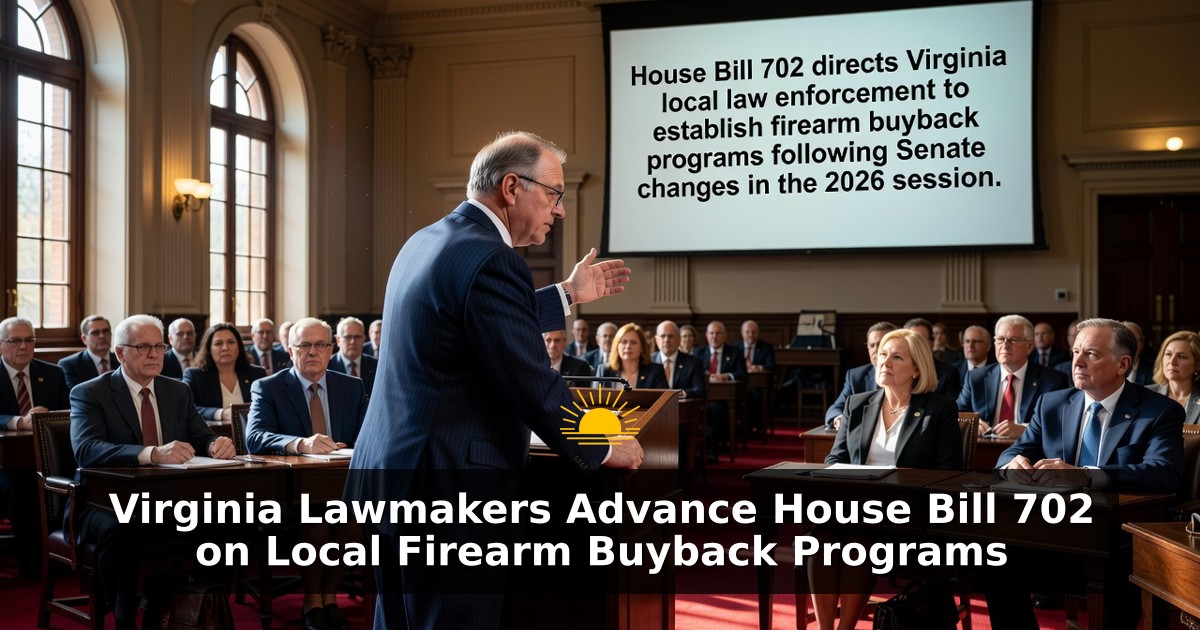
Virginia legislators considered House Bill 702 during the Regular Session on February 27, 2026, focusing on a measure that would require local law enforcement agencies to create firearm buyback programs. The proposal aims to provide structured opportunities for residents to voluntarily surrender firearms in exchange for compensation. Officials framed the initiative as one element in ongoing discussions about community safety and the management of unwanted or excess guns. The bill advanced after review of a Senate substitute that adjusted its placement within state code. Lawmakers examined how such programs might operate across cities and counties without mandating participation by gun owners.
The core provision of House Bill 702 directs local police departments and sheriffs offices to implement buyback events or ongoing collection efforts. These programs typically allow individuals to turn in firearms anonymously or with limited documentation in return for cash, gift cards, or other incentives. Supporters of similar measures in past years have argued that buybacks can remove guns from circulation that might otherwise be stolen, misused, or left unsecured in homes. Critics have often questioned the long-term effect on crime rates while noting that participation remains entirely voluntary. The current bill seeks to standardize the expectation that localities will offer such options rather than leaving the decision solely to individual agencies.
Senate Substitute Alters Bill Classification
A Senate substitute revised House Bill 702 by reclassifying it from a Section One bill to a measure placed in Chapter 15 of the Virginia code. Section One bills often address temporary or uncodified directives, whereas incorporation into Chapter 15 integrates the requirement more permanently into existing statutes governing local government and public safety operations. This change clarifies the legal foundation for agencies tasked with running the programs and may affect how funding, reporting, and oversight are handled. Legislative staff presented the substitute as a technical improvement that aligns the directive with other code provisions related to law enforcement responsibilities. The adjustment received attention during floor discussion as members weighed the practical implications for implementation timelines.
Local law enforcement agencies would bear primary responsibility for designing and conducting the buyback activities under the bill. Departments could choose one-day collection events, partnerships with community organizations, or continuous drop-off options depending on available resources and local needs. Coordination with state guidelines would likely address issues such as safe handling, transportation, and eventual destruction or disposal of surrendered firearms. Many Virginia localities have previously experimented with voluntary turn-in events on a smaller scale, providing a base of operational experience. The legislation would elevate those practices from optional community outreach to a more consistent statewide expectation.
Context of Firearm Buyback Efforts in Virginia
Firearm buyback programs have appeared periodically in Virginia communities as tools intended to reduce the number of unwanted guns in private hands. Past events in various cities and counties have collected hundreds of firearms ranging from handguns to long guns, often with no questions asked about ownership history. Research on buybacks nationally shows mixed results regarding measurable drops in gun violence, yet organizers frequently highlight the removal of weapons that owners no longer wish to keep. Virginia statutes already regulate firearm transfers, storage recommendations, and prohibited persons, creating a broader legal environment in which buybacks would function. House Bill 702 builds on that framework by encouraging proactive collection rather than relying solely on enforcement after crimes occur.
Funding mechanisms for the proposed programs remain an important practical consideration for local governments. Agencies might draw on existing public safety budgets, seek state grants, or partner with private donors and nonprofit groups to cover incentive payments and administrative costs. Transparent accounting would be necessary to maintain public trust and demonstrate that resources are used efficiently. Some localities have previously combined buybacks with educational outreach on safe storage and suicide prevention, expanding the community benefit beyond simple collection. The bill’s directive leaves room for such complementary activities while focusing the mandatory element on the buyback itself.
Community Safety and Ownership Considerations
Discussions surrounding House Bill 702 touched on the balance between expanding voluntary options and respecting lawful gun ownership. The measure does not compel any resident to surrender a firearm and contains no new restrictions on purchases or possession by eligible individuals. Instead, it creates an additional pathway for those who decide they no longer want certain weapons in their households. Public health researchers have noted that reducing easy access to firearms during moments of crisis can form one component of broader safety strategies. At the same time, Second Amendment advocacy groups routinely emphasize that effective programs must avoid any appearance of coercion or data collection that could later be misused.
Implementation details will determine how smoothly the programs operate once the bill takes effect. Training for officers on safe intake procedures, secure temporary storage, and proper documentation will be essential to prevent accidents or loss of collected weapons. Collaboration with neighboring jurisdictions could allow smaller departments to share resources or schedule joint events that serve multiple communities. Regular evaluation of participation rates, types of firearms recovered, and associated costs would help lawmakers and local leaders refine the approach over time. House Bill 702 positions these operational questions as matters for local execution under a clear state directive.
Legislative Path and Broader Implications
The acceptance of the Senate substitute during the February 27, 2026, session marked a procedural step toward final passage of House Bill 702. Members reviewed the reclassification language to ensure consistency with other public safety chapters already in the code. Broader efforts to address gun-related issues in Virginia have included a range of proposals on background checks, extreme risk protective orders, and safe storage education. This particular bill concentrates on the voluntary surrender mechanism as a complementary tool rather than a standalone solution. Its progress reflects continued interest among lawmakers in testing practical methods that localities can administer directly.
If enacted, House Bill 702 would require agencies across the commonwealth to plan and publicize buyback opportunities within a reasonable timeframe. Residents would gain clearer information about when and where they can turn in firearms they no longer wish to keep. Over time, cumulative data from multiple localities could inform future policy adjustments based on actual recovery volumes and community feedback. The legislation underscores a preference for structured, voluntary programs over purely reactive measures. Continued oversight by the General Assembly would allow refinement as operational experience accumulates in the years following implementation.
Observers note that the success of any buyback initiative depends heavily on public awareness and trust in the process. Clear communication that the programs are optional, confidential where permitted, and focused on safety can encourage participation from diverse households. Partnerships with faith groups, civic organizations, and neighborhood associations have strengthened turnout in earlier local efforts. House Bill 702 provides the statutory foundation for those partnerships to expand under a uniform expectation. The measure therefore represents both a policy directive and an invitation for communities to engage constructively with local law enforcement on firearm-related concerns.
2026 bill Buyback community safety February 27 Firearm firearm buyback firearm reduction gun safety House House Bill 702 Law Enforcement Legislation program Regular Regular Session Senate substitute session table