Virginia House Advances Bill Creating Education Advisory Board for African-American, Asian-American and Indigenous Students
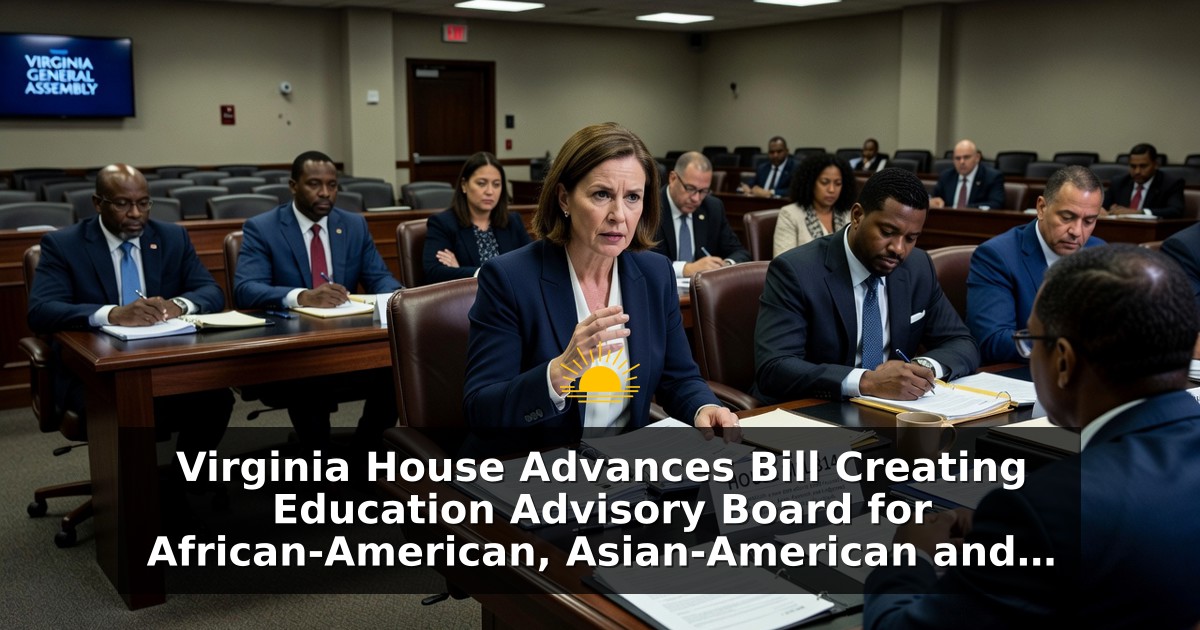
House Bill 814 advanced in the Virginia General Assembly after lawmakers moved to report the measure during a recent committee session. The legislation, sponsored by Delegate Reaser, seeks to establish the Virginia African-American, Asian-American, and Indigenous Education Advisory Board. This body would provide guidance on educational matters affecting students from these communities across the Commonwealth. Officials described the proposal as the final K-12 education bill under consideration from the delegate in the current cycle. The action clears the way for additional review as the measure proceeds through the legislative process.
The core purpose of House Bill 814 centers on creating a formal advisory structure within Virginia’s education framework. The proposed board would examine policies, curricula and programs related to African-American, Asian-American and Indigenous students. Supporters of similar advisory mechanisms in other states have long noted the value of dedicated input on representation and cultural relevance in classroom materials. In Virginia, the bill positions the new board to offer recommendations aimed at improving educational outcomes and ensuring broader perspectives shape school practices. Lawmakers indicated the step supports a more inclusive approach to K-12 policy development.
Virginia’s public education system already includes several specialized advisory groups that address distinct student populations and subject areas. The addition of this board would expand that network by focusing specifically on African-American, Asian-American and Indigenous education concerns. Board members would likely draw from educators, community leaders, parents and subject-matter experts familiar with the histories and experiences of these groups. Their collective input could inform the Virginia Department of Education and local school divisions on best practices. Such structured advice has proven useful in refining instructional standards and professional development offerings in past initiatives.
Under the framework outlined in the legislation, the advisory board would operate in a consultative capacity rather than an enforcement role. It would review existing educational resources and suggest updates that reflect accurate historical and cultural content. Discussions during the committee session highlighted the bill’s intent to give every student’s background a clearer voice in system-wide decisions. Proponents framed the measure as a practical tool for equity without altering core academic requirements. The reporting motion advanced the bill for further deliberation in subsequent stages of the House process.
Legislative observers noted that House Bill 814 fits within a broader pattern of Virginia efforts to strengthen culturally responsive education. Previous sessions have seen measures addressing teacher training, textbook reviews and community engagement on diversity topics. This particular bill concentrates authority in an advisory board whose recommendations could reach both state and local levels. Delegate Reaser presented the proposal as a culminating K-12 priority, underscoring its place among education-focused legislation. Committee members responded by moving the bill forward, signaling initial support for continued examination.
The establishment of the Virginia African-American, Asian-American, and Indigenous Education Advisory Board would require defining membership criteria, meeting schedules and reporting duties. Typical structures for comparable boards include staggered terms to maintain continuity and balanced geographic representation from across the Commonwealth. Appointees might include individuals with direct experience in public schools serving significant populations of the named student groups. The board’s work product could take the form of annual reports or targeted policy briefs submitted to education officials. These outputs would remain advisory, leaving final decisions with elected and appointed education authorities.
Education policy analysts familiar with Virginia’s system emphasize that advisory boards succeed when they maintain clear mandates and transparent operations. House Bill 814 appears designed to meet those standards by focusing on three specific communities whose educational experiences have drawn increasing attention. Data collected by state agencies already track achievement gaps, graduation rates and advanced coursework participation among various demographic groups. An advisory board could help interpret those figures and propose targeted supports. The legislation does not mandate new spending but creates a vehicle for informed recommendations that future budgets might address.
Local school boards and division superintendents would retain primary responsibility for implementing any guidance that emerges from the new state board. Virginia’s tradition of local control in education means advisory recommendations serve as resources rather than directives. Districts with larger African-American, Asian-American or Indigenous student populations might find the board’s insights especially relevant to curriculum committees and family engagement strategies. Smaller or more rural divisions could still benefit from statewide best-practice documents. The bill’s advancement keeps these possibilities under active legislative consideration.
As the measure moves beyond the initial reporting stage, additional hearings will allow for public comment and potential amendments. Stakeholders including teachers’ associations, parent organizations and cultural heritage groups are expected to monitor the bill’s progress closely. Neutral observers stress that the ultimate impact will depend on the quality of appointments and the seriousness with which recommendations are received. House Bill 814 represents one concrete proposal among many education items in the current session. Its focus on structured advisory input distinguishes it from broader funding or standards bills.
The Virginia General Assembly continues to weigh a range of K-12 proposals each year, reflecting ongoing debates over how best to serve a diverse student body. House Bill 814 contributes to that conversation by institutionalizing a dedicated forum for African-American, Asian-American and Indigenous education perspectives. Delegate Reaser’s sponsorship places the concept before colleagues for formal action. The successful motion to report demonstrates procedural momentum at this early point. Further votes will determine whether the advisory board becomes part of Virginia’s permanent education landscape.
In practical terms, the board could examine topics such as inclusive history instruction, support for English learners from Asian-American backgrounds, and resources for Indigenous cultural education. These areas intersect with existing Standards of Learning and teacher licensure requirements. Recommendations might encourage partnerships with museums, universities and tribal organizations already active in educational outreach. The legislation itself remains concise, leaving operational details to be refined through implementation if enacted. Committee advancement marks the first official step in that longer process.
Virginia’s demographic profile has grown more varied over recent decades, with rising numbers of students identifying as Asian-American and continued significant African-American enrollment in many divisions. Indigenous communities, though smaller in absolute numbers, maintain distinct educational interests tied to sovereignty and cultural preservation. An advisory board offers a standing mechanism to surface those interests regularly rather than through ad-hoc task forces. Lawmakers supporting the bill described it as a forward-looking investment in representation. The neutral procedural action of reporting the measure allows the full House to consider those arguments in due course.
Looking ahead, the path for House Bill 814 includes possible cross-over to the Senate and eventual presentation to the governor if it secures final passage. Each stage provides opportunities for refinement based on testimony and fiscal impact statements. Education committees customarily solicit input from the Department of Education staff who would interact with any new board. That collaboration helps align advisory functions with existing agency capacities. The bill’s current status as reported keeps it alive for those subsequent discussions.
The creation of specialized education advisory boards has precedents both in Virginia and in peer states seeking to address equity and inclusion systematically. House Bill 814 adapts that model to three named communities whose histories form essential parts of the Commonwealth’s story. By advancing the legislation, the House committee affirmed interest in formalizing their educational voice. Delegate Reaser’s role as patron anchors the proposal in the current session’s K-12 agenda. Continued legislative scrutiny will test the bill’s details against standards of effectiveness and fiscal prudence.
Observers of Virginia education policy will track whether the advisory board, if established, produces actionable guidance that school divisions can readily use. Success metrics might include improved cultural competence among educators, richer instructional materials and stronger family-school partnerships. The legislation does not guarantee those outcomes but supplies a dedicated structure intended to pursue them. Neutral reporting of the bill’s progress simply records that lawmakers have chosen to move the concept forward for deeper review. That step itself constitutes the immediate factual development emerging from the committee session.
Advisory Board African-American Asian-American Asian-American Education bill delegate Delegate Reaser Delegate Research Education Education Advisory House Bill Indigenous Indigenous Education K12 K-12 Okay research Virginia Virginia African-American