Virginia Delegate Cites Housing Crisis in Subcommittee Push to Advance Measure
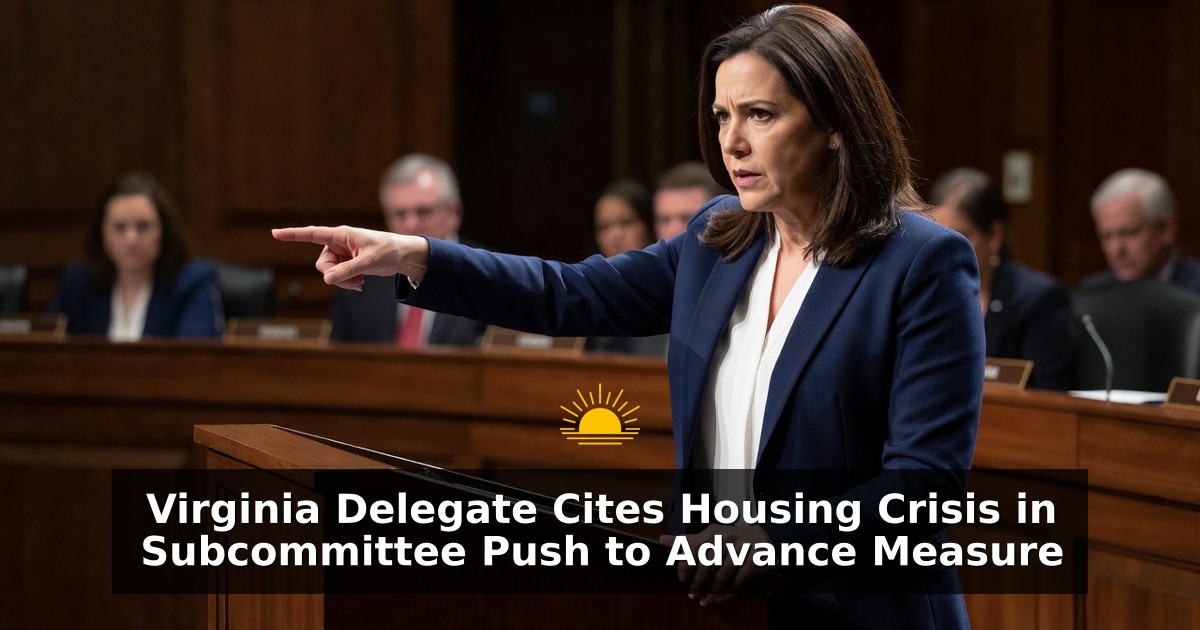
A Virginia General Assembly civil subcommittee session recently featured pointed discussion of the Commonwealth’s ongoing housing shortage and the need for carefully crafted legislative responses. Delegate Keys-Gamarra told colleagues she would be willing to offer a motion to advance the matter under review if members wished to proceed, while underscoring that clearer language would be essential before any proposal reached the full committee. The delegate framed the housing crisis as the sole justification for considering the action at this stage. She also stressed that any path forward must not eliminate residents’ ability to seek relief in the courts.
Virginia has faced persistent pressure on housing supply and affordability for several years, with demand outpacing new construction in many localities. Rising rents, limited inventory of starter homes, and elevated construction costs have combined to create acute challenges for working families, seniors, and young adults entering the market. Local governments and state agencies have documented lengthening wait lists for assisted housing and increased rates of housing instability. Lawmakers have repeatedly examined landlord-tenant statutes, eviction timelines, and related civil procedures as part of broader efforts to stabilize communities.
Subcommittee Focus on Clarity and Process
During the civil subcommittee exchange, Delegate Keys-Gamarra indicated openness to moving the discussion forward through a formal motion while acknowledging uncertainty about the ultimate outcome. She described the step as rolling the dice, reflecting the competitive and often unpredictable nature of the legislative calendar. At the same time, she made clear that the current draft or concept would require sharper definition before it could responsibly advance to the full committee. Such insistence on precision is common in civil justice and housing-related bills, where ambiguous wording can produce unintended consequences for both property owners and tenants.
Committee members routinely weigh how proposed changes interact with existing Virginia Code provisions governing unlawful detainers, notice requirements, and judicial remedies. Housing measures frequently touch on the balance between efficient resolution of possession disputes and meaningful due-process protections. Observers of the General Assembly note that civil subcommittees often serve as the first detailed filter for these complex topics. Clearer statutory language at this stage can reduce later floor amendments and improve the odds of coherent implementation once a bill becomes law.
Housing Shortage as Central Rationale
Keys-Gamarra stated explicitly that the Commonwealth’s housing crisis constitutes the only reason she believes the proposal merits consideration. That framing places the discussion inside a larger policy conversation that has spanned multiple sessions. State reports and regional planning district analyses have highlighted shortages of affordable units in Northern Virginia, Hampton Roads, Richmond, and smaller metropolitan areas alike. Workforce housing gaps affect teachers, first responders, and service employees who struggle to live near their jobs. Rural localities face distinct pressures tied to aging housing stock and limited new development.
Legislative responses in prior years have included incentives for affordable development, adjustments to zoning enabling statutes, and targeted funding for emergency rental assistance. Civil procedure changes sometimes accompany these efforts when lawmakers conclude that court processes themselves influence housing stability. Any proposal that alters filing requirements, hearing timelines, or available defenses therefore draws close scrutiny. The delegate’s remarks positioned the housing emergency as the overriding public-interest rationale while simultaneously drawing a firm boundary around access to judicial forums.
Protecting Pathways to the Courts
A central caution voiced in the subcommittee centered on preserving people’s ability to appear in court. Keys-Gamarra emphasized that she does not want steps taken in the name of housing relief to cut off access altogether. In Virginia, general district courts handle the bulk of landlord-tenant and eviction-related cases, offering relatively rapid dockets compared with circuit courts. Tenants and landlords alike rely on these venues to assert rights, present evidence, and obtain enforceable orders. Advocacy organizations and bar groups regularly monitor legislation that could raise filing barriers, shorten response windows, or limit available claims.
Maintaining court access is viewed by many stakeholders as essential to fairness and to the orderly functioning of the rental market. Property owners seek predictable timelines for recovering possession when rent remains unpaid or lease terms are broken. Occupants seek opportunities to raise defenses such as habitability issues, improper notice, or payment disputes. Striking a workable balance has proven difficult in past sessions, and the delegate’s comments signal that any motion she might offer would still be conditioned on safeguarding those pathways. Clearer drafting before full committee review would presumably address how the measure interacts with existing rights to notice, hearing, and appeal.
Broader Context for Virginia Housing Policy
Beyond the immediate subcommittee exchange, Virginia continues to confront structural drivers of the housing shortage. Population growth in high-cost regions, interest-rate fluctuations, supply-chain effects on building materials, and local land-use constraints all contribute to constrained inventory. State leaders have explored denser development near transit, expanded use of manufactured and modular housing, and public-private partnerships aimed at increasing unit production. Civil justice reforms are only one slice of that larger agenda, yet they often become flashpoints because they directly affect day-to-day relationships between landlords and tenants.
Delegate Keys-Gamarra’s willingness to make a motion if colleagues desire progress illustrates the procedural flexibility available inside subcommittee settings. Members can choose to advance imperfect language with the expectation of refinement, or they can hold a matter until greater consensus forms. Her dual emphasis on the urgency of the housing crisis and the non-negotiable value of court access encapsulates the tension many legislators confront. Future full-committee consideration, should the matter proceed, would likely feature more detailed testimony from housing advocates, real-estate interests, legal-aid providers, and local court clerks.
As the General Assembly session continues, housing affordability remains a dominant theme across multiple committees. Measures touching financing, land use, and civil procedure will be evaluated against the lived experience of Virginia families struggling to secure stable homes. The civil subcommittee discussion led by Keys-Gamarra’s remarks adds one more data point to that ongoing deliberative record. Lawmakers will need to translate broad concern about the crisis into precise statutory text that can withstand both practical implementation and constitutional scrutiny while keeping courthouse doors open.
access to the courts clarity clearer committee consider this courts crisis cut off access full committee full committee clarity go forward Housing Housing Crisis housing crisis reason make a motion motion motion to consider people's access roll the dice