Virginia Lawmakers Weigh Farm Worker Wage Exemption Amid Ongoing Agricultural Losses
Updated
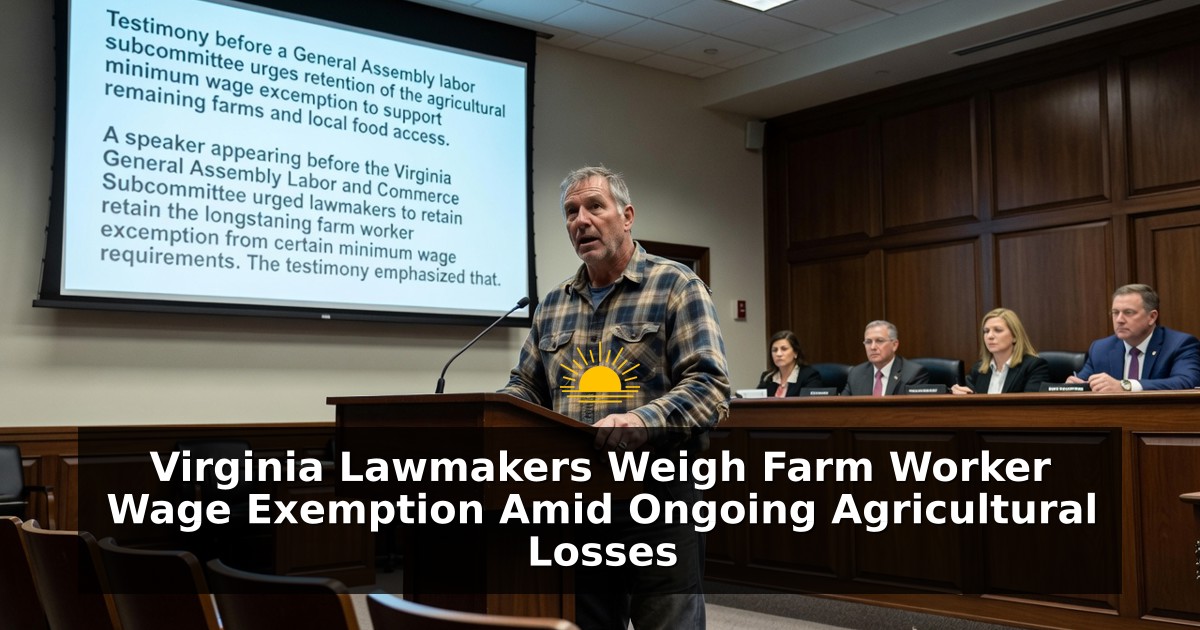
A speaker appearing before the Virginia General Assembly Labor and Commerce Subcommittee urged lawmakers to retain the longstanding farm worker exemption from certain minimum wage requirements. The testimony emphasized that most farmers in the Commonwealth already pay wages above the statutory minimum. Maintaining the exemption, the speaker said, would allow some operations to keep offering stable employment, scheduling flexibility, and competitive pay while navigating economic uncertainties that continue to pressure the sector.
Virginia agriculture has experienced measurable contraction in recent years, with thousands of farms and substantial acreage leaving production. Officials and industry observers have tracked the steady decline through successive agricultural censuses and state reports. The losses are not confined to rural counties. When farms close or consolidate, the effects ripple outward through higher retail food prices, extended supply chains, and diminished availability of fresh, locally grown products in both urban and suburban markets.
Subcommittee members heard that equitable access to affordable, nutritious food across Virginia depends on the continued viability of remaining farms and the workforce that supports them. The speaker linked farm survival directly to community food security, noting that urban residents as well as rural ones benefit when nearby producers remain in business. Support for keeping the farm worker exemption was framed as one practical step toward preserving that capacity rather than accelerating further exits from farming.
Agricultural exemptions from certain labor standards have existed under both federal and Virginia law for decades, reflecting the seasonal, weather-dependent, and often family-based nature of farm work. Proponents argue the flexibility helps smaller and mid-sized operations manage cash-flow swings that differ sharply from those of year-round retail or manufacturing employers. Critics of exemptions periodically call for broader coverage, yet the testimony presented to the subcommittee stressed that prevailing farm wages already exceed the floor in most cases and that removing the exemption could impose new administrative and cost pressures at a vulnerable moment.
Data compiled by state and federal agricultural agencies show Virginia has shed thousands of farms over the past two decades while also losing significant farmland to development, inheritance transitions, and economic consolidation. The remaining operations increasingly specialize or scale up to remain competitive. Labor availability and cost rank among the recurring concerns cited by producers, alongside input prices, weather volatility, and market access. In that context, the speaker described the exemption as a tool that helps some farms continue providing steady jobs rather than reducing hours or exiting production altogether.
Beyond the farm gate, the disappearance of local production lengthens the distance food travels before reaching consumers. Longer supply chains can raise transportation costs and reduce the freshness of produce available in grocery stores and farmers markets. Urban communities that once relied on nearby growers for seasonal fruits, vegetables, and other products experience those effects as higher prices or reduced selection. The testimony connected these consumer outcomes to the underlying health of the farm sector and the workers who keep it functioning.
Lawmakers on the Labor and Commerce Subcommittee routinely examine proposals that affect wage floors, overtime rules, and industry-specific carve-outs. The January hearing provided an opportunity to hear directly from stakeholders about how proposed changes might interact with existing agricultural realities. The speaker closed by respectfully requesting that the panel support continued maintenance of the farm worker exemption, arguing that the measure helps sustain both employment on farms and broader access to locally produced food.
Virginia’s agricultural economy remains a meaningful contributor to state output, employment, and land stewardship even after years of attrition. Dairy, poultry, row crops, horticulture, and specialty operations still generate substantial farm-gate value and support related processing and distribution jobs. Policy choices that influence labor costs are therefore watched closely by producers, farm organizations, and rural economic development officials. The subcommittee appearance added one more data point to that ongoing conversation by underscoring the link between regulatory flexibility and the survival of remaining farms.
Observers note that any adjustment to wage exemptions would need to weigh potential benefits for workers against possible reductions in farm employment or accelerated land conversion. The testimony did not dispute the importance of fair compensation; instead it highlighted that most farmers already pay above the minimum and that the exemption primarily preserves operational flexibility. That framing sought to reassure lawmakers that retaining the current approach would not freeze wages at the statutory floor but would continue to allow competitive packages tailored to local labor markets and seasonal demands.
Food-system resilience has gained renewed attention in Virginia as supply-chain disruptions and inflation have affected household budgets. Local and regional production is frequently cited as one buffer against distant shocks. Maintaining a viable base of farms is therefore presented not solely as a rural economic issue but as a statewide interest that touches nutrition, price stability, and community health. The speaker’s remarks placed the farm worker exemption inside that larger frame, asking the subcommittee to view the policy as one element supporting continued farm viability.
As the General Assembly session proceeds, the Labor and Commerce Subcommittee will continue reviewing labor-related measures that could affect multiple sectors. The agricultural testimony offered a focused case for preserving an existing exemption rather than expanding coverage at this time. Whether the panel advances related legislation or simply takes the comments under advisement, the discussion highlighted the persistent tension between labor standards and the economic pressures facing Virginia’s remaining farms. Continued monitoring of farm numbers, acreage trends, and food-access metrics will likely inform future debates on the same subject.
affordable nutritious food competitive compensation equitable access farm land farm viability farm worker exemption farm workers farmers Farms flexibility food access food prices fresh food local food locally produced food minimum wage rural areas stable jobs supply chains uncertainties urban communities Virginia workers