Loudoun County Reviews Regional Salary Benchmarks for Educators
Updated
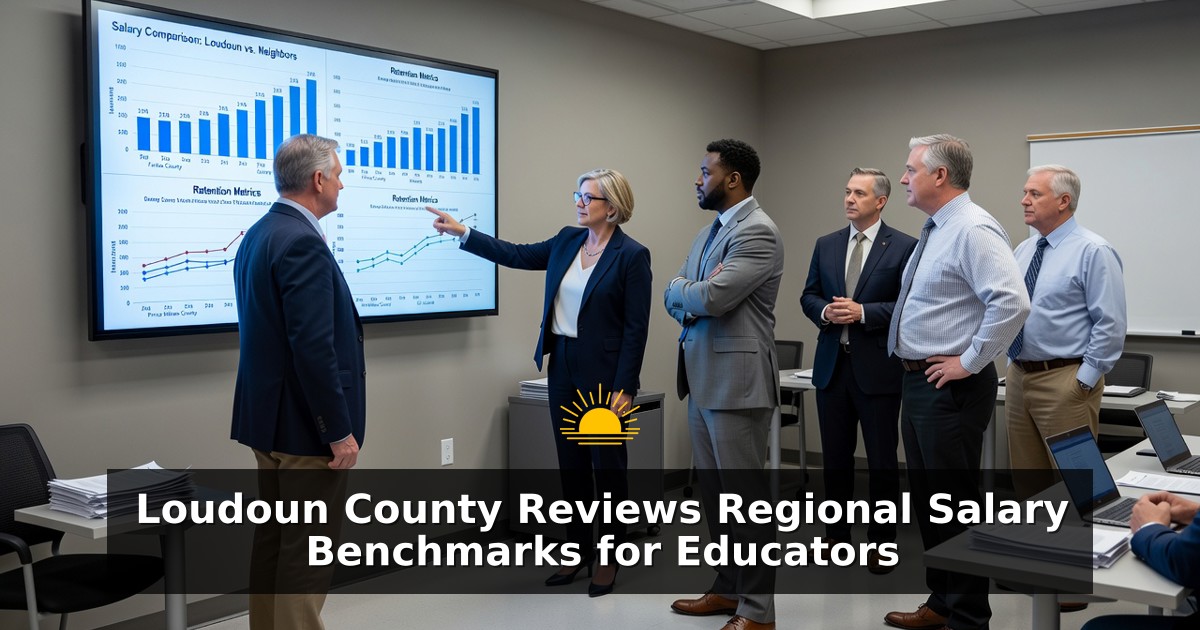
Loudoun County School Board members gathered for a budget work session and public hearing to examine compensation structures across the division. Officials focused on the established process for conducting market rate comparisons that guide salary decisions for teachers and other employees. These reviews help determine whether pay levels remain sufficient to draw skilled professionals into Loudoun County Public Schools. The discussion underscored the ongoing need to align local offerings with regional standards amid persistent competition for talent.
The current members of the Loudoun County School Board are Chair Melinda Mansfield, Vice Chair Atoosa Reaser, April Chandler, Deana Griffiths, Harris Mahedavi, Tiffany Polifko, Maureen Burke, Erica Pearson, and Ian Serotkin. Together they oversee policy and funding priorities for one of Virginia’s largest and fastest-growing school systems. Their deliberations on pay scales form part of broader budget planning that affects classrooms throughout the county. Public input during the hearing provided additional perspective on how compensation influences school quality.
Core Districts in the Comparison Process
School division staff explained that market rate analysis customarily centers on a group known as the big four. This set consists of Prince William County, Fairfax County, Alexandria City, and Arlington County school divisions. Each of these neighboring systems operates in the same high-cost Northern Virginia labor market and therefore serves as a direct benchmark. Data drawn from their published salary schedules allow Loudoun leaders to gauge relative standing on starting pay, step increases, and advanced-degree supplements.
In recent cycles the comparison group has expanded to include Virginia Beach City Public Schools. Adding this large coastal division supplies an additional data point from elsewhere in the commonwealth. Several other Virginia school systems also contribute information on an as-needed basis. Collectively the selected divisions create a practical reference set that reflects both immediate regional rivals and wider state patterns.
Methods for Non-Instructional Roles
Positions outside strictly educational categories follow a distinct survey approach. Human resources personnel rely on a nationwide database that identifies private-sector and public-sector employers of comparable organizational size. The survey extracts compensation figures for roles such as finance, technology, facilities, and transportation. Results from these broader samples help the division set wages that remain viable against both government and commercial alternatives.
This dual methodology—regional peer review for educators and national sampling for support staff—aims to produce balanced pay scales. Officials noted that competitive packages reduce vacancies and lower recruitment costs over time. Stable staffing in turn supports continuity for students who benefit from experienced teachers and reliable operational services. Budget allocations must therefore account for these market-driven adjustments each fiscal year.
Regional Context and Cost-of-Living Pressures
Northern Virginia’s elevated housing prices and overall living expenses place constant upward pressure on public-sector wages. Loudoun County ranks among the wealthiest jurisdictions in the United States, yet that prosperity also intensifies competition for qualified workers. Fairfax County Public Schools, the largest system in Virginia, frequently posts higher average salaries that neighboring divisions must monitor closely. Arlington and Alexandria likewise maintain strong compensation profiles tied to their dense urban settings.
Prince William County offers another important reference because of its similar growth trajectory and demographic mix. When Loudoun salaries fall behind these peers, the division risks losing candidates to nearby openings. Virginia Beach data introduce a useful contrast from a different economic environment within the same state. Taken together, the comparisons supply evidence-based guidance rather than isolated local preferences.
Retention Challenges Facing Virginia Schools
Educator shortages continue to affect districts across the commonwealth and the nation. Many teachers cite compensation as a primary factor when deciding whether to remain in the classroom or pursue other careers. Loudoun’s market reviews seek to address that concern by keeping pace with prevailing rates. Retention of mid-career professionals preserves institutional knowledge and reduces the need for repeated training of newcomers.
Support staff shortages in areas such as bus driving, custodial services, and food operations create parallel difficulties. Nationwide survey results help the division understand what private employers offer for similar duties. Adjustments informed by those findings can stabilize essential services that keep schools running smoothly. Board members weighed these operational realities while reviewing preliminary budget figures.
Balancing Fiscal Limits with Talent Needs
School boards must reconcile competitive pay goals with finite local and state revenues. Property tax collections and state basic-aid formulas supply the bulk of Loudoun’s operating funds. Any across-the-board salary increase carries multi-year cost implications that require careful forecasting. The market comparison process supplies objective data that justify proposed adjustments to the public and to county supervisors who share funding responsibility.
Public hearings attached to budget work sessions allow parents, employees, and residents to comment on compensation priorities. Transparency in how peer data are selected and applied builds confidence in the final recommendations. Officials emphasized that the goal remains attracting and retaining strong educators who directly support student achievement. Competitive salaries form one element within a larger strategy that also includes working conditions and professional development.
Outlook for Upcoming Budget Decisions
As Loudoun County Public Schools refines its next fiscal plan, the established comparison framework will continue to shape salary proposals. Inclusion of the big four divisions plus Virginia Beach and supplemental national data provides a consistent methodology year after year. Board members will revisit the findings when they adopt final pay scales and benefit packages. The outcome will influence the division’s ability to fill classrooms and operational posts with qualified personnel.
Sustained attention to market rates reflects recognition that high-quality education depends on capable staff. Students gain when teachers and support employees choose to build long-term careers in Loudoun rather than seek higher pay elsewhere. The board’s systematic review process therefore serves both workforce stability and instructional excellence. Further public discussion is expected as budget documents move toward formal adoption later in the cycle.
Alexandria Arlington big four budget meeting compensation competitive salaries district comparison education sector educational policy employee attraction Fairfax hiring practices LCPS Loudoun County market rate Prince William salary comparison salary scale School Board teacher retention Virginia Beach
All Virginia News is published by ALL VIRGINIA NEWS, LLC. How we're funded · Corrections · Ethics
