Loudoun Officials Detail Private Union Ratification Process
Updated
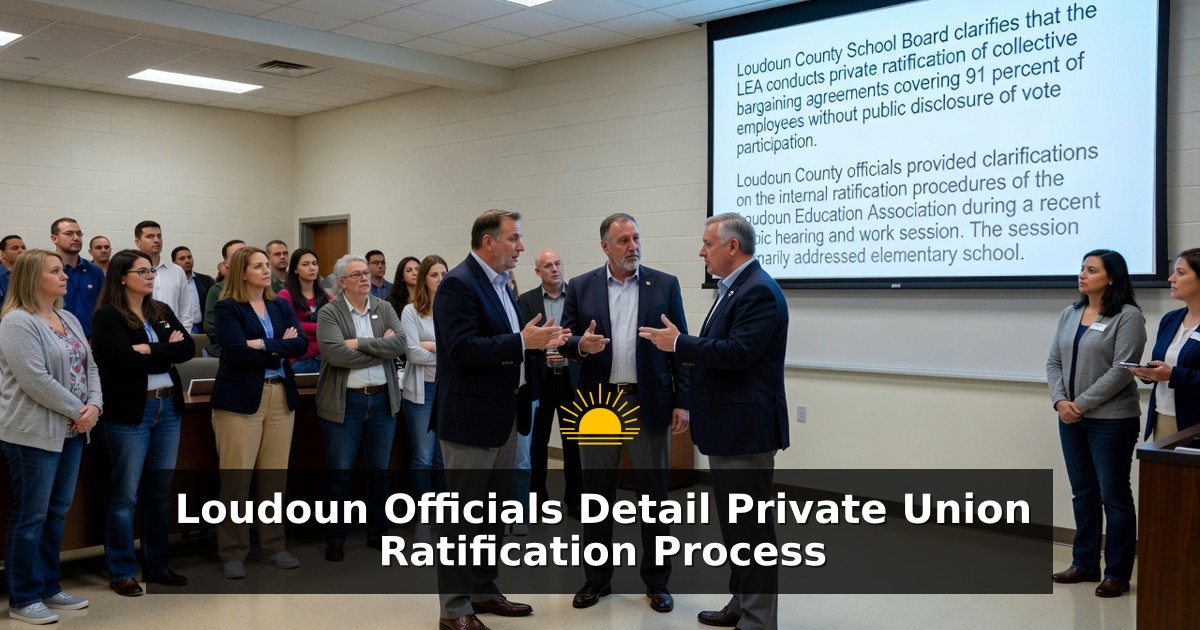
Loudoun County officials provided clarifications on the internal ratification procedures of the Loudoun Education Association during a recent public hearing and work session. The session primarily addressed elementary school attendance zones in the Ashburn and Dulles North regions but included detailed exchanges about collective bargaining practices. Board members sought information on how the union finalizes agreements that impact a significant portion of the school workforce. Explanations centered on the independent nature of the union's voting mechanisms and the limited access school administrators have to those details.
The Loudoun County School Board, composed of Harris Mahedavi, April Chandler, Lauren Shernoff, Deana Griffiths, Kari LaBell, Anne Donohue, John Beatty, Jeff Morse and Brenda Sheridan, continues to navigate complex labor relations under Virginia law. These nine members represent various districts across the county and hold responsibility for approving final contracts after union processes conclude. Their discussions reflect broader efforts to balance employee representation with accountability to residents and taxpayers. Meetings like this one allow for public observation of how such balances are maintained in practice.
Union Representation Across the School System
The Loudoun Education Association serves as the designated representative for employees in both certified and non-certified bargaining units. Officials stated that the union covers 91 percent of the school system's employees through these units. This high level of representation means that nearly all staff positions fall under the scope of negotiated agreements on compensation and conditions. Such coverage stems from the structure of bargaining units established following the county's adoption of collective bargaining policies. Understanding this percentage helps explain the wide-reaching effects of any ratified contract on daily school operations.
Private Nature of the Ratification Vote
School system leaders confirmed that the Loudoun Education Association manages its own private ratification process according to internal bylaws. Administrators are not involved in conducting the votes or determining eligibility among members. They receive notification of the outcome but lack details on participation rates or exact vote counts. This separation ensures the union retains autonomy over its decision-making as a private entity. The process typically follows negotiations where a tentative agreement is presented to members for approval before returning to the board for final consideration.
Board Member Inquiries on Vote Details
Deana Griffiths raised specific questions about available statistics following an email that described the ratification as overwhelming. She inquired how the 91 percent figure related to actual voter turnout in the process. Responses indicated that the percentage refers solely to the share of employees in covered positions rather than those who cast ballots. Officials reiterated that they do not possess data on how many members took part or the precise margins of approval. This exchange underscored the boundaries between public agency knowledge and union confidentiality in labor matters.
Legal Framework for Collective Bargaining
Virginia authorized local school boards and governments to engage in collective bargaining through legislation enacted in recent years. Prior to these changes, public sector unions in the state had limited formal negotiation rights. Localities that choose to participate must follow guidelines for recognizing exclusive representatives like the Loudoun Education Association. Once recognized, the union and employer negotiate terms that require dual approval from internal union ratification and the governing body vote. The private character of the first step aligns with traditional labor practices observed nationwide in both public and private sectors.
Transparency and Public Access Considerations
Observers have noted that the absence of disclosed participation figures can generate questions about the depth of support among covered workers. While the union reported strong backing for the agreement, the lack of specific numbers leaves some aspects opaque to the general public. School board discussions provide a forum where such issues can be aired openly during recorded sessions. Residents interested in labor agreements often attend or review these meetings to stay informed on decisions affecting public education funding. Maintaining clear distinctions between internal union affairs and public proceedings remains a key feature of the current framework.
Impacts on School Staff and Operations
Collective bargaining agreements influence salaries, benefits, working conditions and professional development opportunities for teachers and support staff. With 91 percent of employees potentially affected, the terms shape the overall work environment in Loudoun County Public Schools. Successful ratification allows implementation of negotiated changes that aim to support retention and recruitment in a competitive region. Board approval follows to commit the necessary resources from the school budget. These steps together form the complete path from proposal to enacted policy.
Opportunities for Community Involvement
Future negotiations may prompt additional community input through hearings or comment periods before final board votes. Although the union's ratification stays internal, the subsequent school board consideration occurs in public view with opportunities for resident feedback. This structure permits citizens to express views on fiscal impacts and educational priorities tied to the contracts. Officials have emphasized adherence to established bylaws and legal requirements throughout these processes. Continued dialogue at work sessions helps refine understanding of these multi-layered approval methods.
Comparisons with Other Virginia Jurisdictions
Other counties and cities in Virginia have implemented similar collective bargaining systems with varying degrees of public disclosure around union votes. Practices differ based on local ordinances and the specific bylaws of each employee organization. In Loudoun County, the approach prioritizes the independence of the ratification step while ensuring the final agreement faces elected official scrutiny. Analysts of public administration often examine these models for lessons on efficiency and openness. The recent clarifications contribute to a growing body of information available to those tracking labor relations in education.
Looking Ahead in Loudoun County
As Loudoun County grows and its schools adapt to changing demographics, labor agreements will likely remain central to operational stability. The private ratification process as described operates outside direct school board control yet feeds into public decision points. Questions from members like Deana Griffiths serve to illuminate these mechanics for wider audiences. Overall, the framework seeks to honor both employee voice through the union and taxpayer interests through elected oversight. Further sessions may revisit related topics as new agreements arise or existing ones come up for renewal.
becomes Collective Bargaining County's discussed discussion employee representation focal LEA Loudoun Loudoun County meeting Mrs. Griffiths point Private private ratification Process public disclosure Ratification transparency union process