Parent Details DD Waiver Investigation Shortfalls Before Virginia Panel
Updated
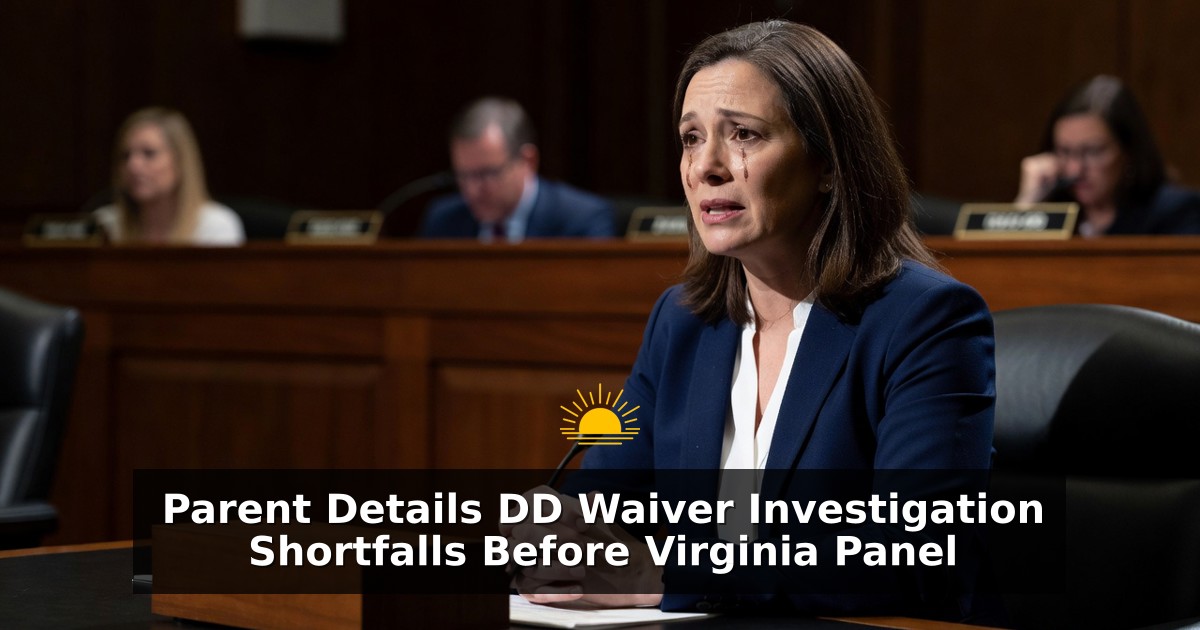
A Virginia mother testified before the Behavioral Health Subcommittee regarding persistent difficulties families encounter when reporting abuse and neglect under the state’s Developmental Disabilities waiver program. Her adult son, who has disabilities, lives in a group home and receives ongoing services through the DD waiver. Beginning in 2020, she filed multiple reports describing instances of abuse and neglect involving her son. In every case the allegations were sent back to the service provider for internal investigation and were ultimately classified as unsubstantiated.
The pattern of provider-led reviews left the family with limited recourse and little confidence in the outcomes. The mother eventually prevailed in a single appeal, yet only after investing 139 hours of her own time gathering evidence and navigating procedural requirements. She emphasized that this level of sustained personal effort lies beyond the reach of most families who already balance caregiving, employment, and other obligations. When further episodes of neglect and verbal abuse arose, she elected not to submit additional reports. Her decision rested on the expectation that the existing process would again produce no meaningful protective response.
Provider Self-Investigation and Oversight Gaps
Under current practice described in the testimony, allegations concerning individuals served by DD waiver providers are routinely returned to those same organizations for self-investigation. Findings of “unsubstantiated” close many cases without external scrutiny, according to the account presented to the subcommittee. Advocates and families have long noted that this arrangement can create inherent conflicts when the entity responsible for delivering care also controls the initial fact-finding. The mother stated that years of experience with these internal reviews convinced her the system fails to safeguard vulnerable adults who depend on group-home services.
Virginia’s DD waiver programs are intended to support community-based living for people with developmental disabilities, offering residential, personal-care, and related supports as alternatives to institutional settings. Licensing and human-rights regulations require providers to address serious incidents, yet the testimony illustrated how self-investigation can leave families feeling that accountability is absent. Independent verification mechanisms exist in some other human-services domains, and the absence of a comparable routine external check in these waiver cases formed a central concern raised before the panel. The cumulative effect, the mother explained, is that some parents simply cease reporting because they anticipate no corrective action.
The Burden Placed on Families Seeking Accountability
Successfully challenging an unsubstantiated finding demanded an extraordinary commitment of time that few households can replicate. The 139 hours devoted to the one successful appeal encompassed document collection, correspondence, and procedural steps that stretched over an extended period. Most families lack comparable resources, flexible schedules, or specialized knowledge of administrative appeals. As a result, legitimate concerns may go unexamined once the provider’s internal process concludes. The mother observed that after repeated unsubstantiated outcomes she stopped filing reports of subsequent neglect and verbal abuse, thereby removing even the limited formal record that might otherwise exist.
This withdrawal from the reporting system carries direct implications for the safety of adults who cannot fully advocate for themselves. Group-home residents receiving DD waiver services often rely on staff for daily support, medication management, and protection from harm. When families conclude that official channels yield no protection, patterns of mistreatment can continue without documentation or intervention. The testimony framed the issue as systemic rather than isolated, underscoring that the design of the investigation pathway itself discourages the very reports needed to identify problems. Subcommittee members heard that restoring confidence would require structural examination rather than case-by-case perseverance by individual parents.
HB1423 and the Call for Independent Review
The mother urged support for HB1423 as a vehicle for the Commonwealth to conduct an independent examination of how abuse and neglect investigations currently operate within the DD waiver system. She described the measure as an opportunity to assess whether existing procedures adequately protect individuals who depend on these services and to determine what changes, if any, are warranted. The focus she requested remained squarely on the safety of vulnerable adults rather than on procedural convenience for providers or agencies. By authorizing a structured review, the legislation would allow policymakers to gather information free from the constraints of any single provider’s internal process.
Proponents of closer oversight note that independent review can identify both strengths and weaknesses in incident-response protocols without presupposing particular reforms. The testimony positioned HB1423 as a study mechanism rather than an immediate overhaul, giving the Commonwealth time to evaluate data, compare practices, and hear from additional stakeholders. Families, providers, licensing staff, and disability-rights organizations all hold relevant perspectives that an impartial inquiry could surface. The mother closed by reiterating that the safety of people who rely on DD waiver services must remain the central criterion for any future adjustments.
Broader Context for Waiver Participant Protections
Developmental Disabilities waivers constitute a primary means by which Virginia delivers long-term supports in community settings. Participants and their families expect that serious allegations will receive thorough, unbiased attention so that corrective measures can be implemented promptly. When investigations remain inside the provider organization, questions of objectivity naturally arise, especially after multiple unsubstantiated determinations. The subcommittee received a firsthand illustration of how those questions erode trust and ultimately reduce the volume of reports that reach authorities.
Public systems serving people with significant disabilities carry a heightened duty to ensure that protective processes function reliably. The account presented to the Behavioral Health Subcommittee highlighted the practical consequences when families lose faith in those processes: incidents may go unreported, patterns may remain hidden, and vulnerable individuals may stay exposed. An independent look of the sort contemplated by HB1423 offers one structured avenue for assessing whether current arrangements meet that duty. Lawmakers now possess a concrete parental narrative against which to weigh the need for further examination of investigation practices across the DD waiver network.
The testimony concluded with a respectful request that the subcommittee advance HB1423 so the Commonwealth can evaluate the investigation framework with the protection of service recipients as its guiding priority. No claim was made that every provider mishandles every case; rather, the consistent return of allegations to the same entities for self-review was presented as a structural feature warranting scrutiny. By placing the experiences of one family into the legislative record, the hearing supplied lawmakers with specific, chronological detail about reporting outcomes from 2020 onward. Those details now form part of the public discussion surrounding accountability for adults who live in DD waiver-funded group homes and cannot independently secure their own safety.
2020 abuse appeal process Behavioral Health Subcommittee commonwealth DD waiver disabled adult family advocacy group home HB1423 independent review investigations neglect public services safety concerns self-investigation service provider substantiated claims Virginia vulnerable individuals