Virginia Lawmaker Criticizes Operation Ceasefire Funding as Ineffective
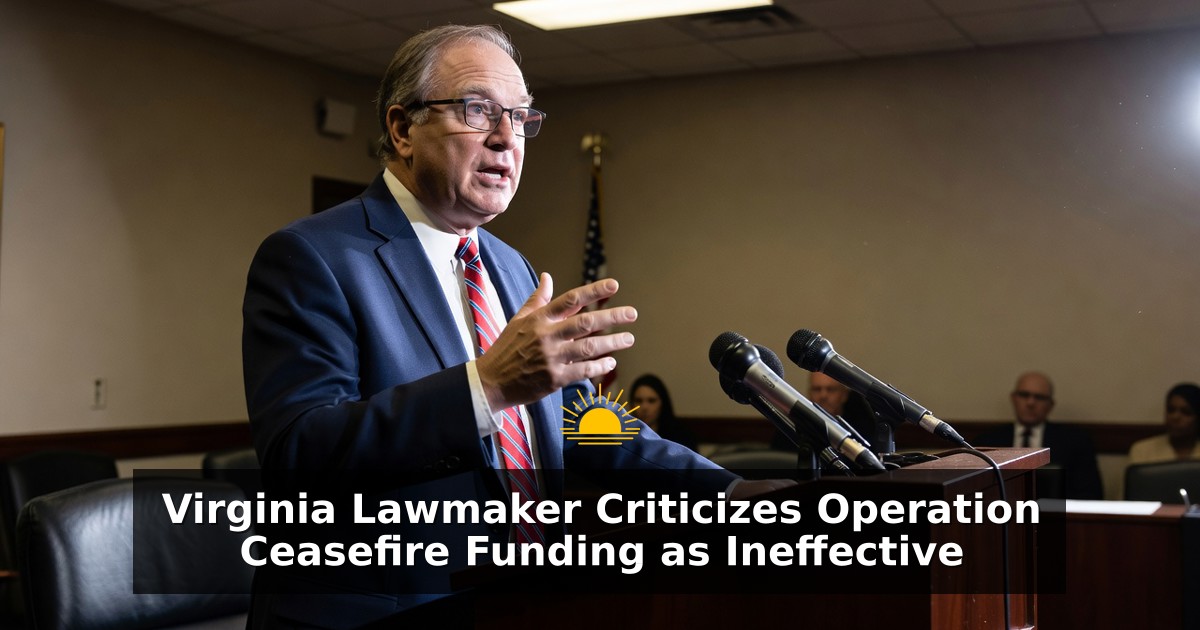
A Virginia delegate raised pointed concerns during a recent public discussion about the effectiveness of Operation Ceasefire, describing the initiative as existing in name only under the prior attorney general. According to the remarks directed at the chair, the program functioned primarily as a slush fund that supported billboards and commercials rather than delivering measurable reductions in criminal activity. The speaker identified former Attorney General Jason Miyares as the official associated with those promotional expenditures. Critics in the session argued that the approach produced no tangible progress against crime and fell short of its public safety mandate.
Delegate Price emphasized the need to shift toward strategies that genuinely prevent violence in communities across the commonwealth. The stated priorities include addressing mass shootings, firearm-related suicides, and domestic violence involving firearms. Lawmakers present heard calls for programs that generate actual results instead of relying on advertising campaigns. This exchange highlighted ongoing debates over how public safety dollars should be allocated to achieve lasting reductions in harm.
Background on Operation Ceasefire Initiatives
Operation Ceasefire originated as a focused deterrence model first implemented in other jurisdictions to interrupt cycles of group-related gun violence. Versions of the approach have been adapted in multiple states, typically combining law enforcement attention on high-risk individuals with social services and community messaging. In Virginia, similar branding has appeared in attorney general office materials aimed at reducing shootings. Supporters of such frameworks historically point to data-driven targeting of repeat offenders and the importance of clear communication that violence will bring swift consequences.
Independent evaluations of ceasefire-style programs in various cities have shown mixed outcomes depending on fidelity of implementation, local partnerships, and sustained funding. Some localities reported short-term drops in homicides when street outreach, focused policing, and opportunity programs operated together. Other reviews found limited lasting impact when resources drifted toward public relations rather than direct intervention. Virginia officials have periodically referenced the model when discussing urban and rural gun crime patterns.
Scrutiny of Advertising and Resource Allocation
The recent comments centered on allegations that funds tied to the Operation Ceasefire label under the previous attorney general supported billboards and commercials. According to the critique, those expenditures did not translate into solved crimes or lower violence rates. Observers of state budgeting note that attorney general offices often maintain discretion over certain public awareness accounts. Transparency advocates regularly call for detailed accounting of how prevention dollars are spent versus how they are marketed to the public.
Public safety experts stress that media campaigns can raise awareness yet rarely substitute for investigative capacity, victim services, or evidence-based interruption of violence. Billboards and commercials may inform residents about tip lines or legal penalties, but measurable crime reduction typically requires coordinated work by prosecutors, police, and community organizations. The delegate’s remarks framed the prior spending pattern as disconnected from those operational necessities. Legislative committees that oversee justice appropriations frequently examine whether branded initiatives deliver verifiable outcomes.
Priorities for Preventing Firearm Violence
Lawmakers heard a clear preference for interventions that target community violence, mass shootings, suicides by firearm, and domestic violence involving guns. Firearm suicide remains a significant share of overall gun deaths in Virginia and nationwide, often exceeding homicides in annual totals. Domestic violence incidents that involve firearms carry elevated risks of lethality, prompting repeated calls for improved protective order enforcement and removal protocols. Mass shooting prevention discussions commonly include threat assessment, secure storage education, and rapid response planning.
Community-based violence interruption programs have gained attention for employing credible messengers who mediate conflicts before they escalate. Mental health access and crisis intervention teams are frequently cited as complementary tools for reducing firearm suicides. Data collection on domestic violence firearm retrieval and extreme risk protective orders continues to inform policy debates in Richmond. Advocates across the spectrum agree that results should be judged by declines in injuries and deaths rather than by the volume of promotional materials produced.
Broader Public Safety Context in Virginia
Virginia has experienced fluctuating rates of violent crime in recent years, with urban centers and certain rural localities facing distinct challenges. Homicide and aggravated assault figures are tracked closely by state police and local departments, informing both enforcement and prevention budgets. Attorney general offices traditionally support local prosecutors, provide training, and administer grant programs related to violence reduction. The transition between administrations often brings reevaluation of which branded efforts continue and which are redesigned.
Legislative sessions routinely feature testimony on the cost-effectiveness of different public safety strategies. Some members prioritize longer prison terms and enhanced penalties for illegal firearm possession. Others emphasize upstream investments in youth employment, housing stability, and trauma-informed services. The Operation Ceasefire discussion fits within this larger conversation about accountability for results. Neutral observers note that any program carrying a high-profile name invites heightened scrutiny when crime statistics do not improve.
Calls for Measurable Outcomes
The speaker underscored a desire to move beyond symbolic labeling and toward initiatives that demonstrably prevent harm. Preventing violence in neighborhoods, reducing the incidence of mass shootings, lowering firearm suicides, and addressing gun-involved domestic violence were listed as concrete objectives. Achieving those aims would require coordination among state agencies, local governments, health systems, and community groups. Performance metrics such as shooting victimizations, clearance rates, and service referral completions are commonly proposed as better gauges than advertising reach.
Fiscal oversight committees retain authority to examine past expenditures and redirect future appropriations. Detailed audits can clarify how much funding supported media production versus direct services or investigations. Stakeholders on all sides of the issue have expressed interest in transparency so that limited public dollars produce the greatest possible safety benefit. The exchange in the recorded session illustrated the tension between promotional activity and operational impact.
Continuing Legislative Attention
Virginia’s General Assembly and related oversight bodies are expected to keep public safety funding under review as new budgets are developed. Discussions about the proper role of the attorney general’s office in violence prevention will likely recur whenever crime trends shift or new grant opportunities appear. Community members affected by gun violence continue to seek both immediate protection and longer-term solutions that address root contributors. The critique of Operation Ceasefire as previously administered adds one more data point to those deliberations.
Accurate assessment of any program demands careful separation of branding from outcomes. Lawmakers, executive officials, and the public share an interest in strategies that reduce the human cost of firearm violence. Whether future efforts adopt new names or refine existing models, the standard articulated in the recent remarks remains centered on verifiable results. Sustained attention to evidence, accountability, and the full range of firearm-related harm will shape the next phase of policy in the commonwealth.
actually Addresses attorney billboards Ceasefire chair commercials Crime directly existed fund general name only Operation previous program Slush Solved speaker Virginia