Opponents Challenge Virginia HB 1238 Over Risks to Live Animal Sales and Farmers
Updated
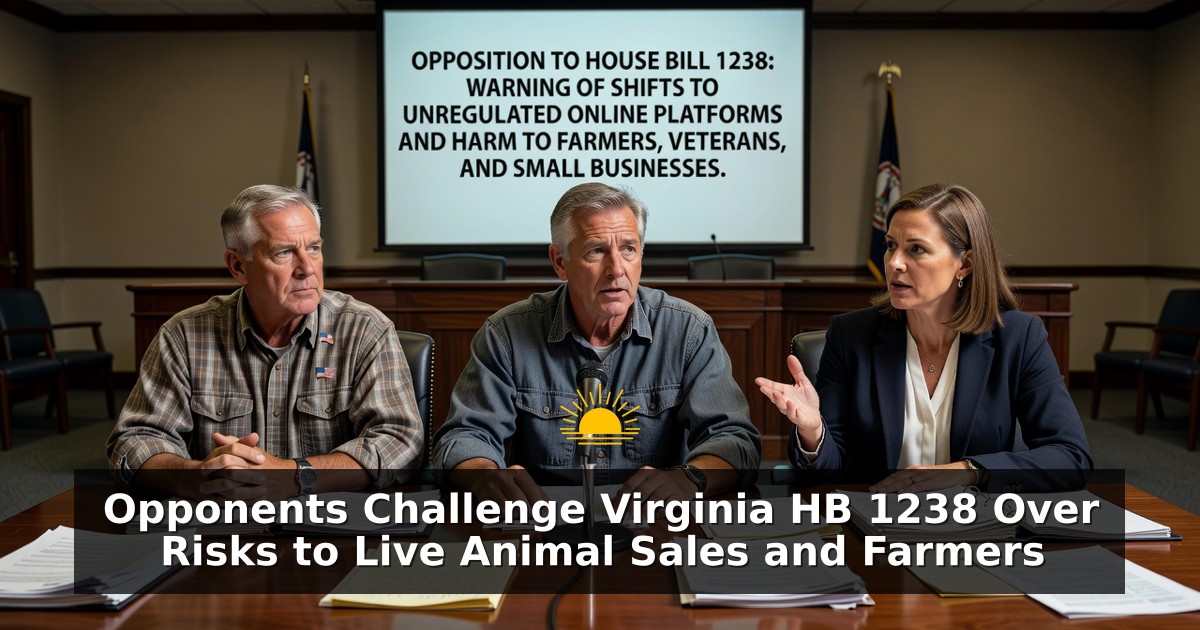
Agricultural industry representatives delivered opposition testimony against Virginia House Bill 1238, highlighting potential disruptions to traditional live animal sales and broader effects on farming operations. Lewis Waski, president of the American Federation of Agriculture, stated clear opposition to the measure during the session. He distributed handouts including a formal letter outlining the group's position and described patterns observed in multiple states. Waski emphasized that restrictions tied to the bill could limit farmers' ability to sell live animals through established channels. This shift, he argued, would drive transactions toward platforms lacking meaningful oversight.
Concerns centered on the movement of sales to sites such as Facebook and Craigslist, where buyers and sellers operate with minimal controls. Waski noted that these venues provide no reliable verification of animal health, origin, or quality. Without regulatory checks, purchasers risk receiving animals that fail to meet basic standards. The testimony framed this outcome as already visible across the nation in response to similar policy changes. Opponents maintained that preserving structured sales avenues remains essential for protecting both producers and the public.
Impact on Farmers and Agricultural Stability
Farmers rely on predictable markets to sustain operations that form a core part of Virginia's economy. The American Federation of Agriculture positioned HB 1238 as a threat to that stability by constraining direct sales of live animals. Waski explained that when conventional outlets become unavailable, producers face reduced options for moving livestock and other animals. This pressure can lower returns and increase uncertainty for family farms already navigating thin margins. Industry advocates stressed that agriculture supports rural communities through employment, land stewardship, and food production chains.
Small business operators within the agricultural sector would encounter parallel difficulties under the proposed changes. Many of these enterprises depend on face-to-face or regulated venue sales to maintain customer trust and comply with health requirements. Shifting volume to unregulated online spaces removes those safeguards and exposes sellers to greater liability. Testimony indicated that the cumulative effect could shrink the viability of independent operations. Maintaining clear pathways for legal sales was presented as necessary to avoid unintended contraction in the sector.
Veterans and Small Business Operations Face Added Pressure
Abbott Hoffman joined the opposition in raising specific points about veterans who participate in farming and related small businesses. Many former service members enter agriculture as a second career, often operating modest-scale enterprises that sell live animals or related products. Hoffman and fellow opponents argued that HB 1238 could complicate these efforts by limiting access to dependable markets. Veterans frequently cite structured agricultural work as a source of purpose and income stability after military service. Any policy that funnels activity toward unmonitored platforms risks undermining those transitions.
Small businesses owned or staffed by veterans would share in the operational challenges. These firms typically lack the resources of larger corporate entities to absorb sudden market shifts or navigate complex compliance gaps. Testimony linked the bill to an environment in which informal online transactions become the default, complete with associated uncertainties. Opponents underscored that veterans and small operators need consistent rules rather than incentives to exit regulated commerce. Protecting these groups formed a recurring theme in the arguments against the legislation.
National Patterns and Oversight Gaps
Waski observed that comparable measures elsewhere have already pushed live animal commerce onto social media and classified advertisement sites. In those settings, no central authority verifies health certificates, tracks disease exposure, or enforces basic welfare standards. Buyers may encounter animals carrying undetected illnesses that later affect herds, flocks, or household pets. Sellers, meanwhile, lose the documentation and reputation benefits that accompany licensed venues. The absence of oversight creates openings for fraud, misrepresentation, and the spread of animal health problems.
Virginia's agricultural framework has long emphasized controlled environments for livestock movement precisely to limit such risks. Established markets and direct-sale protocols allow inspectors to monitor conditions and maintain records. Opponents of HB 1238 contended that weakening those protocols would reverse progress on biosecurity. They pointed to the practical reality that once sales migrate online, reclaiming regulatory visibility becomes difficult. The testimony called attention to the need for policies that keep transactions inside systems equipped for accountability.
Broader Implications for Industry Resilience
The agricultural sector contributes substantially to employment and land use across Virginia counties and cities. Disruptions to live animal sales ripple outward to feed suppliers, veterinarians, transporters, and processors. When primary producers cannot move animals efficiently, secondary businesses experience reduced demand. Opponents warned that HB 1238 could accelerate consolidation by favoring only those operations large enough to absorb new constraints. Smaller and mid-sized farms, including those run by veterans, would bear disproportionate strain.
Unregulated platforms also complicate consumer protections that traditional channels provide. Purchasers of live animals often seek breeding stock, pets, or production animals with known histories. Online listings rarely supply equivalent information or recourse if problems arise. Waski’s remarks highlighted the loss of control over what buyers ultimately receive. Maintaining regulated options was framed as a straightforward way to uphold quality and confidence in the marketplace.
Testimony concluded with a reaffirmation of the American Federation of Agriculture’s stance against the bill. Handouts distributed during the hearing detailed written objections and referenced experiences from other regions. Hoffman’s contributions reinforced the human dimension involving veterans and independent operators. Together the opponents presented a consistent case that the legislation would redirect activity into spaces without adequate safeguards. They urged lawmakers to consider these practical outcomes before advancing the measure.
Preserving viable, supervised avenues for live animal sales remains a priority for those who spoke against HB 1238. The concerns raised touch on economic sustainability, animal health, and support for individuals who have served in the military. As Virginia evaluates the proposal, the testimony supplies a detailed record of industry reservations. Continued attention to market structure and oversight will shape how agricultural commerce functions in the years ahead. Stakeholders on all sides will monitor subsequent discussions for adjustments that address the issues identified.
Abbott Hoffman American Federation of Agriculture animal standards consumer choice Craigslist David Foley Facebook family owned pet stores HB-1238 HPE1238 HSUS Lewis Waski live animals localities military injuries PETA PTSD responsible pet ownership Rutgers Sheila Annons St. Louis Missouri TBI Tony Pauls United States Army Veterans Virginia Virginia Alliance Virginia pet advocacy alliance