Political Battle Heats Up Over Federal Budget Proposals and Virginia Families
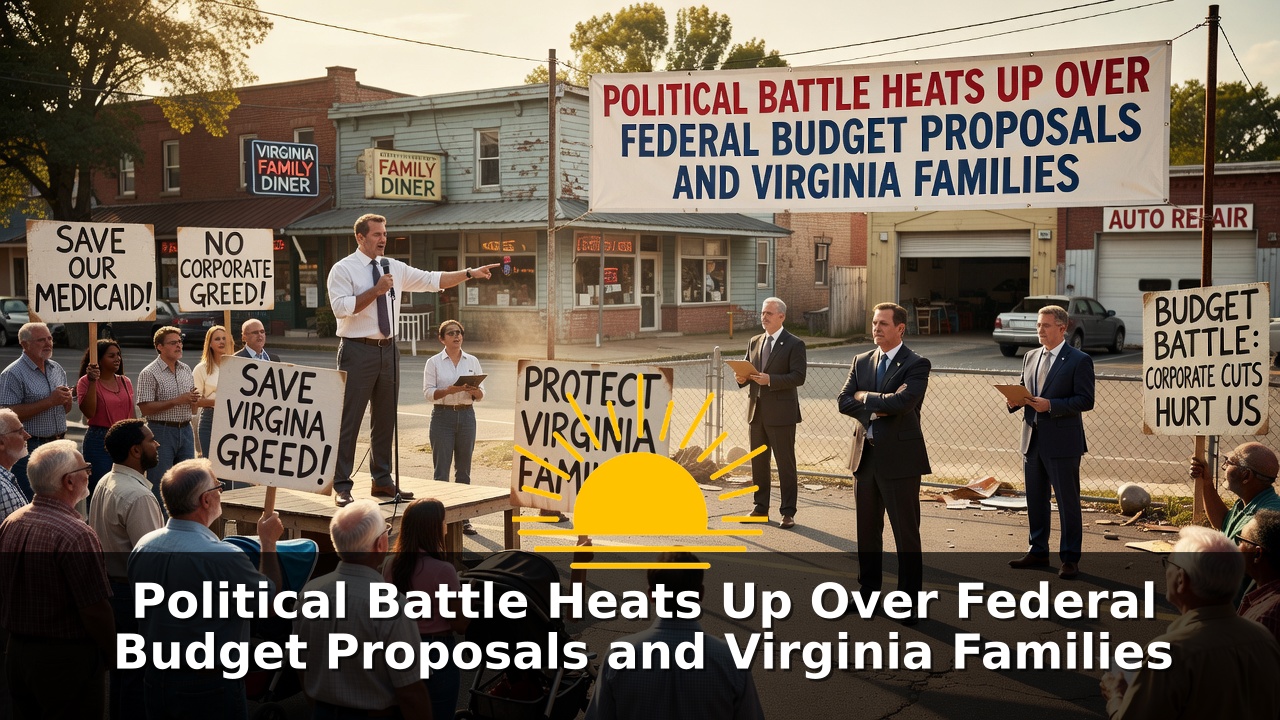
The political landscape in Virginia is increasingly defined by a fierce debate over federal budget proposals and their direct impact on working-class families. As candidates gear up for upcoming elections, the focus has shifted toward legislative efforts that either protect social safety nets or prioritize corporate tax extensions. Democratic and Republican leaders are presenting sharply contrasting visions for economic stability and government assistance. At the center of this conflict are proposed changes to federal assistance programs and the continuation of the 2017 corporate tax cuts.
The Push for Corporate Tax Extensions
Recent legislative efforts in the United States House of Representatives have centered around a budget reconciliation proposal frequently referred to as the One Big Beautiful Bill. This legislative package aims to permanently extend the corporate tax cuts originally established in the 2017 Tax Cuts and Jobs Act. Proponents of the measure argue that maintaining lower corporate tax rates is essential for stimulating economic growth and maintaining global competitiveness. Representative Jason Smith, who chairs the House Ways and Means Committee, stated that Congress must not fail the American people while describing the bill as a historic opportunity to deliver tax policy that prioritizes working-class Americans and saves American jobs.
To offset the trillions of dollars in revenue lost through these tax cuts, the Republican budget proposes significant reductions in various federal assistance programs. The proposed reconciliation bill relies heavily on slashing baseline funding for critical safety nets, including a proposed reduction in Medicaid funding by roughly six hundred billion to one trillion dollars. Additional programs facing potential funding reductions include the Affordable Care Act subsidies, Head Start, and the State Children's Health Insurance Program. Furthermore, the Congressional Budget Office estimates that the extended tax cuts will still increase the federal deficit, potentially triggering automatic Medicare cuts under the PAYGO rules.
Democratic Opposition and Campaign Strategies
Democratic candidates in Virginia are actively campaigning against these proposed budget cuts, framing them as a direct threat to the financial stability of local families. Tom Perriello, a Democratic candidate for Virginia's fifth congressional district, has centered his campaign on lowering the cost of living, raising wages, and protecting established social safety nets. During a recent campaign announcement, Perriello criticized his opponent, Representative John McGuire, and other conservative lawmakers for their legislative priorities. Perriello stated that McGuire and his colleagues have refused to stand up to reckless tariffs and voted to cut food and health care for thousands of people, all while protecting tax breaks for large corporations.
The opposition to the budget reconciliation bill extends beyond Virginia, with national Democratic figures echoing concerns about the broader implications for healthcare access. Lawmakers argue that the proposed reductions disproportionately harm working-class families who rely on federal assistance for basic medical and nutritional needs. Representative Teresa Leger Fernandez highlighted the severity of the situation by pointing out the dual threat to essential health programs. She emphasized that lawmakers are not just cutting Medicaid, but they are cutting Medicare too, underscoring the widespread anxiety regarding the automatic PAYGO cuts that could reach up to four hundred ninety billion dollars by the year 2034.
Justifications for Budget Adjustments
Republican leaders maintain that restructuring federal assistance programs is a necessary step toward fiscal responsibility and workforce participation. A key component of the proposed budget adjustments involves the implementation of stricter work requirements for Medicaid recipients. Supporters of these requirements argue that they will encourage able-bodied adults to re-enter the workforce, thereby reducing long-term dependency on government aid. Speaker Mike Johnson defended this approach by stating that the policy returns the dignity of work to young men who need to be out working instead of playing video games all day.
Unlike previous budget cycles, this particular reconciliation strategy explicitly links the continuation of corporate tax breaks to substantial decreases in social spending. The legislative framework targets the Supplemental Nutrition Assistance Program alongside Medicaid to balance the federal ledger. Conservative policymakers assert that unchecked growth in entitlement programs threatens the long-term economic stability of the nation. By curbing the expansion of these safety nets, they aim to create a more sustainable federal budget while simultaneously fostering a business-friendly environment through permanent tax relief.
The Road Ahead for Virginia Voters
As the 2026 congressional races approach, the stark contrast between these two economic philosophies will likely dominate the political discourse in Virginia. Voters are being asked to evaluate whether the promised economic benefits of corporate tax extensions outweigh the potential reduction in federal assistance programs. Campaigns on both sides are heavily investing in messaging that highlights their respective commitments to providing a fair shot for families across the commonwealth. The outcome of these elections will serve as a crucial indicator of public sentiment regarding the balance between corporate taxation and the preservation of the social safety net.
The ongoing debate over the federal budget highlights a fundamental ideological divide regarding the role of government in ensuring economic security. While proponents of the cuts emphasize fiscal discipline and workforce engagement, opponents warn of devastating consequences for vulnerable populations who rely on Medicaid, Medicare, and other vital programs. As legislative negotiations continue in Washington, the real-world implications of these policies remain a pressing concern for local communities. Ultimately, the decisions made in the coming legislative sessions will shape the financial realities of working-class households in Virginia for years to come.