Prince William County Redirects Development Focus to Innovation Districts Near George Mason University
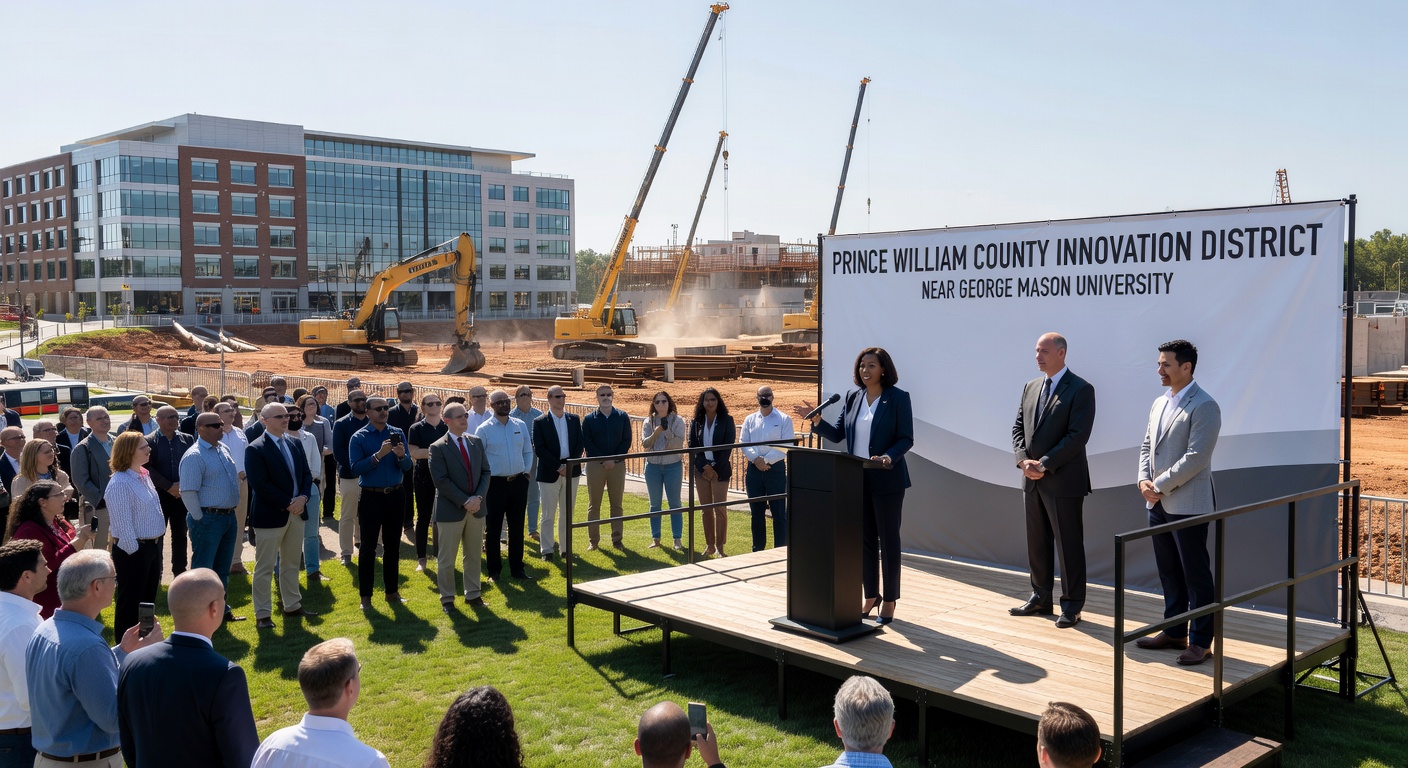
Historically, the Manassas Mall served as the community’s commercial core. Recent discourse acknowledges shifts in land-use patterns and zoning that have opened new growth avenues, particularly developments near George Mason since 2018 and 2019. These changes include recognition of downtown Manassas’ potential alongside university-linked innovation zones.
Key projects include the Nexus234 Innovation District in Manassas, launched to promote research and workforce training. Micron Technology’s $2.17 billion facility expansion in the area is set to add 340 jobs, contributing to semiconductor sector advancement. The county’s transit operations, generating roughly $30 million yearly from specialized funding without drawing from general revenues, support these initiatives. Comparisons to Fairfax County’s model highlight Prince William’s self-sustaining approach.
Discussions emphasize infrastructure enhancements such as VDOT projects, traffic volume management, lighting improvements, and bus services along southern routes. These measures address connectivity challenges posed by incoming development, including potential impacts from major employers. References to similar efforts, like Micron’s role, and regional contexts such as the Shenandoah Valley, illustrate broader strategies.
Redevelopment at the Manassas Mall site, rezoned for comprehensive updates, integrates with this framework. The Prince William County Board of Supervisors, representing districts including Occoquan, Algonkian, Potomac, Woodbridge, Neabsco, Coles, Gainesville, Brentsville, and Dumfries, along with the at-large chairman, oversees these policies in Prince William County.
This multifaceted strategy seeks to balance residential, commercial, and technological needs. Transit upgrades facilitate access to employment centers, while innovation districts foster collaboration between academia and industry. Ongoing evaluations ensure adaptations to traffic and service demands.
The county’s population growth necessitates such planning, with transit playing a crucial role in mobility. Recent elections, such as Jeannie LaCroix’s victory in the Woodbridge District and George Stewart’s in Gainesville, reflect community input on development priorities. Micron’s investment and Nexus234’s emergence signal sustained momentum.
Stakeholders continue monitoring outcomes, with emphasis on efficient resource allocation and equitable benefits. This evolution marks a deliberate pivot toward sustainable urban planning in one of Virginia’s fastest-growing regions.
Source: Field reports and eyewitness accounts.
Email the Prince William School Board at:
Babur B. Lateef, M.D. (Chairman At-Large) — blateef@pwcs.edu,
Richard M. Jessie (Vice Chairman, Occoquan District) — rjessie@pwcs.edu,
Erica C. Tredinnick (Brentsville District) — etredinnick@pwcs.edu,
Lisa A. Zargarpur (Coles District) — lzargarpur@pwcs.edu,
Jennifer T. Wall (Gainesville District) — jwall@pwcs.edu,
Tracy L. Blake (Neabsco District) — tblake@pwcs.edu,
Justin David Wilk (Potomac District) — jwilk@pwcs.edu,
Loree Y. Williams (Woodbridge District) — lwilliams@pwcs.edu,
Email the Prince William Board of Supervisors At:
Chair At-Large (Deshundra Jefferson) – djefferson@pwcgov.org,
Brentsville (Tom Gordy): tgordy@pwcgov.org,
Coles (Yesli Vega): yvega@pwcgov.org,
Occoquan (Kenny Boddye): kboddye@pwcgov.org,
Potomac (Andrea Bailey): abailey@pwcgov.org,
Woodbridge (Jeannie LaCroix): jlacroix@pwcgov.org,
General Board: bocs@pwcgov.org,
Prince William County Andrea Bailey Babur Lateef Bob Weir Deshundra Jefferson Elections Erica Tredinnick Fairfax George Mason George Mason University Jeannie LaCroix Jennifer Wall Jobs Justin Wilk Kenny Boddye Lisa Zargarpur Loree Williams Margaret Franklin Prince William Prince William County Board of Supervisors Prince William County School Board Rain Richard Jessie Tom Gordy Tracy Blake VDOT Victor Angry Virginia Yesli Vega