Loudoun County Proposes Mentor Coach Role for Novice Special Education Teachers
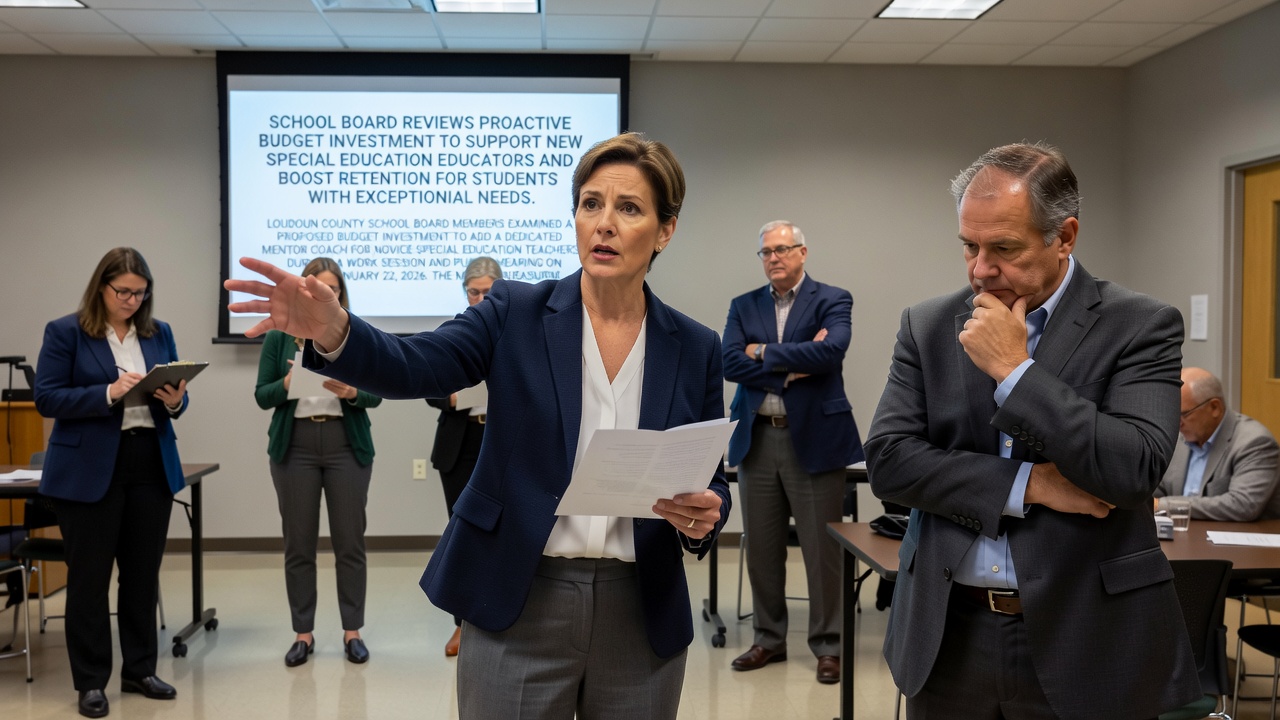
Loudoun County School Board members examined a proposed budget investment to add a dedicated mentor coach for novice special education teachers during a work session and public hearing on January 22, 2026. The measure responds to a rising number of educators entering the field through non-traditional pathways who bring strong commitment yet often need extended guidance. Officials described the role as a forward-looking step to deliver job-embedded assistance in instructional practice, compliance requirements, and classroom management. This support would target the early career years when the risk of teachers leaving the profession reaches its peak. The discussion formed part of broader efforts to stabilize staffing in one of the division’s most challenging areas.
The Loudoun County School Board consists of Chairperson Tiffany Polifko, Vice Chairperson Melinda Mansfield, April Chandler, Deana Griffiths, Kari LaBell, Atoosa Reaser, Jeff Morse, Ian Serotkin, and Lauren Shernoff. These members represent the county’s magisterial districts and at-large seat while overseeing policies for Loudoun County Public Schools. During the session they reviewed how targeted mentoring could strengthen the workforce that serves students with disabilities. Board consideration of the proposal occurred alongside other budget priorities aimed at maintaining educational quality. The focus remained on practical steps that address documented staffing pressures without delaying action until after difficulties arise.
Addressing Persistent Staffing Challenges
Special education continues to rank among the hardest-to-staff fields across Virginia and many other states because of intensive paperwork, regulatory demands, and the complexity of supporting diverse learner needs. Novice teachers arriving via alternative licensure or career-switcher programs frequently lack the extensive classroom apprenticeships found in traditional preparation routes. Without sustained coaching they can experience rapid burnout that disrupts both their own careers and the continuity of services for students. Loudoun County officials noted that early, hands-on assistance can interrupt this cycle before resignations occur. National patterns show elevated attrition rates in special education during the first three years, making preventive investment especially relevant.
The proposed mentor coach would embed directly with new special education teachers rather than relying solely on occasional workshops or distant supervision. Emphasis would fall on refining daily instructional techniques, ensuring accurate implementation of individualized education programs, and building effective classroom routines. Such job-embedded coaching allows immediate feedback in real teaching settings where challenges surface most clearly. Proponents framed the position as a means to build teacher confidence gradually while reinforcing legal and professional standards. This structure aims to convert initial passion into long-term professional competence.
Benefits for Educators and Student Stability
Retention of skilled special education teachers directly influences the consistency of instruction received by students with exceptional needs. When educators remain in their roles, learners benefit from established relationships, familiar routines, and cumulative progress on individualized goals. High turnover forces schools to restart support cycles repeatedly, which can slow academic and social growth for vulnerable students. The mentor coach initiative seeks to protect that continuity by lowering the likelihood that new teachers will exit under stress. Officials underscored that supporting educators first creates the foundation for stronger outcomes among the students who depend on specialized services.
Classroom management and compliance form two additional pillars of the proposed coaching model. New teachers often encounter complex behavioral needs and detailed documentation requirements that extend well beyond general education expectations. Guided practice in these domains can reduce feelings of isolation and overwhelm that contribute to early departures. By addressing these pressures proactively the division hopes to cultivate a more resilient special education workforce. Over time such stability may also ease recruitment difficulties by improving the reputation of local working conditions.
Broader Context of Teacher Preparation Trends
Across the Commonwealth a growing share of special education hires now enter through non-traditional routes in response to persistent vacancies. These pathways expand the candidate pool yet place greater responsibility on school divisions to supply the practical training once provided by university programs. Loudoun County’s mentor coach concept aligns with research indicating that structured induction and coaching raise retention rates for beginning teachers. The approach treats professional development as an ongoing partnership rather than a one-time orientation. Budget planners presented the role as an efficient allocation of resources compared with the higher costs of repeated recruitment and lost instructional time.
Implementation would concentrate resources on the critical window when new teachers form lasting habits and decide whether to remain in the field. Mentors could model effective strategies, co-plan lessons, and help navigate compliance timelines that otherwise consume excessive after-hours effort. This intensive early support differs from reactive measures that intervene only after performance concerns or resignation notices appear. Division leaders described the investment as strengthening the entire system that surrounds students with disabilities. Success would be measured ultimately by improved teacher longevity and more reliable educational experiences for learners.
Fiscal and Programmatic Considerations
As part of the budget work session the proposal joined other potential investments under review for the coming fiscal cycle. Decision makers weighed the upfront cost of a specialized mentor position against the longer-term expenses associated with vacancies, long-term substitutes, and interrupted student services. Special education staffing shortages carry both financial and educational consequences that compound when left unaddressed. By acting early the board aims to protect program quality while managing overall resource demands. Further public input and detailed cost analysis were expected to shape final recommendations.
The discussion highlighted an underlying principle that educator support and student support remain inseparable. Students with exceptional needs rely on teachers who possess both content expertise and the confidence to adapt instruction daily. A mentor coach focused exclusively on special education would channel assistance where attrition pressures run highest. Loudoun County’s examination of this option reflects wider recognition that sustainable improvement begins with the adults who deliver specialized services. Continued deliberation will determine whether the position advances into the adopted budget.
Outlook for Special Education Support
If approved the mentor coach role would represent a concrete commitment to the professional growth of incoming special education teachers. The position’s design prioritizes prevention of burnout through practical, classroom-based guidance rather than abstract training alone. Over successive years the cumulative effect could ease one of the division’s most persistent staffing constraints. Families and staff alike share an interest in classrooms led by prepared, consistent educators. The Loudoun County School Board’s review of the proposal keeps attention fixed on those shared priorities as budget planning proceeds.
Burnout Reduction Classroom Management Educational Outcomes Educational Quality Instructional Practice Investment Loudoun County Mentor Coaches Novice Teachers Proactive Measures Retention Improvement School Board school policy special education Special Needs Stability Student Success Support Structures teacher support Vulnerable Learners
All Virginia News is published by ALL VIRGINIA NEWS, LLC. How we're funded · Corrections · Ethics
