Virginia Agribusiness Leaders Warn Against Uninspected Meat Sales
Updated
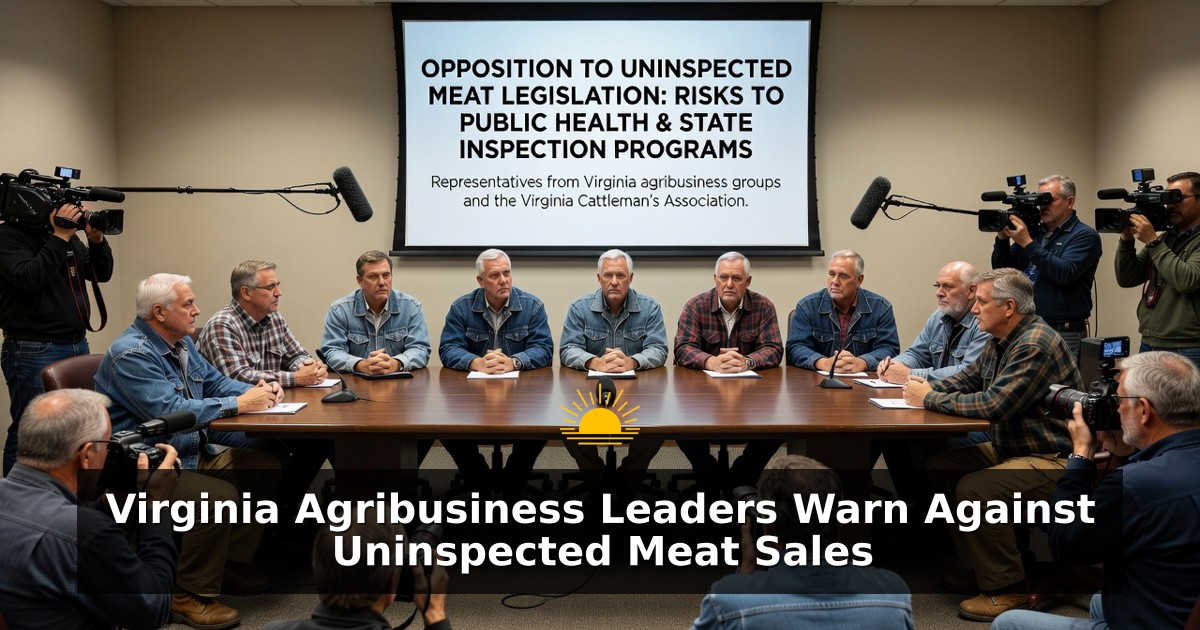
Representatives from Virginia agribusiness groups and the Virginia Cattleman's Association have formally opposed proposed legislation that would allow the sale of uninspected meat products across the state. Speakers at a recent legislative subcommittee hearing emphasized that long-standing policies against uninspected meat and unpasteurized milk stem directly from food safety and public health priorities. They noted that Virginia farmers and milk producers invest significant effort to ensure their products comply with both state and federal standards before reaching consumers. Allowing uninspected meat sales at any level, they argued, would place the state's established meat inspection program in a precarious position. The program operates under a cooperative agreement with the federal government and maintains approval that aligns with national requirements.
Longstanding Policies Protect Public Health
Virginia has maintained firm policies prohibiting the commercial sale of uninspected meat and unpasteurized milk for many years. These measures exist primarily to safeguard consumers from potential health hazards associated with products that have not undergone required testing and oversight. Producers work diligently to meet rigorous standards set by state authorities and federal partners, ensuring that meat and dairy items entering the marketplace are sound and reliable. Officials from agribusiness organizations stressed that any departure from these practices could undermine confidence in the food supply. The cooperative framework between Virginia's inspection system and federal agencies has proven effective in upholding consistent quality controls.
Public health experts have long documented the dangers posed by pathogens that can contaminate raw or improperly handled meat. Bacteria such as E. coli, Salmonella, and Listeria remain serious concerns in uninspected products, capable of causing severe illness especially among vulnerable populations including children, the elderly, and those with compromised immune systems. Pasteurization of milk similarly eliminates harmful microorganisms that thrive in raw dairy. By requiring inspection and processing standards, Virginia aligns its agricultural output with proven methods that reduce these risks. Industry representatives reiterated that farmers already dedicate substantial resources to compliance, viewing the current system as essential rather than burdensome.
State Inspection Program Faces Potential Risks
The Virginia state meat inspection program holds approval through a cooperative agreement with federal authorities, enabling it to operate in harmony with national food safety rules. Speakers warned that authorizing sales of uninspected meat would create inconsistencies that jeopardize this approval status. Such a change could force a reevaluation of the entire program, potentially disrupting services that local producers rely upon for market access. Maintaining federal equivalency allows Virginia facilities to process and distribute products efficiently while meeting interstate commerce expectations where applicable. Agribusiness leaders described the proposed bill as placing the inspection framework into an uncertain and vulnerable stance.
Cattle producers share these reservations and have joined agribusiness voices in urging lawmakers to reject the measure. The Virginia Cattleman's Association specifically requested opposition, underscoring that food safety remains non-negotiable for the livestock sector. Uninspected meat entering commercial channels might erode consumer trust not only in specialty products but across the broader meat industry. Established inspection protocols include ante-mortem and post-mortem examinations, facility sanitation checks, and residue testing that collectively minimize hazards. Removing these layers for certain sales would introduce variables that state and federal systems have worked decades to control.
Broader Implications for Virginia Agriculture
Virginia's agricultural economy depends heavily on reliable markets for livestock and dairy, with cattle operations contributing meaningfully to rural livelihoods and overall production value. Producers who already satisfy state and federal benchmarks fear that relaxed rules could create uneven competition or invite regulatory scrutiny from higher authorities. The cooperative inspection model has allowed smaller processors to serve local demand while adhering to the same scientific standards applied nationwide. Any legislative shift risking that model might compel costly adjustments or limit options for farmers seeking certified outlets. Industry advocates maintain that protecting the integrity of inspection preserves both public welfare and the economic stability of farming communities.
Food safety debates often balance consumer choice against documented health protections developed through historical experience with contamination outbreaks. Federal meat inspection laws originated in response to earlier public health crises and continue to evolve with scientific advances in pathogen detection. Virginia's participation in the cooperative program reflects a deliberate choice to uphold those protections at the state level. Opponents of the bill contend that exceptions for uninspected products would weaken rather than enhance the system. They point to the careful work already performed by milk and meat producers as evidence that existing requirements support rather than hinder responsible agriculture.
Calls for Continued Oversight
During the hearing, speakers respectfully asked subcommittee members to oppose the legislation in order to preserve current safeguards. They framed their position as consistent with decades of policy focused on preventing foodborne illness. Unpasteurized milk and uninspected meat were cited together as categories where scientific consensus favors regulated processing. Maintaining the status quo, according to these groups, ensures that products sold to the public continue meeting verified standards. The associations expressed readiness to support measures that strengthen rather than dilute inspection capacity.
Observers of agricultural policy note that similar proposals in other states have prompted extensive discussion about the trade-offs between direct-to-consumer flexibility and uniform safety nets. In Virginia the emphasis from agribusiness and cattle organizations remains fixed on the practical consequences for the state program and for everyday consumers. By keeping inspection intact, officials can continue verifying that meat leaving regulated facilities is free from visible defects and produced under sanitary conditions. The cooperative federal-state arrangement further multiplies resources available for monitoring and enforcement.
As lawmakers consider the measure, the testimony provided clear articulation of industry concerns rooted in public health data and operational realities. Farmers and ranchers already navigate complex requirements to deliver safe food, and their representatives argue that expanding uninspected sales would complicate rather than simplify that mission. The potential impact on program approval stands as a central technical objection alongside the broader safety rationale. Continued adherence to established protocols offers a proven path for protecting both Virginians who purchase meat and dairy and the producers who supply them.
Sustaining robust inspection ultimately serves the shared interest of a trustworthy food system. The positions advanced by agribusiness leaders and the Cattleman's Association highlight the interconnected nature of farm practices, regulatory approval, and consumer protection. Lawmakers now possess detailed input on why the current framework warrants preservation according to those closest to livestock and dairy production. Future deliberations will determine whether the bill advances or whether safety considerations prevail in their present form.
bill cooperative agreement farmers Federal Government federal standards food safety Legislation Madam Chair meat producers milk producers public health sponsor state meat inspection program state standards subcommittee trade Davis uninspected meat unpasteurized milk VDEX Virginia Agribusiness Council Virginia Cattleman's Association