Virginia School Board Weighs $300,000 Amendment for First-Grade Device Carts
Updated
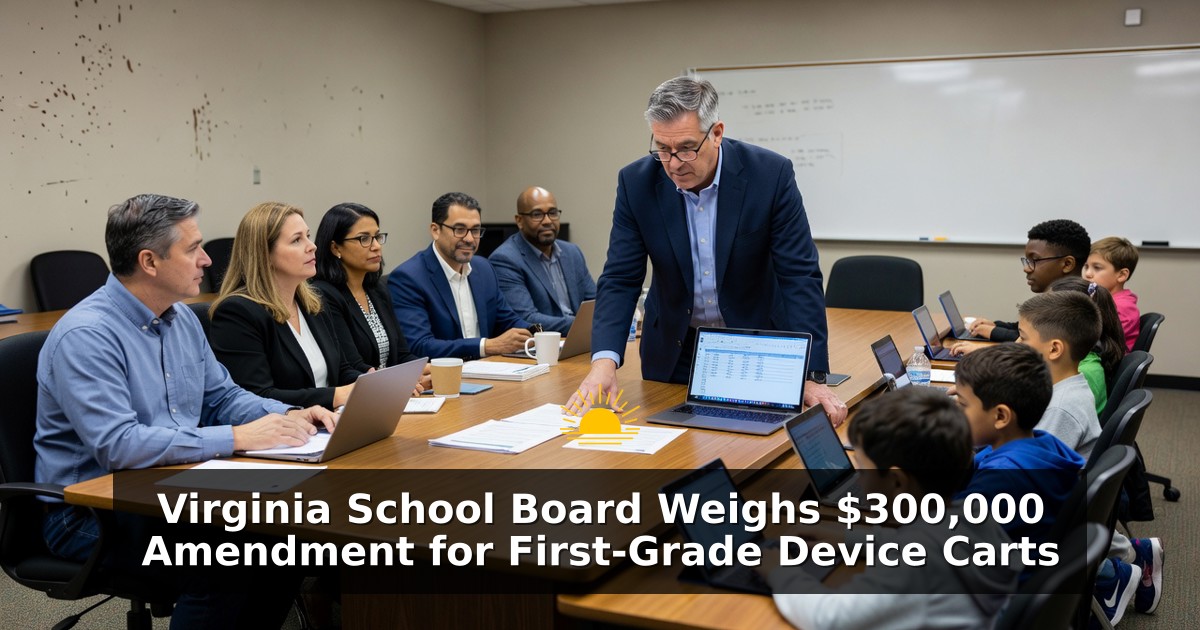
During a special school board meeting convened to adopt the fiscal year 2027 operating budget, a member introduced an amendment to fund the next phase of device storage carts for first-grade students at a cost of $300,000. The proposal called for drawing the money from the projected year-end fiscal year 2026 appropriated unspent fund balance rather than new revenue sources. Board member Ms. Schernov presented the motion after months of internal discussions and community input. Ms. Recordi provided a second, allowing the full board to open formal discussion on the change. The amendment forms part of broader deliberations on how technology infrastructure supports early elementary instruction across Virginia public schools.
Details of the Budget Amendment
The amendment specifically targets storage and charging solutions that would support one-to-one device programs already under review for first graders. Device storage carts typically secure tablets or laptops, manage power supplies, and simplify classroom logistics for teachers handling multiple devices daily. By tapping unspent balances from the prior fiscal year, the proposal avoids immediate impacts on the core operating allocations for staffing, facilities, or instructional materials. School board procedures require such amendments to the base budget motion to receive a second before debate can proceed, a step completed without delay. Officials noted that the phased rollout would build on earlier investments already made in older elementary grades.
Origins in Curriculum Discussions
Ms. Schernov explained that the idea grew from sustained work inside the curriculum and instruction area over the preceding year. A December meeting in particular examined patterns of device usage among the youngest learners and the practical needs that accompany expanded access. Public comment periods at earlier board sessions supplied additional perspectives, as did conversations with parents living in the member’s community. These sources collectively underscored questions about how often and in what manner first graders interact with personal devices during the school day. The resulting motion therefore reflects both administrative review and direct constituent feedback gathered across several months.
Technology as a Learning Tool
In remarks supporting the amendment, Ms. Schernov stressed that devices ought to function as one instrument among many rather than the exclusive pathway to knowledge. She described the initiative as potentially the start of a wider reevaluation of screen-based instruction in the primary years. From a child-development perspective, the phased introduction of storage carts would allow educators to monitor usage patterns and adjust practices accordingly. Research literature on early elementary education frequently notes that structured limits on device time can coexist with targeted digital literacy goals. The board member expressed pride in advancing the measure and confidence that the direction aligns with developmental readiness for six- and seven-year-old students.
Broader Context of One-to-One Programs
One-to-one device initiatives have spread across many Virginia divisions over the past decade as broadband access and hardware costs have improved. Storage carts address practical classroom challenges such as overnight charging, theft prevention, and rapid distribution at the start of lessons. Education analysts observe that successful programs pair hardware with clear guidelines on duration of use, content quality, and offline alternatives. National pediatric guidance often recommends that schools balance interactive screen activities with hands-on manipulation, outdoor time, and face-to-face collaboration for children in the early grades. Local budget decisions like the one under review therefore sit at the intersection of infrastructure planning and pedagogical philosophy.
Funding Mechanism and Fiscal Prudence
Utilizing projected year-end unspent balances represents a common technique for addressing emerging priorities without reopening the entire revenue forecast. Virginia school divisions routinely monitor appropriation balances throughout the fiscal year and identify residual amounts that can be reallocated before books close. The $300,000 figure covers a defined next phase rather than a full-system overhaul, keeping the request modest relative to overall operating budgets that often exceed hundreds of millions of dollars. Board members retain the ability to weigh the amendment against competing claims on the same unspent pool, including maintenance, transportation, or instructional support needs. Transparent discussion of such choices remains a core expectation of public budget adoption hearings.
Community and Parental Perspectives
Parents who spoke during public comment periods and those who contacted their representative directly contributed to the momentum behind the carts proposal. Some families emphasize the convenience of digital platforms for differentiated reading and mathematics practice, while others voice caution about cumulative screen exposure at young ages. The amendment process itself creates a formal channel for these viewpoints to influence resource allocation. School boards across the commonwealth regularly navigate similar tensions when updating technology plans. By grounding the request in both professional curriculum work and community sentiment, the motion seeks to demonstrate responsiveness on an issue that touches daily classroom life.
Next Steps in Board Deliberation
Once the second was recorded, the chair invited discussion among all members, recognizing Mr. Pepper to begin remarks. Subsequent speakers typically examine cost estimates, implementation timelines, professional development requirements for teachers, and metrics for evaluating success after deployment. Any approved amendment would fold into the final FY27 operating budget ultimately adopted by the board. Follow-up reporting often tracks how quickly carts reach schools, how teachers integrate them, and whether adjustments to device policies accompany the hardware. The special meeting format underscores the priority placed on settling budget details before the new fiscal year begins.
Implications for Early Education Practice
Decisions about first-grade technology infrastructure carry implications that extend beyond a single budget line. Educators continue to refine hybrid models in which digital tools supplement rather than replace foundational skills in literacy, numeracy, and social interaction. Storage carts can facilitate quick transitions between device-based and non-device activities, supporting the flexible scheduling many child-development specialists endorse. Longitudinal observations from other divisions suggest that clear usage protocols and regular review cycles help maintain that balance over time. The current proposal therefore contributes one concrete step within a longer conversation about appropriate technology density in the primary classroom.
The board’s consideration of the $300,000 amendment illustrates the careful calibration required when pairing fiscal opportunity with instructional philosophy. By drawing on unspent prior-year funds, linking the request to documented curriculum discussions, and inviting open debate, the process adheres to standard governance practices. Outcomes of the vote and subsequent implementation will determine how first-grade classrooms manage devices in the coming school year. Continued monitoring of both budgetary execution and student experience will supply the evidence needed for any future phases. In this manner, the special meeting advances a practical infrastructure item while keeping larger questions of child development and learning design in public view.
budget adoption budget amendment child development curriculum device storage carts device usage Education first grade FY26 FY27 budget instruction learners one-to-one devices operating budget Parents public comment School Board School Funding special meeting Technology unspent fund balance