Virginia Senate Panel Reviews Pet Shop Inspection Records Showing Few Violations
Updated
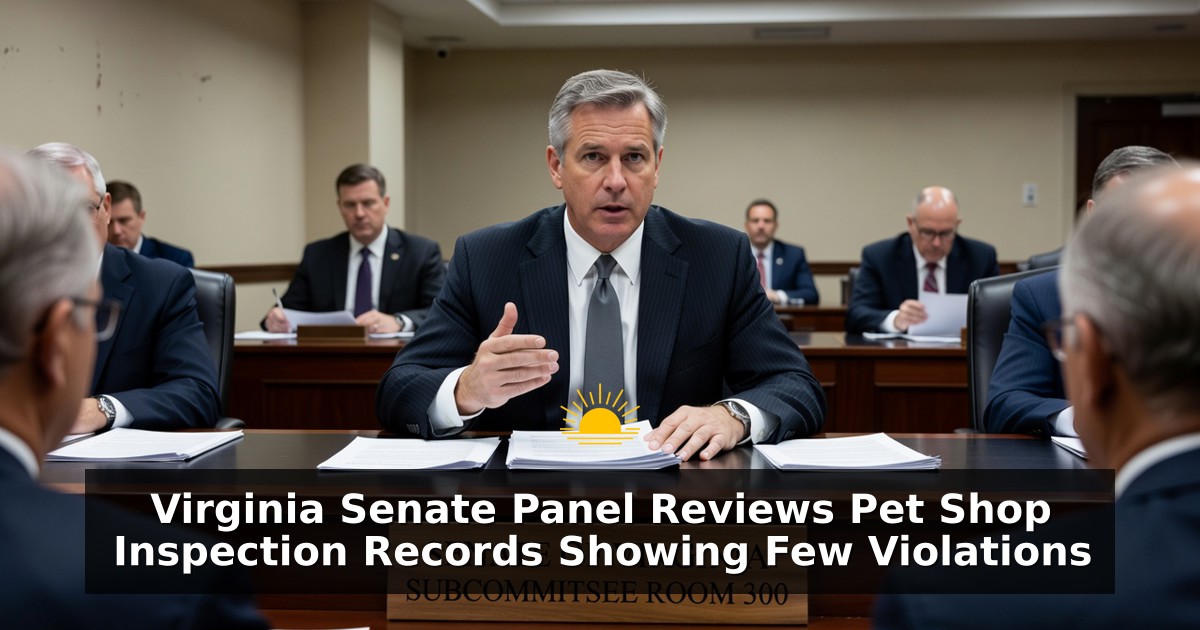
Officials from the Virginia Department of Agriculture and Consumer Services presented inspection findings on pet shops during a hearing in Senate of Virginia Subcommittee Room 300. David McGreeby testified that reviews conducted over the past couple of years identified very minimal violations across the facilities examined. He emphasized that the majority of recorded issues involved technical or paperwork matters rather than direct concerns over animal welfare. No violations related to animal care were documented in those inspections, according to the testimony shared with lawmakers. The data was placed before the subcommittee as members considered whether additional measures might be warranted for pet-related businesses operating in the Commonwealth.
Senator Stanley participated actively in the discussion while the inspection results were reviewed for possible next steps. The hearing focused on the practical record of compliance among pet shops that sell dogs and other animals to the public. Lawmakers heard that the limited number of citations did not center on the health or treatment of animals held at the retail locations themselves. This information provided a factual baseline drawn from state-level oversight activities. Participants weighed the findings against broader questions about sourcing practices that bring animals into Virginia stores.
State Inspection Results in Detail
McGreeby outlined that the Virginia Department of Agriculture and Consumer Services maintains responsibility for examining pet shops under existing state authority. Over the multi-year period covered in his remarks, inspectors encountered few problems overall. Technical violations typically involve record-keeping, licensing details, or facility documentation rather than conditions affecting the animals. The absence of animal care citations stood out as a central point in the presentation to the subcommittee. These outcomes suggest that, at the retail stage inside Virginia, most operators met basic standards during the reviewed timeframe.
The testimony underscored the distinction between on-site care at pet shops and earlier stages of breeding or transport. Officials noted that state inspectors concentrate on the conditions observed when animals are already in the commercial sales environment. Minimal findings in this area offer one data set for evaluating the current regulatory framework. Subcommittee members received the information without accompanying claims of widespread mistreatment inside the shops themselves. The record therefore centers on compliance levels achieved under present rules rather than hypothetical scenarios.
National Context Surrounding Puppy Sourcing
Discussion during the hearing also referenced larger patterns in dog breeding across the United States. Speakers noted estimates of roughly 10,000 puppy mills producing more than two million puppies each year nationwide. Only a fraction of those operations hold federal licenses from the U.S. Department of Agriculture, leaving a substantial share without that layer of oversight. An Office of Inspector General report from the USDA has previously highlighted challenges in enforcement, including facilities that do not correct identified problems in a high percentage of cases. Separate analyses have pointed to gaps in inspection coverage and reductions in federal inspector staffing levels.
These national figures were introduced to illustrate why some advocates seek stronger accountability at the point of retail sale. The argument presented held that retailers who acquire dogs for resale carry a responsibility to verify the quality of their sources. Proponents stated they do not aim to eliminate pet shops but instead want those businesses to obtain animals from reputable breeders. Good operators already exist on both the breeding and retail sides, according to comments made in the room. The focus remained on preventing the introduction of poorly bred or inadequately raised animals into the consumer market.
Balancing Oversight and Business Realities
Virginia lawmakers examined how state inspection data intersects with calls for refined definitions or sourcing requirements. The minimal violation history reported by the Department of Agriculture supplies evidence that many pet shops already operate within acceptable parameters on animal care. At the same time, the broader supply-chain concerns raised in testimony point to issues that originate outside Virginia borders. Subcommittee participants considered whether clarifying expectations for retailers would address upstream problems without imposing undue burdens on compliant local businesses. The hearing record shows an effort to ground any future action in documented inspection outcomes rather than assumptions.
Existing federal mechanisms have faced documented limitations, including incomplete inspection rates and staffing constraints. State-level data from Virginia offers a contrasting picture of relatively clean retail compliance. This contrast formed part of the factual backdrop for the subcommittee’s review. Officials and legislators alike recognized that consumers ultimately receive animals that have traveled through multiple hands before reaching a store. Ensuring high standards at each step remains a shared interest expressed during the proceedings.
Implications for Future Policy Consideration
The information presented leaves Virginia policymakers with a clear snapshot of recent enforcement experience. Minimal technical violations and zero animal care citations over two years indicate that current state inspections have not uncovered systemic failures inside pet shops. Any proposals to adjust rules would therefore need to target sourcing transparency or definitions of acceptable suppliers rather than reacting to widespread local mistreatment. Senator Stanley and colleagues reviewed the material with an eye toward practical effects on both animal welfare and legitimate commerce. The subcommittee setting allowed detailed examination of the numbers without immediate votes or final decisions.
Stakeholders on various sides of the issue can now reference the same state-generated data when discussing potential legislation. Pet shop owners who maintain strong records gain support from the low violation counts. Advocates concerned about national breeding practices gain a forum to highlight gaps that federal oversight has not fully closed. The hearing in Subcommittee Room 300 thus served as a point of information exchange grounded in Virginia’s own inspection history. Continued evaluation will likely depend on whether additional evidence emerges or whether lawmakers decide the existing framework already suffices.
Public interest in the health of companion animals keeps the topic relevant for residents across the Commonwealth. Families purchasing dogs expect healthy, well-adjusted pets, and the inspection summary speaks to conditions at the final commercial stage. By placing the Department of Agriculture’s findings on the record, the subcommittee created a reference point for subsequent debates. The neutral presentation of minimal violations alongside national statistics allows for measured consideration of next steps. Further hearings or bill drafts may build directly on the facts established in this session.
2026-02-03 animal care committee testimony David McGreeby inspections minimal violations no violations pet shop data pet shops regulatory review Senate hearing Senator Stanley subcommittee meeting Subcommittee Room 300 technical issues Violations Virginia agriculture Virginia Department of Agriculture Virginia lawmakers Virginia Senate