Virginia Senator Affirms Bill Covers All Companion Animals Including Hunting Dogs
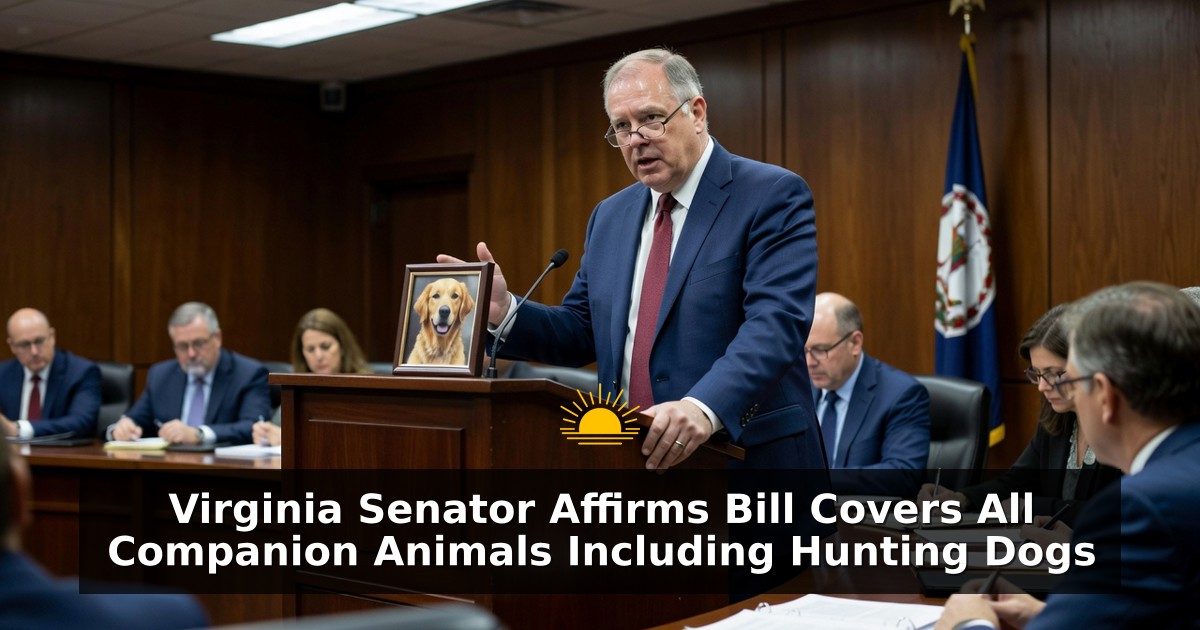
Virginia State Senator Bill Stanley addressed questions about the scope of proposed legislation during a recent meeting of the Senate of Virginia SFAC Public Safety Claims Subcommittee. He confirmed that the measure would apply fully to hunting dogs and all other companion animals. Stanley underscored that owners retain full responsibility for care even after an animal's working usefulness ends. The discussion centered on preventing abandonment and ensuring humane treatment across every category of pet.
Stanley responded directly when asked whether hunting dogs qualify as companion animals under the bill. He stated without reservation that they do and that the legislation must cover them. The senator noted personal familiarity with cases in which such dogs were discarded once their practical roles concluded. He insisted the proposed law would reach every instance of neglect or harm involving these animals. Officials present heard a clear affirmation that no exemptions would apply based on an animal's prior use.
Personal Experience Shapes Legislative View
Stanley shared details of adopting a walker hound that had been released by its previous owners. The dog arrived with a congenital heart condition that required ongoing veterinary attention. Medical professionals initially projected a remaining lifespan of only six months for the animal. Stanley covered all associated costs and provided a stable home environment. The hound ultimately lived for two and a half years under his care.
During that extended period the dog rested regularly on the family couch and received constant affection from a six-year-old child. Stanley observed that the animal had never previously experienced such consistent kindness and security. He described the hound as thriving emotionally despite its health limitations. The account illustrated how responsible ownership can transform an animal's final years. Committee members received a firsthand illustration of the difference proper care makes.
Stanley also referenced separate cases in which owners of companion animals ended their lives by shooting them. He declared that the pending legislation should and must address those actions as well. The senator framed such conduct as an unacceptable abandonment of duty. He tied the examples directly to the need for clear statutory coverage. The remarks reinforced that every form of mistreatment falls within the bill's intended reach.
Lifelong Duty Extends Beyond Utility
The core principle Stanley advanced is that accepting responsibility for any animal life creates lasting obligations. Whether the animal is a dog or a cat, the end of its usefulness in hunting, work, or other roles does not terminate the owner's duties. Care, shelter, and humane treatment remain required for the full duration of the animal's life. Stanley presented this standard as non-negotiable for anyone who takes on a pet. The subcommittee heard the argument as a foundational element of the proposed measure.
Virginia maintains existing statutes that prohibit animal cruelty and regulate abandonment, yet gaps in enforcement and coverage continue to draw legislative attention. Lawmakers periodically review how companion animals used in sporting or working contexts are treated once their primary functions cease. Stanley's comments align with broader efforts to close those gaps through updated definitions and stronger accountability. Animal welfare organizations across the commonwealth have long documented cases of discarded hunting dogs and other working animals left without support. Reliable data from state shelters show recurring intakes of such animals in poor condition.
Public records indicate that congenital conditions and other health issues frequently appear among surrendered or stray hunting breeds. Owners who walk away leave veterinary costs and emotional burdens to rescues or new adopters. Stanley's own experience mirrors patterns reported by multiple Virginia animal control agencies. The two-and-a-half-year lifespan extension he achieved stands as a concrete counter-example to premature disposal. His testimony therefore supplied both personal evidence and policy rationale in a single exchange.
Implications for Statewide Animal Protection
Passage of legislation that explicitly includes all companion animals would clarify obligations for owners of hunting dogs, working cats, and similar pets. Enforcement agencies would gain clearer authority to intervene when animals are abandoned or harmed after their utility ends. Prosecutors could pursue cases involving deliberate shootings or neglect with reduced ambiguity about statutory reach. Shelter operators and rescue groups would likely see gradual reductions in intake volumes tied to discarded working animals. The cumulative effect would strengthen the baseline of humane treatment expected throughout Virginia.
Stanley closed his remarks by returning to the simple premise that taking on a life creates enduring responsibility. He rejected any notion that an animal becomes disposable once it no longer serves a specific human purpose. The subcommittee discussion thereby highlighted both the moral and legal dimensions of pet ownership. Continued deliberation will determine the final language and effective date of any enacted bill. Observers of Virginia animal law anticipate further hearings as the proposal advances through the legislative process.
Community response to similar past measures has generally favored expanded protections, provided definitions remain precise and enforcement remains practical. Stanley's emphasis on universal coverage for companion animals seeks to meet that standard. The walker hound story supplied an accessible narrative that humanized abstract statutory language. By pairing personal history with firm policy statements, the senator framed the issue in terms readily understood by colleagues and constituents alike. The record of the subcommittee now contains a clear articulation of lifelong ownership duties.