State Releases Draft Rules for Recreational Cannabis Market Opening in 2027
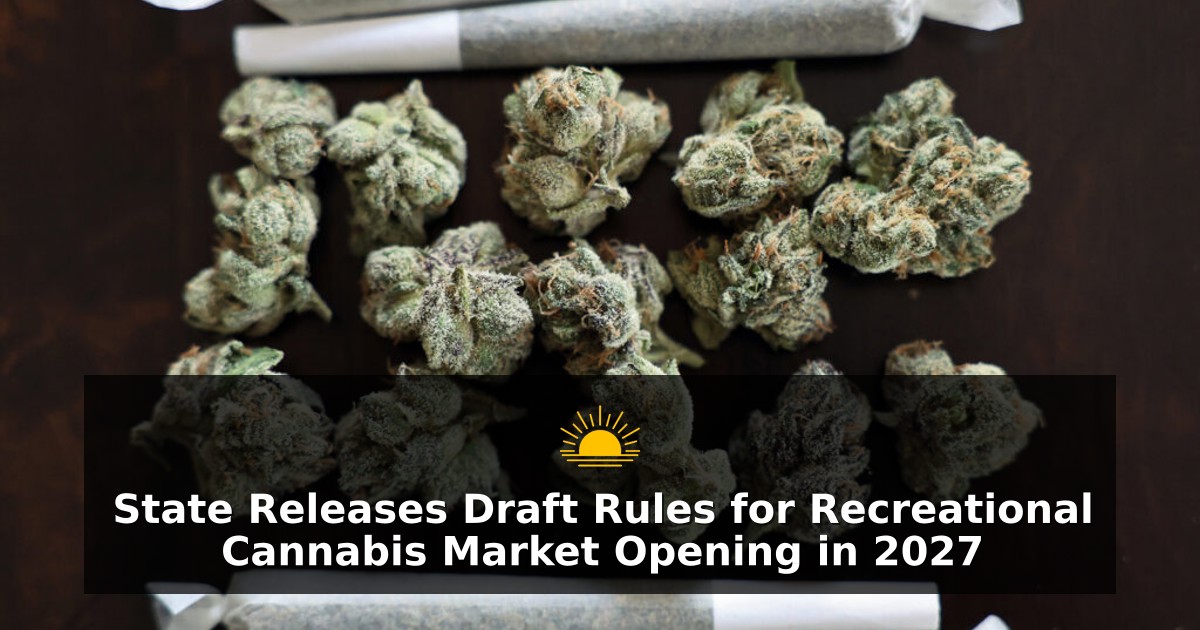
Virginia’s Cannabis Control Authority has released draft regulations for the recreational marijuana market scheduled to open July 1, 2027, outlining license types, fees and a phased application process that will shape who gets to sell, grow and test cannabis in the commonwealth.
Richmond BizSense reported that under the market framework set in state law and budget language, the CCA may award up to 350 retail marijuana store licenses statewide. A retail-dedicated license would carry a $4,000 application fee and a one-time first-year operating fee of $20,000, with annual renewals at $15,000.
A separate microbusiness license would allow vertically integrated retail, cultivation and processing for smaller operators, with a $1,000 application fee and $2,500 initial authorization fee, renewing at $6,000 a year. Jamie Patten, the CCA’s acting head and chief administrative officer, told BizSense the microbusiness tier is designed to be achievable for limited-resource Virginia operators rather than only multistate cannabis companies.
Cultivation would use a five-tier canopy system. The largest Tier V license would allow up to 35,000 square feet of canopy, with only five such licenses available initially and possible adjustments in 2028. Application fees for cultivation would range from $3,000 to $7,500, first-year operating fees from $20,000 to $50,000, and renewals from $15,000 to $45,000.
Draft rules also cover delivery operators, testing facilities and processors, plus separate permits distinguishing recreational “retail marijuana stores” from medical “cannabis dispensing facilities.” Reinspection fees would apply when regulators must revisit a site after violations or expansions. Licenses would not be awarded to home-based businesses, and permit holders would have 18 months to become operational or face revocation.
The CCA plans to open applications by Feb. 1 and phase batches over time. Early batches are expected to include microbusiness, hemp processors, cultivators and labs; retail licenses are not expected in the first wave. Lotteries are likely where demand exceeds supply — especially retail and cultivation — but less likely for testing labs if applications stay below caps.
“Impact” licenses would favor businesses at least 51% owned and controlled by people who lived from 1999 to 2025 in areas disproportionately policed for marijuana offenses or in historically disadvantaged communities. Those licensees could seek fee waivers and discounts, Patten said — a social-equity lever built into the fee schedule.
Except for statutory caps on retail stores and the initial Tier V cultivation limit, the CCA would set other license caps later. Metrc, already used for medical seed-to-sale tracking, is scaling for adult-use volume, and OpenGov is building the online application portal. The CCA board is expected to approve final regulations in December for early-2027 effectiveness, after stakeholder feedback.
Jake Shuford, the CCA’s legislative and regulatory manager, told board members the draft is not final and will be tweaked through engagement. That comment matters for local governments: zoning, buffers, odor rules and local-option timing will interact with state licensing even if the retail market is statewide in statute.
For consumers, July 1, 2027, is the headline date, but supply readiness may lag. Commenters have noted that applications opening in February leave a short runway before retail sales — potentially advantaging medical operators who already grow and dispense. Microbusiness advocates hope lower fees offset that head start.
Public-health and public-safety agencies will watch testing rules, packaging, advertising limits and impaired-driving enforcement as the market stands up. Localities will watch whether retail clustering lands near schools or in already stressed commercial corridors. The draft fee schedule is the first concrete signal of how expensive — and how competitive — entry will be.
Businesses considering applications should study not only fees but operational definitions: what counts as “operational” within 18 months, how canopy is measured, and how recreational and medical permits interact under common ownership. Incomplete applications or missed reinspection windows could prove costly given the fee levels described.
Politically, recreational sales remain contested even as the statutory clock runs. Supporters emphasize tax revenue, regulated product safety and reduced illicit-market harms; opponents warn of addiction, youth access and black-market persistence. The CCA’s job is to implement the market the General Assembly authorized, not to relitigate legalization — but draft regs will still draw fire from both directions.
Virginians who want to weigh in should track CCA board meetings and comment windows before the December finalization. Cities and counties should align zoning calendars with the February application opening so that would-be retailers are not licensed at the state level while stuck in local permitting limbo.
Ali Faruk Andrew Breton Anne Holton Budget Cannabis Control Authority Cheryl Burke Cynthia Newbille Ellen Robertson Emmett Jafari Fire Health Katherine Jordan Kathryn Ricard Kenya Gibson Marijuana Matthew Percival Nicole Jones Reva Trammell Richmond Richmond City Council Richmond School Board Sarah Abubaker Schools Shavonda Fernandez Stephanie Lynch Stephanie Rizzi Violations Virginia Wesley Hedgepeth