States take action against ‘claim sharks,’ who charge veterans for disability assistance
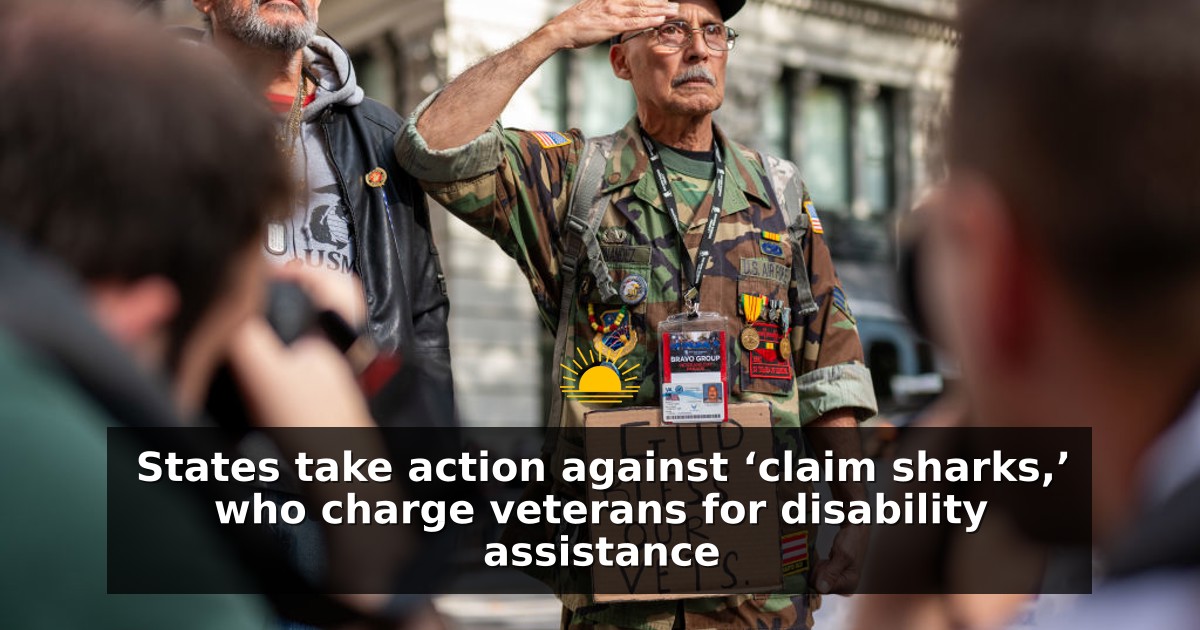
For-profit consultants who charge veterans to file U.S. Department of Veterans Affairs disability claims—often labeled “claim sharks” by critics—are facing a wave of state bills after federal legislation to close the loophole stalled, with Maine, New Jersey, and New York already enacting crackdowns and similar measures introduced in roughly 17 states.
Accredited veterans service organizations such as The American Legion and Veterans of Foreign Wars help veterans file claims at no cost. Attorneys and VA-accredited agents may charge for certain work, including appeals, under federal rules. A parallel industry of unaccredited consultants markets speed and higher ratings for upfront fees or a cut of future benefits—sometimes thousands of dollars—drawing fire from lawmakers who say the practice skims disability compensation Congress intended for wounded veterans.
Missouri Republican Rep. Dave Griffith, a Green Beret veteran, has pushed criminal penalties for taking compensation to help a veteran apply for benefits. His bill died in committee and was refiled for a later session. “When there are organizations and companies like these claim sharks out there that prey on our veterans, taking their hard-earned benefits away and making a profit from them, there is something empirically incorrect about that,” Griffith said. He also objected that many such firms are run by veterans themselves.
VA data show disability claims average about four to five months, though some cases drag a year or longer. Monthly compensation for service-connected conditions can range from a few hundred dollars to more than $4,000 depending on rating and dependents. The 2022 PACT Act, the largest expansion of toxic-exposure benefits in a generation, enlarged the pool of veterans who may qualify for conditions linked to burn pits, Agent Orange, and related hazards—raising both legitimate demand for help and the dollars consultants can capture.
Critics describe fee structures pegged to five times a monthly increase. Griffith cited examples in which a veteran awarded a 100 percent rating near $3,800 a month might face a one-time consultant bill around $19,000, with some cases allegedly reaching $30,000 when firms delay filing to enlarge back-pay cuts. Florida Democratic Rep. Anna Eskamani, working with Republican Rep. Michelle Salzman—both with Army ties—backed anti–claim-shark legislation after warning that companies use exploitative tactics to take a large chunk of benefits. New Jersey became the first state to bar anyone without VA accreditation from charging for claim help; Maine and New York followed. Louisiana, by contrast, quietly allowed capped fees up to $12,500 after Gov. Jeff Landry let a bill become law without a signature—an about-face from his earlier work as attorney general against similar firms.
Industry advocates argue most firms are legitimate and that a few bad actors drive the narrative. Former acting VA Secretary Peter O’Rourke, who left the Trump administration in 2018, has toured statehouses arguing the market offers options the overloaded VA accreditation system cannot match. He says he supports fee caps and transparent contracts but opposes criminalizing private assistance. OpenSecrets data cited in coverage show major consulting firms spending hundreds of thousands of dollars on federal lobbying in successive years, while state lobbyists fight GUARD Act–style bills modeled on stalled congressional language that would penalize unaccredited paid claim help.
The VFW and American Legion support the federal GUARD Act approach and have clashed publicly with for-profit firms. The VA has warned veterans to avoid unaccredited consultants. Media and state investigations in places including Texas and Louisiana have scrutinized allegedly illegal practices. Bills failed or stalled in several states, including Arizona, Georgia, Hawaii, and Kentucky, while Alabama’s veterans affairs panel moved toward drafting a prohibition—signaling the fight will return in the next legislative calendar.
For Virginia readers, the national pattern matters because veterans in every congressional district use the same VA claims pipeline, and any federal GUARD Act revival or neighboring-state crackdown changes where firms operate and how they advertise. Until Congress acts, statehouses remain the main arena deciding whether paid claim help is a regulated service, a capped industry, or a crime when the helper lacks VA accreditation.
Bills Charges Charity Congress Crime Data Democrats Disabilities Disability Editorial Fire Grants Lawmakers Legislation Republican Scott spending Texas Toxic Trump Trump administration Veterans Virginia VirginiaMercury