Virginia Shield Bill Gains Support to Protect Healthcare Access
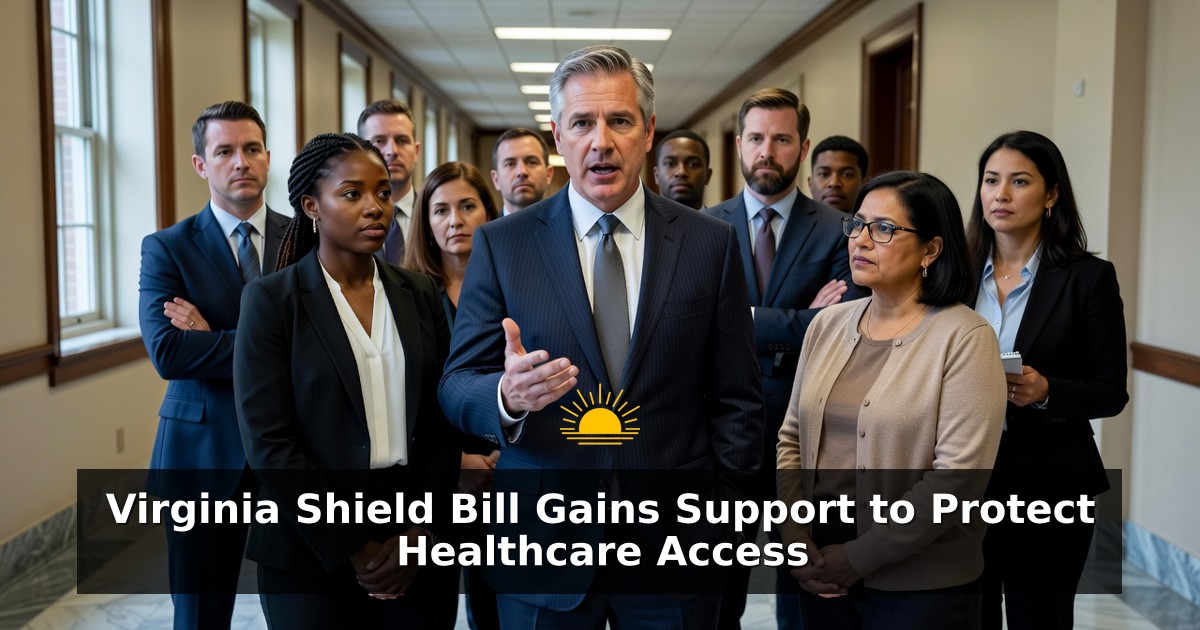
Lawmakers in Virginia are advancing discussion of the Shield Bill, a measure supporters describe as vital for preserving women's healthcare access across the commonwealth. Delegate Simon has argued that the legislation is necessary to protect women's healthcare rights at a time when other states have moved to criminalize certain reproductive services. Advocates emphasize that the bill would help safeguard providers who offer legal care in Virginia and prevent external legal pressures from undermining those services. The proposal comes as Virginia continues to stand as the last state in the South that maintains protections for abortion access.
Supporters frame the Shield Bill as a direct response to efforts by some states to extend their criminal laws beyond their own borders. They point to growing concerns that prosecutors or private parties in restrictive jurisdictions might seek to target patients, providers, or helpers connected to care received in Virginia. By establishing clear legal shields, the bill aims to keep Virginia's healthcare system insulated from such reach. This approach, according to backers, reinforces the state's existing framework for reproductive services while addressing practical risks faced by clinics and physicians.
Legislative Context and Core Provisions
The Shield Bill focuses on protecting healthcare providers who deliver services that remain lawful under Virginia statutes. Delegate Simon has highlighted the measure's role in ensuring that medical professionals can continue their work without fear of out-of-state civil or criminal actions. Proponents note that similar protective statutes have been examined in other jurisdictions facing comparable interstate tensions after shifts in national abortion jurisprudence. In Virginia, the legislation is presented as a targeted tool rather than a broad expansion of existing rights, concentrating instead on defensive legal barriers.
Advocates stress that the bill would maintain the commonwealth's status as a destination for patients seeking care that is restricted elsewhere in the region. They argue this continuity is essential for regional healthcare stability, particularly for residents of neighboring states who travel to Virginia for services. The discussion in subcommittee settings has centered on practical safeguards, including limitations on cooperation with out-of-state investigations related to legally provided care. These elements are intended to reduce uncertainty for hospitals, independent clinics, and individual practitioners.
Concerns Over Interstate Legal Reach
A central theme raised by supporters involves the potential for other states to criminalize women's healthcare decisions and then attempt to enforce those rules against actors inside Virginia. Delegate Simon and fellow advocates have underscored that such extraterritorial efforts could chill the provision of care even when it complies fully with Virginia law. The Shield Bill is positioned as a countermeasure that would block the use of Virginia courts or law enforcement resources for those purposes. This protective stance, they contend, upholds the principle that each state determines its own healthcare policies within its borders.
Observers of the debate note that Virginia's geographic position amplifies the stakes. As surrounding Southern states have enacted tighter restrictions, the commonwealth has absorbed increased demand for services. Maintaining clear legal protections for providers is therefore seen as critical to sustaining capacity and avoiding disruptions. Supporters repeatedly return to the point that without such shields, the mere threat of distant litigation or prosecution could lead some clinicians to limit offerings, thereby reducing overall access.
Broader Implications for Reproductive Services
Beyond immediate legal defenses, backers of the Shield Bill describe it as essential for the long-term viability of reproductive healthcare infrastructure in Virginia. They argue that stable protections encourage continued investment in clinics, training of specialized staff, and retention of experienced physicians. In an environment of heightened interstate conflict over abortion policy, these factors become decisive for whether services remain widely available. The legislation is thus cast as both a shield for individuals and a foundation for institutional resilience.
Public discussion around the measure has also touched on patient privacy and the free flow of accurate medical information. Advocates maintain that providers must be able to counsel patients fully about options without concern that records or communications could later be subpoenaed by authorities in other states. By addressing these vulnerabilities, the Shield Bill seeks to preserve the integrity of the physician-patient relationship under Virginia standards. Supporters present this continuity as consistent with the commonwealth's recent history of safeguarding access.
Path Forward in the General Assembly
As the bill moves through legislative channels, including civil subcommittee review, its proponents continue to rally support by focusing on concrete risks rather than abstract principles. Delegate Simon has reiterated that the measure responds directly to documented attempts elsewhere to export restrictive regimes. The emphasis remains on keeping Virginia's legal environment predictable for those who rely on or deliver reproductive care. Further hearings and floor consideration will determine the final shape of any enacted protections.
In summary, the Shield Bill represents an effort to codify defenses for healthcare providers and patients against external pressures. Its supporters view passage as necessary to lock in Virginia's position as the final Southern state preserving abortion access. The debate reflects deeper questions about state sovereignty in medical regulation and the practical effects of divergent laws across state lines. Continued legislative attention will clarify how firmly Virginia chooses to wall off its providers from out-of-state enforcement actions.
abortion access Amidst argue bill Civil controversy healthcare legal protection necessity protecting Shield shield bill state laws subcommittee Supporters Virginia women's women's healthcare