Virginia Schools Face Funding Strain from Excused Student Absences
Updated
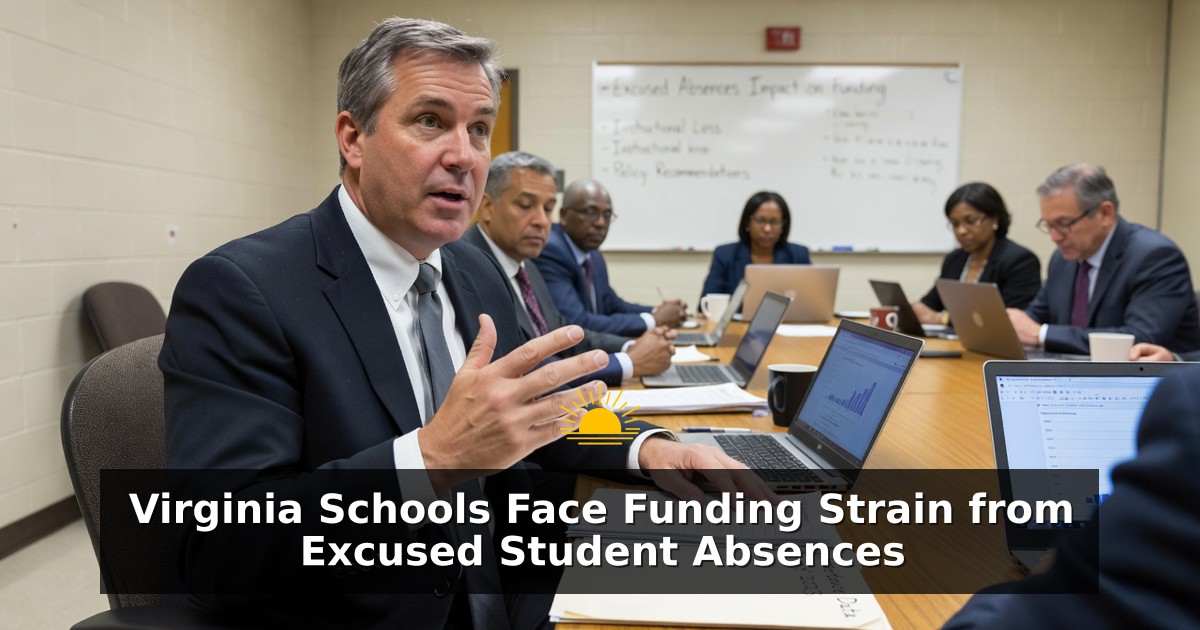
Education leaders in Virginia continue to examine the financial and instructional effects of student absences during ongoing policy discussions. At a recent K-12 Subcommittee meeting, Tom Smith of the Superintendents Association outlined the practical challenges that arise when students miss school for legitimate reasons. He stressed that absences carry consequences for classroom learning as well as for the budgets that sustain daily operations. School divisions across the commonwealth rely on consistent student presence to maintain stable resource levels. These dynamics place administrators in a position of balancing compassion for families with the need for predictable funding.
Smith described a recurring pattern in which lawmakers introduce measures to formalize excused absences for medical and family circumstances. Such proposals acknowledge genuine needs that keep children out of school on given days. Yet each absence, regardless of its classification as excused or unexcused, removes the corresponding funding that would otherwise support the school. This structure creates ongoing pressure on division leaders who must plan staffing and programs around fluctuating daily counts. The testimony underscored the importance of recognizing these effects before finalizing new rules.
The Role of Attendance in Virginia School Finance
Virginia distributes a major share of state education dollars according to measures of student membership and presence. Average Daily Membership calculations form the backbone of allocations tied to the Standards of Quality. When a student is not present, the count for that day declines and funding follows suit. Local school boards therefore monitor attendance closely throughout the year to project revenues with reasonable accuracy. Variations in these figures can force mid-year adjustments that affect classroom resources and support services.
The funding model treats excused and unexcused absences in the same financial manner. Smith noted that payment arrives only for the time a child spends in school. Periods of absence generate no state support for the hours or days involved. This reality holds even when medical documentation fully justifies the time away. Superintendents must therefore manage the resulting gaps while still meeting instructional and operational obligations.
Instructional Consequences Beyond the Budget
Missed school days interrupt the sequence of lessons planned by teachers. Students who return after absences often require targeted review sessions and makeup assignments to regain lost ground. These recovery efforts draw time away from regular curriculum pacing and can stretch limited instructional staff. Over repeated instances, the cumulative effect appears in classroom performance data and end-of-year assessments. Schools invest additional resources to close those gaps and keep learners on track.
Family medical needs and other personal circumstances frequently drive the absences under discussion. Parents and guardians seek flexibility so that health appointments or recovery periods do not create further hardship. Legislators respond with bills intended to protect students from penalties in such cases. The Superintendents Association accepts the validity of those family priorities. At the same time, its members urge careful review of the downstream fiscal results.
Navigating Competing Priorities in Policy Design
School leaders occupy a middle position between supporting households and safeguarding institutional finances. They understand the reasons families request excused time yet remain accountable for balanced budgets. Smith emphasized that awareness of both sides should inform the drafting of attendance-related statutes. Without that dual focus, well-intentioned rules can produce unintended strain on division resources. Collaborative dialogue helps surface practical solutions that serve students and schools alike.
Attendance patterns vary across urban, suburban, and rural divisions in Virginia. Access to healthcare, transportation reliability, and community health trends all influence how often students miss class. Funding formulas that respond strictly to daily presence can amplify differences among localities. Policymakers therefore consider equity implications when they weigh new exemption categories. Data on absence trends supplies an evidence base for more refined approaches.
Broader Implications for Educational Stability
Stable funding enables schools to maintain teacher positions, instructional materials, and student support programs. Sudden or sustained drops in attendance-based revenue complicate those commitments. Division officials respond by adjusting expenditures, seeking local supplements, or reallocating existing funds. Each of those steps carries trade-offs that ultimately reach classrooms. Long-term planning becomes more difficult when revenue remains tied so directly to daily headcounts.
National conversations about education finance often mirror the issues raised in the Virginia subcommittee. Many states employ similar attendance or membership metrics to drive aid. Occasional reforms introduce limited hold-harmless provisions or alternative counting methods for specific situations. Virginia stakeholders watch those experiments for lessons that might apply at home. The goal remains a system that funds schools adequately while encouraging regular participation.
Perspectives from Practitioners Shape Future Bills
Testimony from the Superintendents Association supplies lawmakers with ground-level insight into operational realities. Smith’s remarks illustrated how abstract policy language translates into concrete budget lines. Subcommittee members heard that every new category of excused absence carries a measurable cost. That information equips legislators to craft measures with clearer understanding of implementation effects. Continued exchange between practitioners and policymakers strengthens the quality of resulting statutes.
As discussions proceed, additional stakeholders will contribute views on attendance and funding. Parents, teachers, health professionals, and local officials all hold relevant experience. Integrating those perspectives can produce balanced frameworks that respect family needs without eroding school resources. The subcommittee process itself offers a forum for testing ideas against practical constraints. Outcomes from these sessions will influence how Virginia schools manage absences in coming years.
Toward Sustainable Approaches
Effective policy will likely combine clear guidelines for excused absences with mechanisms that protect core funding stability. Options under consideration in similar debates elsewhere include adjusted counting windows or supplemental aid for verified medical leave. Any Virginia solution would need to align with existing Standards of Quality requirements and local composite index calculations. Careful fiscal analysis can identify approaches that minimize disruption. The emphasis stays on enabling both student well-being and dependable school operations.
Smith closed by thanking the subcommittee for the opportunity to present these considerations. His comments reinforced that superintendents stand ready to work with legislators on workable language. The exchange highlighted the value of including operational voices early in the bill development cycle. Future proposals on student absences will benefit from that foundation of shared understanding. Virginia’s education community remains focused on policies that sustain learning and resources together.
Absences association Debate discusses education finance Education Policy financial implications funding House Bill 1017 implications K-12 Subcommittee School Funding Smith Student student absences Superintendents Superintendents Association Tom Tom Smith Virginia legislation