Virginia Bill Expands Dental Assistant Roles to Boost Patient Access
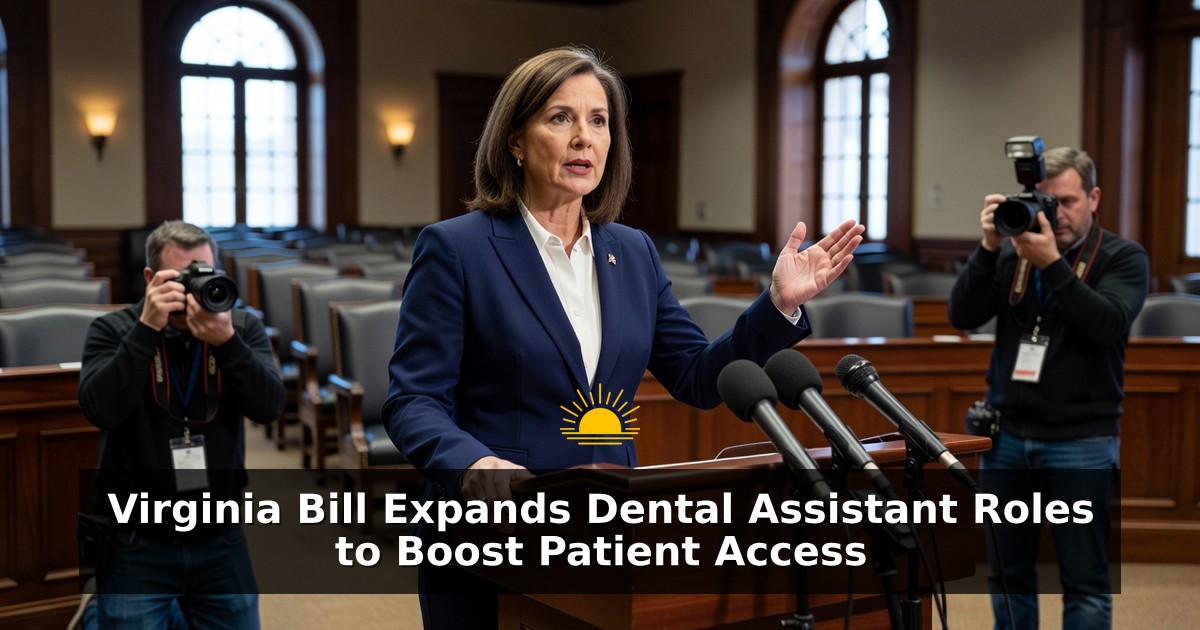
Delegate Marcia Price has introduced legislation in the Virginia General Assembly designed to strengthen the dental workforce and expand patient access to preventive care services. The measure would authorize dental assistants who have completed at least 1800 hours of clinical experience to earn certification for assisting with basic functions during dental hygiene appointments. These duties would occur only under the direct supervision of a licensed dentist or a licensed dental hygienist. Proponents present the bill as a practical response to persistent scheduling backlogs that delay routine and preventive dental visits across the Commonwealth.
The proposal emerged after stakeholders identified challenges within a dental hygiene education program and sought collaborative solutions. Multiple groups convened to explore options that could accelerate workforce development without compromising safety standards. The resulting bill focuses on utilizing existing experienced dental assistants more effectively in clinical settings. Officials emphasize that the change targets limited preventive tasks rather than advanced procedures reserved for higher-licensed professionals.
Oral Health Access Challenges Across Virginia
Virginia continues to face uneven distribution of dental providers, particularly in rural localities and underserved urban neighborhoods. Many residents encounter long wait times for hygiene appointments that form the foundation of preventive oral health. Free clinics and community health centers report consistent demand that exceeds available hygienist capacity. Expanding the supportive role of qualified dental assistants offers one avenue to increase the number of patients seen each day while maintaining professional oversight.
Dental assistants already perform essential chairside and preparatory duties in practices throughout the state. Adding a certification pathway for basic functions during hygiene visits builds on that foundation with clear experience thresholds. The 1800-hour requirement ensures participants bring substantial hands-on knowledge before taking on the new responsibilities. Supervision by either a dentist or hygienist provides an additional layer of clinical accountability during patient encounters.
Evidence Drawn from Missouri Pilot Program
An eight-month study conducted in Missouri under Institutional Review Board approval examined a comparable expanded role for dental assistants. Researchers tracked more than 1600 patient visits in which assistants delivered limited preventive care. The evaluation recorded no adverse clinical events and received no patient complaints related to the services provided. These findings supplied Virginia stakeholders with data indicating that carefully scoped duties can be performed safely when experience and supervision criteria are met.
The Missouri results have been cited to illustrate that patient safety need not be sacrificed when workforce models adapt to demand. Virginia’s proposal mirrors the limited scope tested in that study, focusing on basic functions rather than independent practice. Lawmakers reviewing the bill in the Health Professions Subcommittee have access to this evidence as they weigh potential benefits against regulatory considerations. The data help frame the discussion around measurable outcomes rather than untested assumptions.
Broad Stakeholder Backing for the Measure
Support for the legislation spans several sectors of the oral health community. Practicing dentists have endorsed the concept as a means to improve practice efficiency and patient flow. Free clinics, which serve large numbers of uninsured and underinsured Virginians, view the change as a tool for reducing appointment delays. The Virginia Community College System, which trains many dental assistants, has also expressed backing for the certification pathway that aligns with existing educational pipelines.
In the Senate, the companion measure is being carried by Dr. Todd Pillion, bringing bicameral attention to the issue. The dual introduction signals coordinated interest in addressing dental access through workforce adjustments. Advocates argue that the bill complements broader public health goals by emphasizing education and prevention alongside treatment. Greater availability of basic hygiene support can help more residents maintain oral health and avoid more complex interventions later.
Implications for Preventive Care and Public Health
Preventive dental services play a documented role in overall health outcomes, reducing risks associated with untreated oral disease. By enabling experienced dental assistants to contribute to hygiene appointments, the legislation aims to multiply the reach of existing licensed providers. Patients in both private practices and safety-net settings could experience shorter waits and more consistent recall intervals. The approach relies on certification standards and supervised practice to preserve quality while increasing capacity.
Community college programs stand to benefit from clearer career ladders that reward clinical experience with expanded duties. Dental assistants who invest time in the profession gain a defined route to additional responsibilities and potentially greater workplace value. Dentists and hygienists retain authority over care plans and direct oversight, ensuring the traditional team structure remains intact. The net effect sought by sponsors is a more resilient delivery system capable of serving larger numbers of Virginians.
Legislative Consideration and Next Steps
The bill is under review in the Health Professions Subcommittee, where members examine its alignment with existing statutes governing dental practice. Discussions center on the precise definition of basic functions, the certification process, and enforcement of the supervision requirement. Supporters urge favorable consideration on grounds that the measure responds directly to documented access gaps and educational program constraints. Opposing views, if any arise, would likely focus on scope-of-practice boundaries and the need for ongoing outcome monitoring.
If advanced, the legislation would establish a new certification available to dental assistants meeting the 1800-hour threshold. Implementation would involve regulatory details developed by the appropriate state boards to ensure uniform standards. Tracking of patient outcomes and any incidents would provide Virginia-specific data comparable to the Missouri study. Such information could guide future refinements to the model.
Dental assistants occupy a central position in the daily operation of oral health practices and contribute to public health through chairside support, patient education, and facilitation of preventive services. The proposed bill seeks to formalize an expanded yet limited set of functions that leverage their experience under professional supervision. By doing so, sponsors intend to alleviate appointment backlogs and extend the benefits of regular dental hygiene care to more residents of the Commonwealth. Continued legislative scrutiny will determine whether the framework advances into law and how its provisions are ultimately structured for statewide application.
adverse events basic functions certification clinical experience commonwealth dental assistants dental hygiene appointments dental hygiene school dental workforce development dentists Dr. Todd Pillion free clinics IRB approved study licensed dental hygienist licensed dentist Missouri patient access patient complaints patient visits preventive care Senate supervision Virginia Community college system workforce development